










TFIPOST हिन्दी
TFIPOST Global
Tfipost.com
Tfipost.com
No Result
View All Result
  • Premium
  • Politics
    • All
    • Analysis
    • Opinions
    • Trending
    PM Modi Draws a Red Line on NEET Leak, Says Students’ Future Cannot Be Compromised

    PM Modi Draws a Red Line on NEET Leak, Says Students’ Future Cannot Be Compromised

    Foreign Fotofinish of SFI : When Student Activism Becomes Political Spectacle

    Foreign Fotofinish of SFI : When Student Activism Becomes Political Spectacle

    Yogi Sharpens Political Offensive as Sanatan Debate Returns to Centre Stage

    Yogi Sharpens Political Offensive as Sanatan Debate Returns to Centre Stage

    USA-Iran on the Edge: West Asia Faces Its Greatest Test

    USA-Iran on the Edge: West Asia Faces Its Greatest Test

    • Analysis
    • Opinions
    • Trending
  • Economy
    • All
    • Business
    • Economy1
    • Finance
    ULIP Fund Switching Explained: When, Why, and How to Boost Returns

    ULIP Fund Switching Explained: When, Why, and How to Boost Returns

    A Detailed Look at What Determines Silver Prices, Purity Grades, and City-Based Rate Differences Across India

    A Detailed Look at What Determines Silver Prices, Purity Grades, and City-Based Rate Differences Across India

    10 Things You Can Do on the Boubyan App That Most People Don’t Know About

    10 Things You Can Do on the Boubyan App That Most People Don’t Know About

    Benefits of using a mortgage loan EMI calculator for long-term budget planning

    Benefits of using a mortgage loan EMI calculator for long-term budget planning

    • Business
    • Finance
  • Defense
    • All
    • Defence
    • Strategy
    • Weaponry
    From Shipbuilder to Maritime Capability Partner: Navy Outlines Bigger Vision for Defence PSU HSL With Dy Chief of Navy’s visit

    From Shipbuilder to Maritime Capability Partner: Navy Outlines Bigger Vision for Defence PSU HSL With Dy Chief of Navy’s visit

    General Dhiraj Seth’s ‘VIJAY’ Doctrine Signals India’s Next Military Transformation

    General Dhiraj Seth’s ‘VIJAY’ Doctrine Signals India’s Next Military Transformation

    Why the Army is quietly rewriting India’s warfighting doctrine with its first Integrated Battle Groups

    Why the Army is quietly rewriting India’s warfighting doctrine with its first Integrated Battle Groups

    India Officially Names Six Operation Sindoor Martyrs as Their Sacrifice Enters National War Memorial Record

    India Officially Names Six Operation Sindoor Martyrs as Their Sacrifice Enters National War Memorial Record

    • Defence
    • Strategy
    • Weaponry
  • Geopolitics
    • All
    • Africa
    • Americas
    • Asia Pacific
    • Europe
    • South Asia
    • West Asia
    Modi-Takaichi Summit Signals India-Japan’s Strategic Pivot Towards a Stronger Indo-Pacific Alliance

    Modi-Takaichi Summit Signals India-Japan’s Strategic Pivot Towards a Stronger Indo-Pacific Alliance

    PoK Leadership Explodes at Islamabad as Khawaja Asif’s Kashmir Remark Sparks Rare Public Break and Identity Showdown

    PoK Leadership Explodes at Islamabad as Khawaja Asif’s Kashmir Remark Sparks Rare Public Break and Identity Showdown

    Canada’s Khalistan Blowback: After 41 Years, Ottawa Finally Admits Canada-Based Khalistani Extremists Blew Up Air India’s Kanishka

    Canada’s Khalistan Blowback: After 41 Years, Ottawa Finally Admits Canada-Based Khalistani Extremists Blew Up Air India’s Kanishka

    From Cells To Networks: NIA Maps Affiliate Terror Structure In JMB–IMK Case, Chargesheets 11 Linked To Northeast Bengal Module

    From Cells To Networks: NIA Maps Affiliate Terror Structure In JMB–IMK Case, Chargesheets 11 Linked To Northeast Bengal Module

    • Africa
    • Americas
    • Asia Pacific
    • Europe
    • South Asia
    • West Asia
  • Knowledge
    • All
    • Culture
    • Education
    • History
    • Indology
    Shankaracharya, Dharma, and Politics: The Avimukteshwaranand Question

    Can a Shankaracharya Be Political? The Avimukteshwaranand Debate Through the Lens of Dharma

    ‘Not Refugees, But Warriors’: Mohan Bhagwat Seeks to Redefine the Legacy of Partition Migrants

    ‘Not Refugees, But Warriors’: Mohan Bhagwat Seeks to Redefine the Legacy of Partition Migrants

    Why Chennai Is Standing Out in the Growing Map of Franchise Opportunities in India

    Why Chennai Is Standing Out in the Growing Map of Franchise Opportunities in India

    Samvidhan Hatya Diwas: The Emergency That Put India’s Democracy Under Suspension and Still Divides Memory

    Samvidhan Hatya Diwas: The Emergency That Put India’s Democracy Under Suspension and Still Divides Memory

    • Culture
    • History
    • Indology
  • Law
  • Lounge
    • All
    • Books
    • Cinema
    • Entertainment
    • Food
    • Games
    • Health
    • Lifestyle
    • Satire
    • Sports
    • technology
    • Travel
    How to Stay Safe While Playing at Online Casinos

    How to Stay Safe While Playing at Online Casinos

    Why Match Analysis Is Becoming More Important for Modern Bettors

    Why Match Analysis Is Becoming More Important for Modern Bettors

    What Sets TekRevol Apart Among Top-Rated App Development Companies

    What Sets TekRevol Apart Among Top-Rated App Development Companies

    What Tests Can Help Identify the Cause of Hair Fall?

    What Tests Can Help Identify the Cause of Hair Fall?

    • Books
    • Cinema
    • Food
    • Health
    • Sports
    • technology
    • Travel
    • Satire
Tfipost.com
  • Premium
  • Politics
    • All
    • Analysis
    • Opinions
    • Trending
    PM Modi Draws a Red Line on NEET Leak, Says Students’ Future Cannot Be Compromised

    PM Modi Draws a Red Line on NEET Leak, Says Students’ Future Cannot Be Compromised

    Foreign Fotofinish of SFI : When Student Activism Becomes Political Spectacle

    Foreign Fotofinish of SFI : When Student Activism Becomes Political Spectacle

    Yogi Sharpens Political Offensive as Sanatan Debate Returns to Centre Stage

    Yogi Sharpens Political Offensive as Sanatan Debate Returns to Centre Stage

    USA-Iran on the Edge: West Asia Faces Its Greatest Test

    USA-Iran on the Edge: West Asia Faces Its Greatest Test

    • Analysis
    • Opinions
    • Trending
  • Economy
    • All
    • Business
    • Economy1
    • Finance
    ULIP Fund Switching Explained: When, Why, and How to Boost Returns

    ULIP Fund Switching Explained: When, Why, and How to Boost Returns

    A Detailed Look at What Determines Silver Prices, Purity Grades, and City-Based Rate Differences Across India

    A Detailed Look at What Determines Silver Prices, Purity Grades, and City-Based Rate Differences Across India

    10 Things You Can Do on the Boubyan App That Most People Don’t Know About

    10 Things You Can Do on the Boubyan App That Most People Don’t Know About

    Benefits of using a mortgage loan EMI calculator for long-term budget planning

    Benefits of using a mortgage loan EMI calculator for long-term budget planning

    • Business
    • Finance
  • Defense
    • All
    • Defence
    • Strategy
    • Weaponry
    From Shipbuilder to Maritime Capability Partner: Navy Outlines Bigger Vision for Defence PSU HSL With Dy Chief of Navy’s visit

    From Shipbuilder to Maritime Capability Partner: Navy Outlines Bigger Vision for Defence PSU HSL With Dy Chief of Navy’s visit

    General Dhiraj Seth’s ‘VIJAY’ Doctrine Signals India’s Next Military Transformation

    General Dhiraj Seth’s ‘VIJAY’ Doctrine Signals India’s Next Military Transformation

    Why the Army is quietly rewriting India’s warfighting doctrine with its first Integrated Battle Groups

    Why the Army is quietly rewriting India’s warfighting doctrine with its first Integrated Battle Groups

    India Officially Names Six Operation Sindoor Martyrs as Their Sacrifice Enters National War Memorial Record

    India Officially Names Six Operation Sindoor Martyrs as Their Sacrifice Enters National War Memorial Record

    • Defence
    • Strategy
    • Weaponry
  • Geopolitics
    • All
    • Africa
    • Americas
    • Asia Pacific
    • Europe
    • South Asia
    • West Asia
    Modi-Takaichi Summit Signals India-Japan’s Strategic Pivot Towards a Stronger Indo-Pacific Alliance

    Modi-Takaichi Summit Signals India-Japan’s Strategic Pivot Towards a Stronger Indo-Pacific Alliance

    PoK Leadership Explodes at Islamabad as Khawaja Asif’s Kashmir Remark Sparks Rare Public Break and Identity Showdown

    PoK Leadership Explodes at Islamabad as Khawaja Asif’s Kashmir Remark Sparks Rare Public Break and Identity Showdown

    Canada’s Khalistan Blowback: After 41 Years, Ottawa Finally Admits Canada-Based Khalistani Extremists Blew Up Air India’s Kanishka

    Canada’s Khalistan Blowback: After 41 Years, Ottawa Finally Admits Canada-Based Khalistani Extremists Blew Up Air India’s Kanishka

    From Cells To Networks: NIA Maps Affiliate Terror Structure In JMB–IMK Case, Chargesheets 11 Linked To Northeast Bengal Module

    From Cells To Networks: NIA Maps Affiliate Terror Structure In JMB–IMK Case, Chargesheets 11 Linked To Northeast Bengal Module

    • Africa
    • Americas
    • Asia Pacific
    • Europe
    • South Asia
    • West Asia
  • Knowledge
    • All
    • Culture
    • Education
    • History
    • Indology
    Shankaracharya, Dharma, and Politics: The Avimukteshwaranand Question

    Can a Shankaracharya Be Political? The Avimukteshwaranand Debate Through the Lens of Dharma

    ‘Not Refugees, But Warriors’: Mohan Bhagwat Seeks to Redefine the Legacy of Partition Migrants

    ‘Not Refugees, But Warriors’: Mohan Bhagwat Seeks to Redefine the Legacy of Partition Migrants

    Why Chennai Is Standing Out in the Growing Map of Franchise Opportunities in India

    Why Chennai Is Standing Out in the Growing Map of Franchise Opportunities in India

    Samvidhan Hatya Diwas: The Emergency That Put India’s Democracy Under Suspension and Still Divides Memory

    Samvidhan Hatya Diwas: The Emergency That Put India’s Democracy Under Suspension and Still Divides Memory

    • Culture
    • History
    • Indology
  • Law
  • Lounge
    • All
    • Books
    • Cinema
    • Entertainment
    • Food
    • Games
    • Health
    • Lifestyle
    • Satire
    • Sports
    • technology
    • Travel
    How to Stay Safe While Playing at Online Casinos

    How to Stay Safe While Playing at Online Casinos

    Why Match Analysis Is Becoming More Important for Modern Bettors

    Why Match Analysis Is Becoming More Important for Modern Bettors

    What Sets TekRevol Apart Among Top-Rated App Development Companies

    What Sets TekRevol Apart Among Top-Rated App Development Companies

    What Tests Can Help Identify the Cause of Hair Fall?

    What Tests Can Help Identify the Cause of Hair Fall?

    • Books
    • Cinema
    • Food
    • Health
    • Sports
    • technology
    • Travel
    • Satire
No Result
View All Result
Tfipost.com
Tfipost.com
No Result
View All Result
  • Premium
  • Politics
  • Economy
  • Defense
  • Geopolitics
  • Knowledge
  • Law
  • Lounge

Decriminalisation of Politics: A Passive approach by an activist Supreme Court

Guest Author by Guest Author
3 October 2018
in Analysis
Decriminalisation of Politics: A Passive approach by an activist Supreme Court
Share on FacebookShare on X

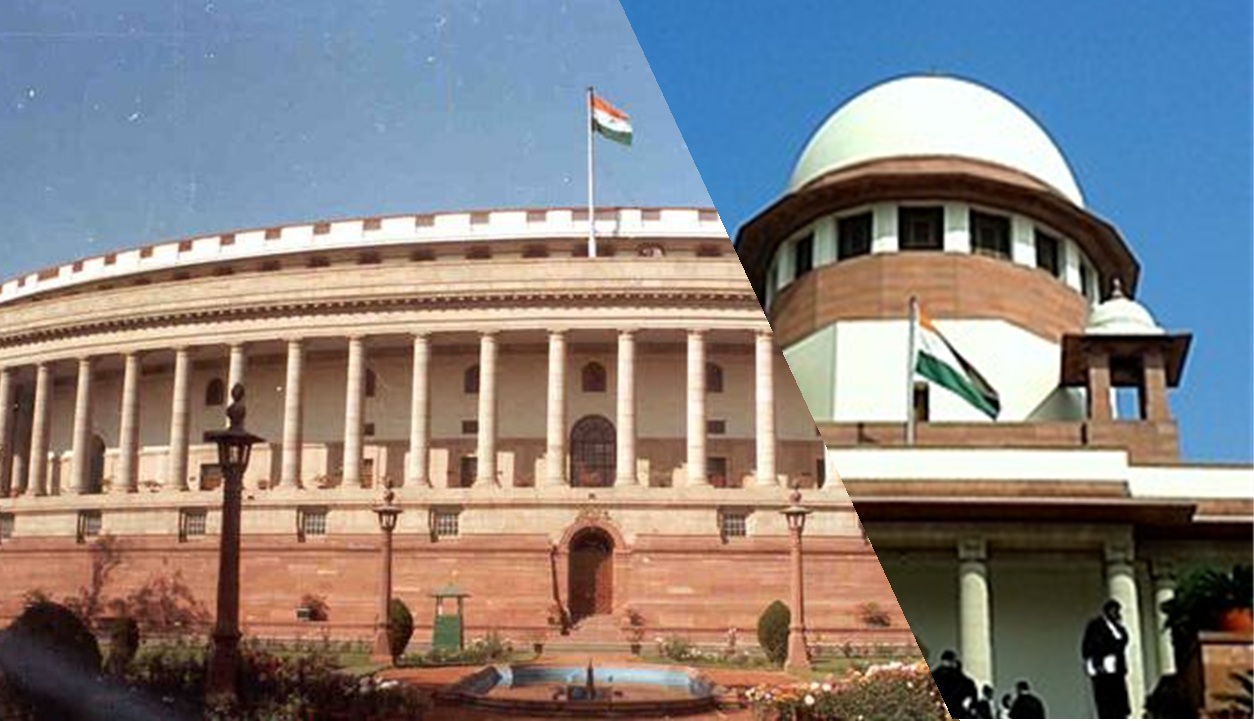
A five judge Constitution bench of the Supreme Court in the case of Public Interest Foundation v. Union of India decided upon issues pertaining to decriminalisation of politics. The petition was filed with the plea to reduce the influence of politicians with criminal antecedents or pending criminal charges in our polity. It also explored whether disqualification from the legislature can be read beyond the circumstances laid down in Article 102 of the Constitution and the circumstances laid down through law by the Parliament, primarily the Representation of People Act.

In this regard, few precedents of the Supreme Court pertinent to the issue were discussed. The Court agreed with the decision in Lily Thomas v. Union of India wherein it was held that under Article 102(1)(e) and 191(1)(e), the Parliament and the State legislature had the exclusive power to make laws to lay down the grounds on which members of the Parliament and the State legislature respectively can be disqualified. The decision in Manoj Narula v. Union of India also holds significance where the Court said that although a member cannot be prohibited from being made Minister because charges have been framed against him for an alleged offence because the Parliament by law has not provided for such a disqualification, our elected leaders should have a watchful eye in appointing them in the Council of Ministers. The Constituent Assembly had also discussed the need of people with character and integrity to work in furtherance of the Constitution.

RelatedPosts

Ram Mandir Donation Probe Faces Fresh Scrutiny

Judicial Expansion at the Apex: Centre Clears Appointment of Five Judges to Supreme Court, Strength Nearing Full Capacity

Supreme Court Verdict Crushes Opposition’s SIR Narrative, Reasserts Election Commission’s Constitutional Authority

Load More

It was argued that law makers cannot have the taint or doubts over them of breaking the law, and  they should also considered to be having a fiduciary relationship similar to other constitutional posts such as UPSC, CVC and members of civil service who undergo test of integrity and can be disqualified on ‘framing of charge’. Thus lawmakers and ministers, holding a position of high constitutional trust should be subject to rigours and strict restrictions. The presumption of innocence exists in criminal law and debarring a person with charges will only be a restriction civil in nature. Also, people charged with serious offences if allowed in the executive and legislature, the present mechanism of control for civil servants and the government machinery which is responsible for criminal prosecution ultimately lead us to a situation where such tainted legislators will be placed on a different footing than ordinary people which is a violation of Article 14 of the Constitution.

The Supreme Court however, agreeing with the government’s view, held that the prescribing grounds for disqualification are solely a legislative power under the Constitution and the Parliament has in the Representation of People Act enumerated and clearly specified multiple grounds. In the absence of legislative introduction of any new grounds, it is not for the Court to legislate and add further grounds.

The Suprme Court extensively discusses the pervasion of criminal actions and influence in politics, starting with the 1993 Mumbai blasts as a collaboration of criminal gangs, police and custom officials and their political patrons. The 244th Law Commission Report, ‘Electoral disqualifications’ comprehensively dealt with the possibility of debarring people from contesting elections, including at what stage of criminal proceeding. The court notes statistical data to elaborate on the extent of criminalisation in politics. Since 2004, 18% of all candidates had criminal cases pending against them out of which 8.4% had charges of serious offences such as murder, rape, crimes against women and under Prevention of Corruption Act. 28% of all winners had criminal cases pending and 13.5% winners had serious charges against them. Hence, a candidate charged with a serious offence had a higher probability to get elected than a counterpart without criminal record.

The Law Commission had proposed debarment from contesting at the stage of framing of charges. It reasons that conviction rates among sitting legislators is abysmally low, trials face inordinate delays and there is no deterrent to parties from giving tickets to tainted politicians. It argues that framing of chargesheet should not mean bar from contesting election, because through a chargesheet the police is only forwarding material collected in investigation to consider the provisions which can be charged against the accused. It is not tested at the anvil of cross-examination and because there is no application of judicial mind, no prima facie case is possible to be built at this stage. Even cognizance is only judicial notice of the offence without the possibility of the court to appreciate evidence according to law and be able to conclude that no prima facie case exists. In that case, the version of investigation is the only version at the stage of cognizance which would mean that determination of disqualification of a candidate will be at the hands of police authorities.

At the stage of framing of charges, a prima facie case has to be proven which means that evidence on record should raise not merely suspicion as to possibility of conviction but a ‘grave’ suspicion, in the absence of which the judge can discharge the accused. Hence, framing of charges entails substantial judicial scrutiny of whether there is enough material qua the accused and circumstances of the case to at all proceed with criminal scrutiny. Thus, framing of charges by the appropriate court was proposed as the stage to disqualify a candidate from contesting elections. Further, they recommended a cut-off period to prevent frivolous politically motivated pre-election prosecution by means of which a candidate would be disqualified only if charges in a case were framed one year before scrutiny of his nominations.

The petitioners also pleaded that political parties being central and indispensable to electoral politics, directions be given to prevent a candidate with criminal charges to contest with the symbol of a party. This shall prevent political backing to candidates with criminal antecedents.

The Supreme court rejected the above submission by the following reasoning. As per the Election Symbols Order, a candidate set up by a political party ‘shall’ choose and ‘shall’ be allotted only the symbol of that political party. Hence, by imposing an obligation on the Election Commission to allot the symbol reserved for a party to the candidate it chooses, it creates a consequent right to the candidate set up by a political party to contest on that symbol. Thus, in the absence of any disqualification with respect to criminal charges, a person cannot be denied the symbol of the political party if the party chooses him as candidate.

The Supreme court then opined that the legislature ought to enact a law debarring candidature in elections of persons charged with serious or heinous offences. It laid down directions to create awareness about criminal antecedents of candidates, among which were stating all particulars in EC form for candidature and display of information of pending criminal cases in bold letter; information to the political party about the pending cases against him; obligation on the political party to put such information on its website; the candidate and the party ought to issue a declaration in widely (at least three times) circulated newspapers in the locality about the antecedents of the candidate including publicity on electronic media.

The guidelines in the judgement seem insufficient as the quantification of publication is low and voluntary access to nomination papers or party websites by the people is limited. Criminal nexus in politics has become deeply entrenched. Every state assembly election sees thousands of crores worth of cash and liquor being seized, and some politicians even being elected from behind the bars. Further, in places like Bengal state immunity and sponsorship to coercion and political violence creates a fearful atmosphere where free voting ceases to exist.

The Supreme Court ought to have adopted the stage of framing of charges by the magistrate as prima facie criminal case against a candidate, pending disposal of which he cannot be allowed to contest. Even without having adopted new ground of disqualification at the stage of framing of charges, stringent guidelines could have been applied. These stringent conditions could have regulated the behaviour of candidates with criminal antecedents and acted as disclaimer to the people he is seeking votes from. Examples of such guidelines could be necessary declaration of the candidate’s pending criminal cases in every political gathering in his constituency, reserving one-fourth space in newspapers/pamphlets/posters in the local area to present details of his criminal cases where such ad or posters have reference to the candidate, or his political party or its star campaigners recognised by the EC or any office-bearer of the political party.

Thus, while the judgement recognises the problems with increasing number of candidates in politics with criminal background, it culminates only in academic analysis without effective measures to actually curb the problem in politics. This judgment is clearly lacking the necessary bite to cure this disease which nowadays activist version of Supreme Court is applying to several other constitutional cases. The Hon’ble Supreme Court has clearly missed this opportune time towards decriminalization of politics in India while keeping it at the mercy of legislators.

Author- Shivam Singhania (Shivam is a law student of West Bengal National University of Juridical Sciences, Kolkata)

Tags: Indian PoliticsSupreme Court
Share16TweetSend
Previous Post

Indian education system: Need for returning to Bharat

Next Post

13 Muslims convert to Hinduism in Baghpat

Related Posts

Is Lalit Modi Back? Kochi IPL Controversy Returns With Fresh Claims Over Tharoor Pushkar and Political Pressure
Analysis

Is Lalit Modi Back? Kochi IPL Controversy Returns With Fresh Claims Over Tharoor Pushkar and Political Pressure

5 June 2026

Lalit Modi has once again pulled the 2010 Kochi IPL franchise controversy back into national focus, reviving a dispute...

Bengal’s Pre-Bakrid Exodus Exposes the Infiltration Network Long Denied by the State
Analysis

Bengal’s Pre-Bakrid Exodus Exposes the Infiltration Network Long Denied by the State

27 May 2026

A silent movement unfolding across West Bengal’s border belt has suddenly exposed a controversy that remained buried beneath political...

Bengal Buries Mamata’s ‘Appeasement Model’ as Suvendu Govt Ends Imam-Muezzin Allowances
Analysis

Bengal Buries Mamata’s ‘Appeasement Model’ as Suvendu Govt Ends Imam-Muezzin Allowances

19 May 2026

The newly formed Bharatiya Janata Party government in West Bengal has announced the end of religion-based government allowances introduced...

Load More

Leave a Reply Cancel reply

Your email address will not be published. Required fields are marked *

I agree to the Terms of use and Privacy Policy.
This site is protected by reCAPTCHA and the Google Privacy Policy and Terms of Service apply.

Currently Playing

A Decade After 709 Crackdown: Remembering China's Human Rights Lawyers

A Decade After 709 Crackdown: Remembering China's Human Rights Lawyers

00:04:16

China's War on Human Rights Lawyers: The Legacy of the 709 Crackdown

00:03:57

IRAN EYES RED SEA GAMBIT

00:02:34

US- IRAN CONFLICT INTENSIFIES

00:03:05

Mass Detentions and Enforced Disappearances: The Aftermath of July 5

00:03:20
Facebook Twitter Instagram Youtube
tfipostTfipost.com
Right Wing | News Analysis | Indian Opinion
  • About us
  • Contact Us
  • Careers
  • Brand Partnerships
  • Terms of use
  • Privacy Policy
  • Sitemap

©2026 TFI Media Private Limited

No Result
View All Result
  • Premium
  • Politics
    • Analysis
    • Opinions
    • Trending
  • Economy
    • Business
    • Finance
  • Defense
    • Defence
    • Strategy
    • Weaponry
  • Geopolitics
    • Africa
    • Americas
    • Asia Pacific
    • Europe
    • South Asia
    • West Asia
  • Knowledge
    • Culture
    • History
    • Indology
  • Law
  • Lounge
    • Books
    • Cinema
    • Food
    • Health
    • Sports
    • technology
    • Travel
    • Satire
TFIPOST हिन्दी
TFIPOST Global

©2026 TFI Media Private Limited