
















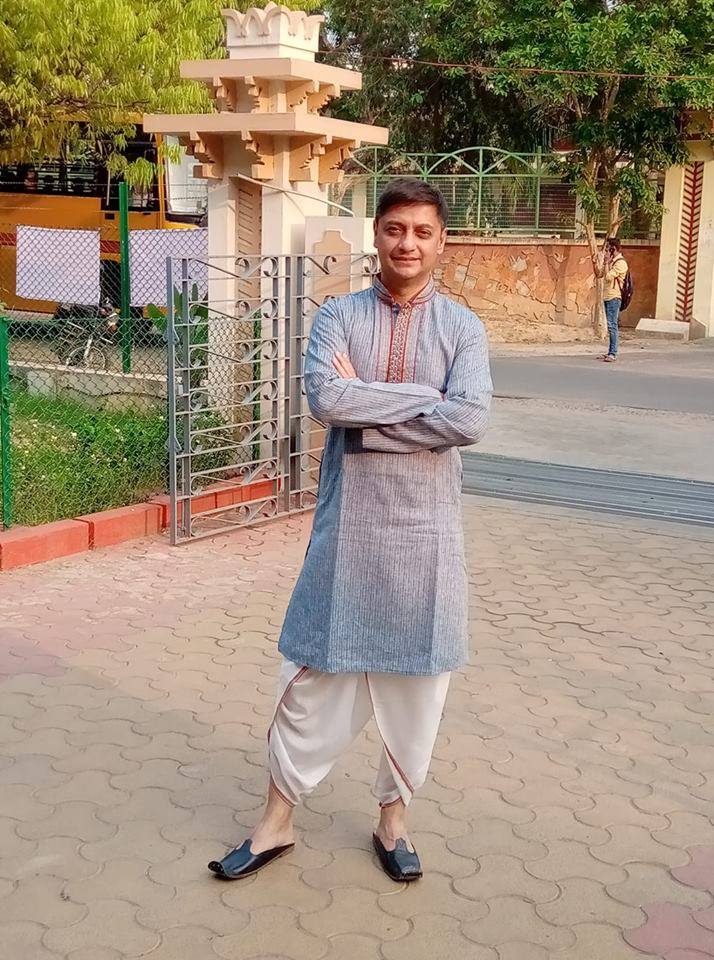
With speculation intensifying around Suvendu vacating Nandigram, political circles increasingly believe that Sanyal, currently a member of the Prime Minister’s Economic Advisory Council, could soon be handed a significant role in Bengal politics. In fact, discussions have already begun over the possibility of him becoming the state’s next Finance Minister.
A ‘Global Bengali’ Enters Bengal Politics?
So far, only five ministers have taken oath alongside Chief Minister Suvendu Adhikari. Crucial portfolios such as finance, home, education, health, industry and commerce are currently being handled by Suvendu himself.
One of the BJP government’s biggest challenges is believed to be the absence of a legislator with deep economic expertise and high-level administrative experience – particularly at a time when Bengal’s financial condition remains fragile and the state desperately needs industrial expansion and skilled employment generation.
This is precisely where Sanjeev Sanyal’s name has started gaining momentum.
Born in Kolkata, Sanyal studied at St Xavier’s and St James’ before moving to Delhi for higher education. He later went to Oxford University as a Rhodes Scholar.
He has served as Managing Director at Deutsche Bank and later became Principal Economic Adviser to India’s Finance Ministry. Between 2017 and 2022, he played a key role in drafting six editions of India’s Economic Survey. Currently, he serves as a member of Prime Minister Narendra Modi’s Economic Advisory Council with the rank of Secretary to the Government of India. He has also represented India at G7 and OECD meetings.
In many ways, Sanyal embodies the idea of a true “Global Bengali.” He has witnessed Bengal’s rise and decline from close quarters while also working at some of the world’s most influential institutions and policy-making platforms.
The BJP, after all, is no stranger to bringing experienced bureaucrats into frontline politics. External Affairs Minister S Jaishankar and Petroleum Minister Hardeep Singh Puri remain prominent examples of that model.
Economist, Historian… and Explorer
What truly separates Sanjeev Sanyal from most economists in Indian public life is his explorer’s instinct.
In January 2026, he boarded the wooden vessel INSV Kaundinya for an 18-day voyage across the Arabian Sea from Porbandar to Muscat. The ship itself was built using stitching techniques depicted in 5th-century Ajanta cave paintings.
Through storms, rain and rough seas, Sanyal shared daily updates from the middle of the ocean. Upon reaching Muscat, he remarked:
“This is not just about spending 18 days at sea. It is about a dream that has been in the making for five years.”
Beyond economics, Sanyal is also regarded as a remarkable historian. His writings and lectures often compel people to look at Indian history through a fresh lens. Much of his work has focused on reclaiming India’s civilizational narrative beyond the Mughal-colonial framework and restoring attention to indigenous historical achievements.
What Is His Vision for Bengal?
Sanyal has repeatedly spoken about Bengal’s economic decline and the urgent need to revive the state’s growth engine. Following the election results, he gave multiple interviews and wrote extensively on how Bengal can recover from decades of stagnation.
His vision is believed to revolve around infrastructure-led growth, port-driven commerce, maritime economy, urban renewal and linking education directly with industry.
For a state that possesses Haldia Port, Digha’s cable landing infrastructure, New Town’s emerging technology hub and Hooghly’s industrial belt, this is not viewed as a generic economic framework but as a Bengal-specific blueprint.
Sanyal was also seen attending Suvendu Adhikari’s swearing-in ceremony dressed in traditional Bengali attire alongside his wife
With Suvendu likely to vacate Nandigram, speculation is now intensifying that the BJP could field Sanjeev Sanyal from the constituency in the upcoming bypoll.
If that happens, Bengal may soon witness the formal political entry of a rare technocratic face — one shaped equally by economics, history and civilizational imagination.