
























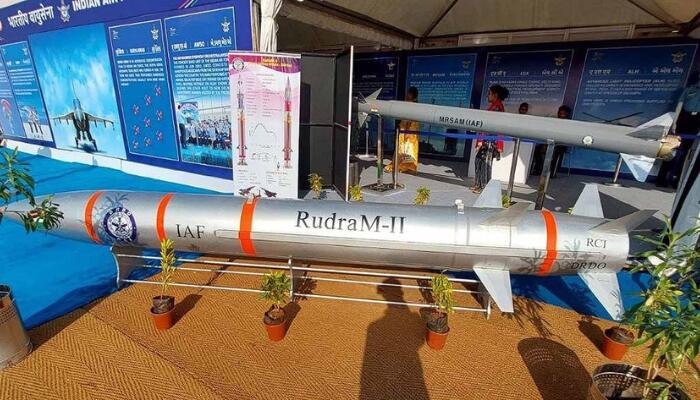
India’s indigenous defence programme has taken a significant step forward with the successful combat validation trial of the Rudram-2 anti-radiation missile, developed by the Defence Research and Development Organisation (DRDO). The missile was launched from a Sukhoi Su-30MKI platform and successfully demonstrated its ability to perform under difficult release conditions, a key requirement for operational combat readiness.
According to DRDO, the missile achieved all designated test objectives and struck its target with high precision. The trial is particularly significant because it validated the weapon’s performance under non-ideal launch parameters, replicating real-world combat scenarios where fighter aircraft may be required to release weapons during aggressive manoeuvres or in contested airspace.
Rudram-2 represents a major evolution in India’s anti-radiation capability. Designed primarily to neutralise enemy radar and electronic emission sources, the missile is intended to suppress hostile air defence systems and create safer corridors for strike aircraft. In doing so, it strengthens India’s Suppression of Enemy Air Defences (SEAD) capability, a critical component of modern air warfare doctrine.
With an estimated range of around 300 kilometres, the missile enables stand-off engagement of radar installations, allowing pilots to remain outside the most heavily defended zones. It is equipped with an Inertial Navigation System (INS) and an Imaging Infrared (IIR) seeker option, allowing it to continue tracking targets even if enemy radar operators attempt to evade detection by switching systems off, a known countermeasure in modern electronic warfare.
Beyond its primary role, Rudram-2 is also designed with secondary ground-attack capability, allowing it to engage hardened military infrastructure, airfields, and strategic installations when required. This dual-role flexibility adds operational value in dynamic conflict environments.
Technically, the missile follows a high-energy flight profile that can push it beyond Mach 5, placing it in the hypersonic regime, although this is achieved through its trajectory rather than a dedicated hypersonic propulsion system.
The Rudram programme forms part of a broader indigenous missile family, with development already progressing on next-generation variants. Rudram-3 is expected to significantly extend range and payload capacity, with early indications suggesting a reach of nearly 500 kilometres, further enhancing India’s long-range SEAD envelope.
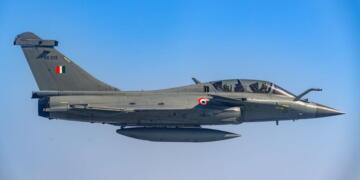
Strategically, the programme reflects India’s push towards self-reliance in critical defence technologies, reducing dependence on foreign-origin systems. The missile is expected to be integrated not only with the Su-30MKI fleet but also with platforms such as the Dassault Mirage 2000 and potentially the Dassault Rafale.
While earlier variants such as Rudram-1 did not see confirmed operational deployment in past contingencies, including references around Operation Sindoor, the latest trial success indicates that India’s next-generation anti-radiation capability is moving steadily towards frontline induction.
In strategic terms, the development of Rudram-2 is not merely a weapons test but a step towards strengthening India’s ability to degrade and dismantle enemy air defence networks at the outset of conflict, a capability that increasingly defines modern aerial warfare outcomes.
