
























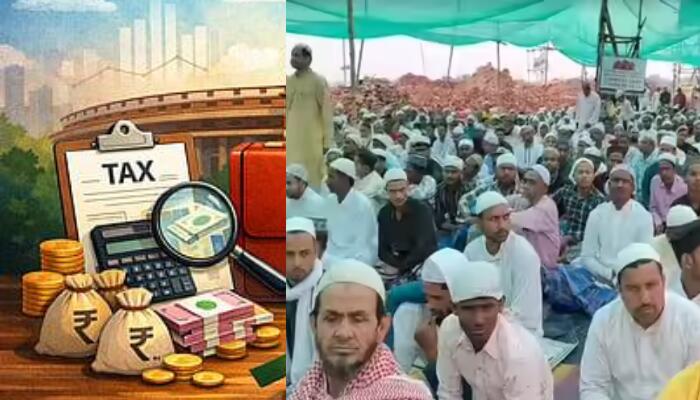
The newly formed Bharatiya Janata Party government in West Bengal has announced the end of religion-based government allowances introduced under the previous Trinamool Congress administration led by Mamata Banerjee.
The decision came only nine days after Suvendu Adhikari took the oath as Chief Minister. The move signals the BJP government’s intention to redraw Bengal’s political and welfare framework from the outset.
Women and Child Development Minister Agnimitra Paul announced the decision after a cabinet meeting. She confirmed that all schemes distributing benefits based on religion would end on June 1.
Paul said, “The government would stop all assistance schemes currently operating under religious categorisation through the Department of Minority Affairs and Madrasa Education and the Information and Cultural Affairs Department. Existing payments will continue only till the end of this month. The government will issue a fresh notification soon.”
A Welfare Scheme That Triggered Political Backlash
The clerical allowance scheme remained one of the most controversial policies of the Mamata Banerjee government. Supporters defended it as welfare support for religious figures. Critics, however, accused the TMC government of using public money for vote-bank politics.
Under the scheme, the state paid monthly honorariums to thousands of religious functionaries. After the final revision in August 2023, registered Imams received ₹3,000 every month. Muezzins and Hindu priests received ₹2,000 each.
The political controversy centred on the scale of the scheme and the imbalance in beneficiaries.
Official figures showed that around 41,205 imams and 39,028 muezzins benefited from the payouts. In comparison, the number of Hindu priests remained far lower, between 4,800 and 8,000.
The Mamata government introduced allowances for Hindu pujaris only in 2020. By then, Imam honorariums had already operated for nearly eight years. The decision came after sustained criticism and allegations of religious favouritism.
Opposition parties argued that the inclusion of priests did little to change the overall structure of the scheme. Muslim clerics still formed the overwhelming majority of beneficiaries.
BJP Pushes ‘Governance Over Handouts’
The BJP repeatedly attacked the scheme during the Assembly election campaign. The party described the payouts as “Muslim appeasement” and accused the TMC government of weakening governance through identity-based welfare politics.
Its election slogan, “Bhat, not Bhatta”, projected jobs and economic reform as alternatives to recurring subsidies.
The BJP now presents the decision as both an administrative correction and an ideological shift.
OBC List Faces Major Revision
The cabinet also approved the cancellation and revision of the state’s existing OBC list following a 2024 judgment by the Calcutta High Court.
The dispute involved the inclusion of 77 communities in the OBC category. Of them, 75 were Muslim communities added during the TMC regime.
The High Court struck down the classification process and invalidated nearly five lakh caste certificates issued since 2010. The decision triggered a major political and legal confrontation in the state.
The government has now announced a fresh panel to determine future OBC eligibility criteria.
The cabinet also approved the formation of the Seventh State Pay Commission. The commission will revise salaries for government employees, civic body staff, and workers in state-run educational institutions.
The BJP government has made its political message clear. It wants to end religion-based state patronage in Bengal. What the TMC defended as secular welfare, the new administration now calls political appeasement funded by taxpayers.