






















RelatedPosts
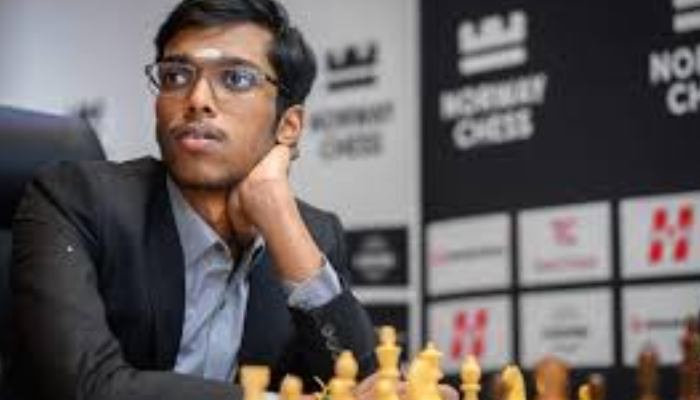
The 20-year-old Grandmaster completed his turnaround by defeating Germany’s Vincent Keymer in the final round, while Wesley So drew with Alireza Firouzja, a result that confirmed Praggnanandhaa’s victory in a tightly contested race decided by the smallest of margins. Going into the last round, So led on 15.5 points, Praggnanandhaa followed on 15, and Firouzja stood at 14.5, leaving all three in contention under the tournament’s aggressive scoring system.
From last place to title contender
Praggnanandhaa’s campaign appeared to be collapsing midway through the event. After six rounds, he was bottom of the table following consecutive classical defeats, and his chances of recovery looked remote in a field where decisive results are rare and consistency is critical.
What followed was an extraordinary reversal. He produced four consecutive classical wins, a feat at the highest level of chess that immediately transformed the standings and the narrative of the tournament.
The run began with a victory over Alireza Firouzja, followed by a statement win against Magnus Carlsen. He then carried the momentum forward with successive victories over world champion D Gukesh and Vincent Keymer, completing a remarkable sequence that propelled him into title contention and ultimately to the top of the table.
A breakthrough in Carlsen’s domain
Norway Chess has long been associated with Magnus Carlsen, the five-time world champion and multiple-time winner of the event, making Oslo one of the most demanding venues in world chess.
Praggnanandhaa’s victory carries added weight because of that context. Not only did he win in Carlsen’s home environment, he also defeated him twice in classical games during the tournament, a rare achievement at elite level and a symbolic shift in the balance of momentum at the top of the game.
Fine margins decide the final round
The title race remained open until the final games. Under the tournament format, classical wins carried three points, keeping multiple scenarios alive heading into the last round.
Praggnanandhaa’s decisive moment came as he converted a complex position against Keymer, gradually taking control through precise calculation and superior coordination in the endgame. Once So and Firouzja split points, the Indian’s victory was confirmed without the need for a tie-break.
A landmark for Indian chess
The win marks a historic milestone, making Praggnanandhaa the first Indian to win Norway Chess and reinforcing the rapid rise of India’s new generation on the global stage.
In a tournament defined by elite resistance and razor-thin margins, Praggnanandhaa’s rise from last place to champion stands as one of the most striking turnarounds in recent chess history, achieved in the very arena long dominated by Magnus Carlsen.