





















Delhi Police on Monday formally withdrew Jantar Mantar’s status as the capital’s designated protest venue, ending an arrangement that has lasted more than three decades. The decision is set out in a standing order signed by Police Commissioner Anurag Kumar. It says the Ministry of Home Affairs had constituted a committee to examine alternative venues, and that on the committee’s recommendation Jantar Mantar has been de-notified and Ramlila Ground, Burari Ground and CBD Ground in East Delhi designated instead.
A detailed and revised SOP for protests at the three venues will be issued separately, and until then organisers must follow the applicable police directions and permission requirements. The notice partially modifies the earlier Standing Order dated April 28, 2022. High security is in place in Central Delhi, with barricades at multiple locations.
The move drew sharp criticism online, including from voices who asked whether any stakeholders or organisations had been consulted before the decision. The order does not say how the committee reached its conclusion, and I couldn’t find a government explanation beyond the notice itself.
The backdrop
The decision follows a turbulent few months at the site. The Cockroach Janta Party, a youth-based movement, began protests there on June 6. In July, police rejected claims that the site had been locked, saying it remained an authorised venue for peaceful demonstrations. Last week, police reiterated that permission must be sought 10 days in advance and gatherings cannot exceed 1,000 people.
The Delhi High Court has also been drawn in. It recently questioned police for denying the Kshatriya Karni Sena permission to protest at Jantar Mantar, where the government’s counsel said no protests were being permitted because the venue is in a “sensitive area”. The judge told police that if they didn’t want protests there, they should suggest another place.
What Jantar Mantar was built for
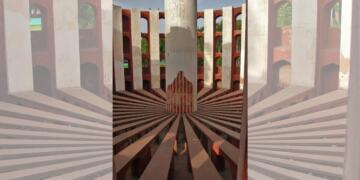
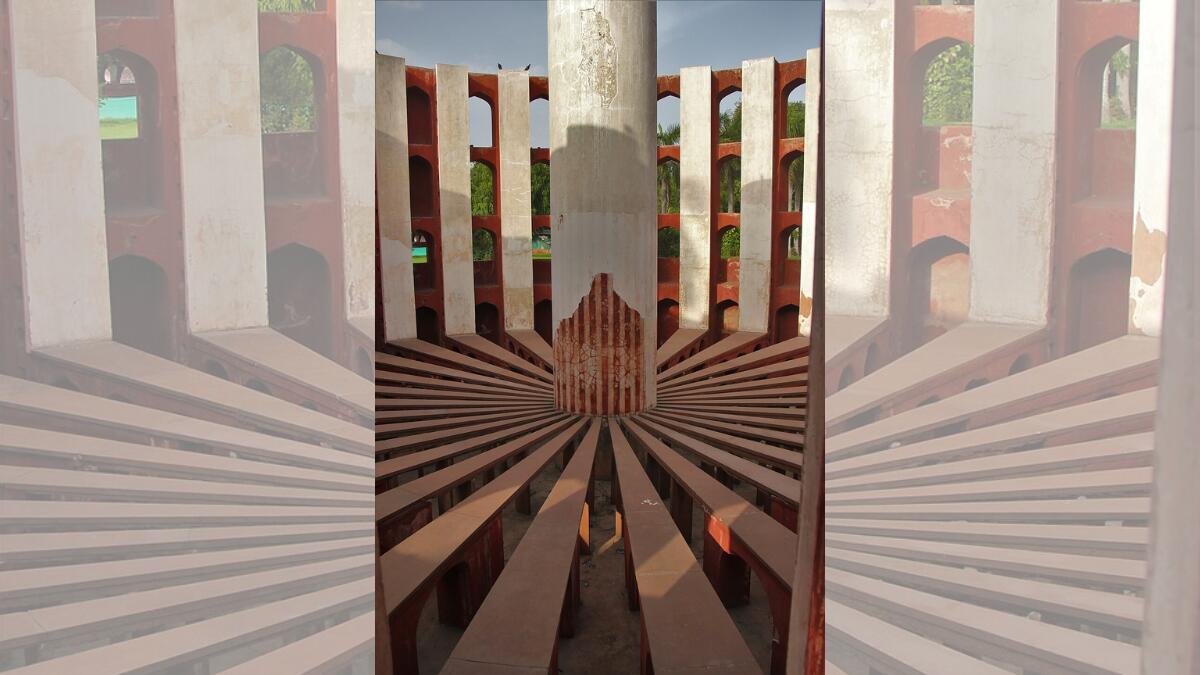
The name refers to an astronomical observatory, not a protest ground. It was built by Maharaja Sawai Jai Singh II of Jaipur, who constructed five observatories between 1724 and 1735 at Delhi, Jaipur, Ujjain, Varanasi and Mathura. The Delhi one was the first and served as a model for the larger Jaipur observatory. Its construction was completed in 1724 and is regarded as a gift to the Mughal emperor Muhammad Shah. Some accounts put the date at 1731.
Jai Singh believed accurate astronomical calculations were impossible with the small instruments then in use, so he built large masonry ones. He compiled a table of 1,018 stars in his book Zij-e-Muhammad Shahi. The monument, in other words, was a scientific project, and political gatherings were never part of its purpose.
How it became a protest site
The protests were never held inside the monument. They take place on the adjoining road, which is widely known by the monument’s name.
For the first decades after Independence, the main venue was elsewhere. The Boat Club lawns near India Gate were Delhi’s principal venue for political rallies. The turning point came in 1988. Thousands of farmers led by Mahendra Singh Tikait occupied the Boat Club lawns for days. Authorities then restricted demonstrations there on security and traffic grounds, and by 1993 Delhi Police had begun directing protests to Jantar Mantar, mainly for traffic management and crowd control.
The location suited the authorities. Unlike the wide Boat Club lawns, Jantar Mantar’s narrow, linear layout has limited entry and exit points, making crowds easier to regulate, barricade and monitor. It also sits close to Parliament and the central government district, which gave protesters visibility.
Over the years it became the setting for some of the country’s best-known agitations. In April 2011, Anna Hazare began a hunger strike there demanding a strong Lokpal law, and in 2023 leading wrestlers protested there against then Wrestling Federation of India chief Brij Bhushan Sharan Singh over harassment allegations.
Legal challenges along the way
The site’s status has been contested before. In 2017 the National Green Tribunal directed that protests there be halted, citing noise pollution, traffic congestion and its residential character. In 2018, in Mazdoor Kisan Shakti Sangathan vs Union of India, the Supreme Court ruled that protests could not be banned outright at Jantar Mantar or Boat Club, and directed authorities to balance protest rights with public order. Delhi Police’s subsequent standing order required prior permission and capped gatherings at 1,000, with Ramlila Maidan designated for 1,000 to 50,000 people and Burari for gatherings above 50,000.
What changes
On the practical side, traffic near Jantar Mantar, close to several important government buildings, may improve for the general public. Whether the new arrangement meets the Supreme Court’s 2018 requirement that protest rights be balanced with public order will likely depend on the detailed SOP still to come, and on whether the order is challenged in court. The three new venues are further from Parliament and the seat of government than Jantar Mantar, which is the proximity many protesters have valued.