























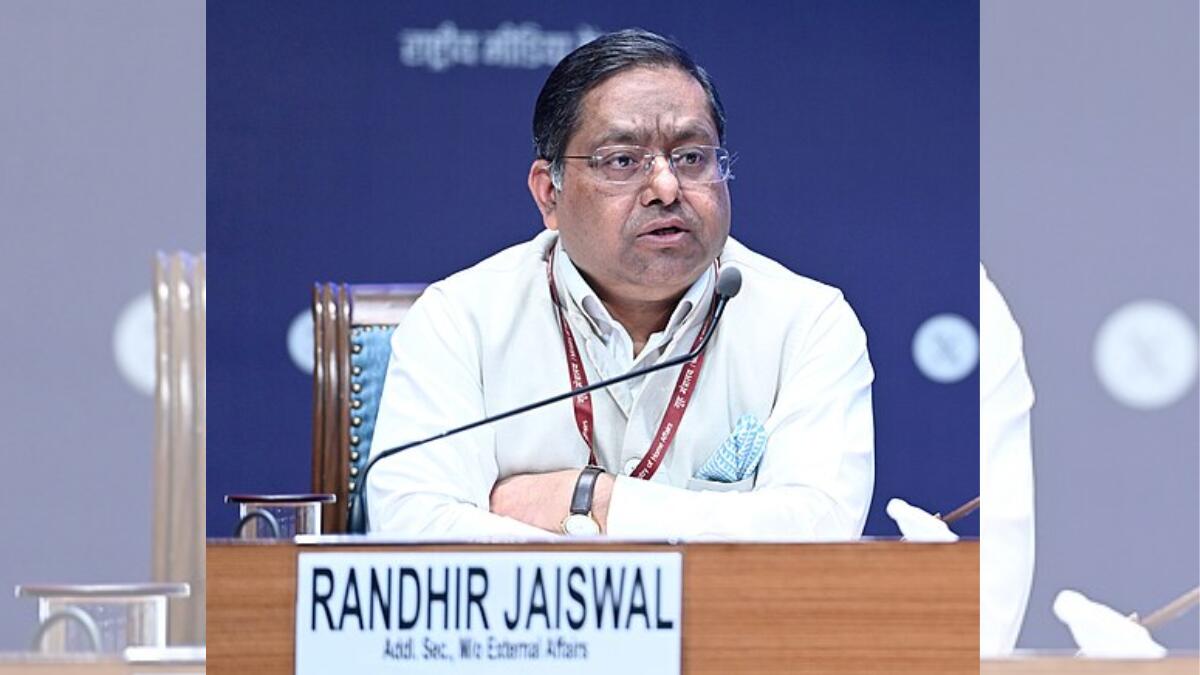
The Ministry of External Affairs put the toll plainly on Wednesday. “We have lost 22 Indian nationals in the conflict, including 14 seafarers,” spokesperson Randhir Jaiswal said, adding that three of the dead were in Saudi Arabia. New Delhi, he said, remains in close touch with Indian communities across the Gulf.
The number has climbed fast. In mid-July the ministry put the toll at 14, with two missing. Parliament was told on July 30 that 16 Indians, including 10 seafarers, had died. The latest figure adds six deaths and four seafarers to that count.
India has been neither a belligerent nor a target. The war began on February 28, when the United States and Israel attacked Iran, and Tehran answered with missiles and drones aimed at US bases, ships and major cities in the Gulf. That India is still counting its dead comes down to three structural facts.
Where Indians work
The MEA says nearly one crore Indians live and work in the region. They staff construction sites, utilities, hospitals and shops in the very states Iran has chosen to strike because they host American forces or critical infrastructure. Death has reached them without discrimination. A worker was killed when Iran hit a power and desalination plant in Kuwait. Another died in Abu Dhabi from debris of a ballistic missile launched from Iran. Oman, which is neither a combatant nor a US adversary, recorded the highest toll in the July breakdown, with eight Indians killed there, against four in the UAE.
Who mans the ships
Seafarers now make up the majority of the dead, a pattern that follows from how global shipping is staffed. Indian crews serve in large numbers on vessels registered elsewhere, owned elsewhere and chartered for cargoes in which India has no stake. When those ships enter the Strait of Hormuz, their crews carry the risk regardless of the flag. In one incident, three Indian seafarers were killed after the US Navy attacked their vessel, the MT Settebello. In another, an Indian sailor died and six Indians were injured when two tankers were struck by Iranian missiles, prompting India to summon Iranian diplomats. The fire has come from both sides of the conflict, which leaves New Delhi with no single party to hold responsible.
What passes through Hormuz
The strait carries a large share of the world’s oil, and the war has disrupted it, triggering a major global energy crisis. India, a heavy energy importer, depends on those flows. At one point 28 Indian-flagged vessels were stuck near the strait. For New Delhi, freedom of navigation is an economic necessity, which is why its statements repeatedly press for safe and unimpeded passage and a return to dialogue.
The limits of neutrality
India’s diplomacy has been built on talking to everyone. The Prime Minister has been in contact with leaders of the UAE, Qatar, Saudi Arabia, Oman, Bahrain, Jordan, Kuwait and Israel, while External Affairs Minister S Jaishankar has stayed in touch with counterparts including Iran. That breadth of relationships gives India access, but it has not bought safety for its citizens. Those in the region live and work under missile alerts irrespective of the passport they carry.
Critics in Parliament have pressed the government on preparedness, and the MEA has pointed to evacuations, a round-the-clock control room and shipping advisories. Roughly 7,000 Indians were estimated to be in Iran as of July, and more than 2,500 had already been brought out.
The broader question is how a country with a stake in peace but little leverage over the combatants protects workers whose livelihoods sit inside someone else’s war. The answer so far has been diplomacy, advisories and evacuations, none of which can stop a missile. The count has risen each time it has been updated.