







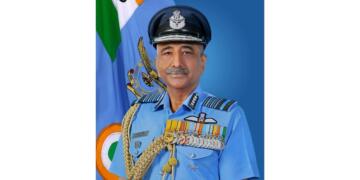
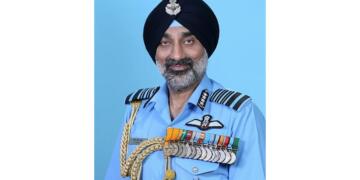












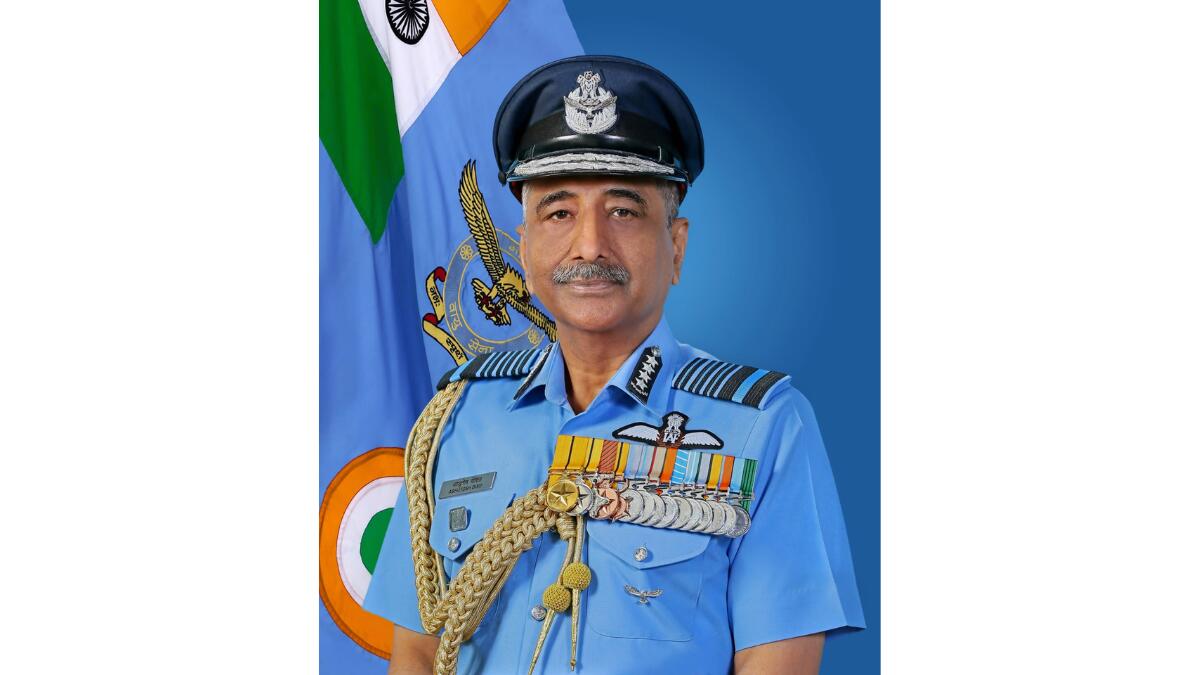
Air Chief Marshal Ashutosh Dixit assumed charge as the Indian Air Force’s (IAF) 29th Chief of the Air Staff on Saturday, succeeding Air Chief Marshal Amar Preet Singh after 42 years of service. He takes command as the force confronts lessons from Operation Sindoor, delayed Tejas fighter deliveries and a continuing shortfall in combat squadrons.
ACM Singh received a ceremonial Guard of Honour at Race Course Air Force Station before the handover. ACM Dixit previously served as Vice Chief of the Air Staff, the Ministry of Defence confirmed in its October 31 statement.
Commissioned into the fighter stream on December 6, 1986, ACM Dixit is an experimental test pilot and qualified flying instructor with more than 3,300 flying hours, according to his latest official biography. His experience includes flying Mirage-2000, Jaguar and MiG fighters, commanding a Mirage-2000 squadron and leading Air Force Station Bidar.
An alumnus of the National Defence Academy, he is also a graduate of the defence services command and staff college in Bangladesh and the national defence college in New Delhi. His decorations include the Param Vishisht Seva Medal, Ati Vishisht Seva Medal, Vayu Sena Medal and Vishisht Seva Medal.
He also participated in Operations Safed Sagar and Rakshak. His most consequential recent assignment was as chief of integrated defence staff to the chairman, chiefs of staff committee during Operation Sindoor in May 2025. The tri-service appointment involved joint military planning and coordination during India’s response to the Pahalgam terrorist attack.
The conflict underscored the importance of striking distant targets while detecting threats before they reached Indian territory. Precision weapons had fundamentally altered the relationship between distance and vulnerability, demanding deeper surveillance and near-real-time intelligence, AM Dixit said at a defence seminar in June 2025, according to The Indian Express.
His test-pilot background is especially relevant to the troubled Tejas Mk-1A programme. Dixit contributed to the initial and final operational clearance activities of the earlier Tejas Mk-1 and helped finalise Jaguar and MiG-27 upgrade projects, the ministry confirmed.
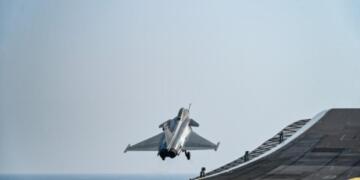
The Mk-1A remains delayed by engine supply problems and unresolved systems-integration tests. In September, AM Dixit said engines had been fitted and two or three technical issues still needed validation before induction, while stressing that testing could not be compromised, The New Indian Express reported.
The IAF has approximately 29 fighter squadrons against an authorized 42, constraining its ability to sustain operations and manage contingencies involving Pakistan and China. Replacing retiring aircraft, advancing Tejas Mk-2 and the Advanced Medium Combat Aircraft, and pursuing additional multirole fighters will demand procurement decisions and reliable deliveries.
AM Dixit also inaugurated IAF Dronathon-2026 at Pokhran, engaging domestic firms and start-ups on surveillance, autonomous systems and counter-drone technologies. Improving long-range air defence, electronic warfare, space-enabled awareness and networked command systems will be equally important.
His senior appointments include command of a forward base support unit in the Western Sector, air defence commander at Southern Air Command, senior air staff officer at South Western Air Command, deputy chief of the air staff and air officer commanding-in-chief of Central Air Command. His experience at headquarters integrated defence staff is also relevant to joint military planning and the continuing debate over theatre commands.