
















Operation Sindoor placed Air Chief Marshal Amar Preet Singh at the centre of India’s military confrontation with Pakistan, testing the Indian Air Force’s ability to deliver precision strikes while managing escalation. As Singh handed over command on Saturday after nearly 42 years of service, his tenure also stood out for an unusually public confrontation with Hindustan Aeronautics Limited (HAL) over delayed Tejas fighter deliveries.
Operation Sindoor: The defining test
Launched on May 7, 2025, following the Pahalgam terrorist attack that killed 26 people, Operation Sindoor initially targeted nine terrorist facilities in Pakistan and Pakistan-occupied Kashmir (PoK). The subsequent escalation required coordinated precision strikes, intelligence gathering, electronic warfare and integrated air defence across India’s armed forces.
Singh commanded the IAF through the confrontation, overseeing an operational effort involving fighter pilots, air-defence crews, intelligence specialists, engineers and ground personnel. The campaign demonstrated the importance of networked targeting, long-range weapons, surveillance and coordination between offensive and defensive capabilities.
The S-400 long-range air-defence system emerged as a significant element of India’s response. Singh later described it as a “game-changer” and claimed Indian forces had downed at least five Pakistani fighters and one larger aircraft, possibly an electronic intelligence or airborne early warning platform. Pakistan disputed the claims, and competing accounts of aircraft losses remain independently unresolved, Reuters reported.
Beyond battlefield performance, Singh emphasized the importance of knowing when to terminate a conflict. India ended the confrontation after achieving its counterterrorism objectives rather than prolonging hostilities for prestige, he subsequently argued.
The experience also reinforced his emphasis on combining crewed aircraft, drones, precision weapons, electronic warfare and layered air defence rather than relying excessively on any single technology.
The Tejas controversy: Refusing to compromise
Singh’s other defining challenge came from within India’s defence production system.
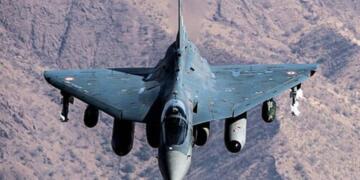
At Aero India in February 2025, he publicly questioned HAL’s ability to deliver the Tejas Mk-1A after being assured that 11 aircraft would be ready, even without engines. None met the promised standard, he said.
His criticism extended beyond missed deadlines. Aircraft displayed as Mk-1A lacked the complete weapons and operational capabilities expected of the variant, Singh argued, questioning HAL’s mission-oriented approach to production.
The IAF subsequently maintained that it would not accept Mk-1A aircraft with unresolved critical shortcomings in missile-firing capability, radar integration and electronic-warfare performance, even while allowing concessions on less essential requirements, as per reports.
The position reflected a refusal to compromise on combat readiness, not a rejection of the indigenous Tejas programme. No verified official record establishes that Singh personally rejected a particular aircraft during formal acceptance trials.
HAL cited delays in GE F404 engine deliveries alongside outstanding testing and systems-integration requirements. By September, 27 Mk-1A airframes had been assembled, but the first formal handover remained pending.
A fighter pilot’s perspective
Singh’s criticism carried particular weight because of his technical background.
Commissioned on December 21, 1984, he accumulated more than 5,000 flying hours, worked on the MiG-29 upgrade programme in Russia and directed Tejas flight-testing at the national flight test centre. He also commanded a frontline fighter squadron and airbase before becoming Air Chief in September 2024.
His final flying sortie on October 20, aboard a Kiran trainer alongside his first instructor, Wing Commander VS Kochar (retired), brought his aviation career full circle.
His successor inherits approximately 30 fighter squadrons against a sanctioned 42, delayed Tejas Mk-1A deliveries and unfinished Tejas Mk-2 and advanced medium combat arcraft programmes. Strengthening unmanned systems, modern weapons and domestic manufacturing capacity remains equally important.
An unusual farewell
Singh’s departure also carried an unusual controversy. His customary golfing-out farewell was cancelled after the Air Force sports complex on Lok Kalyan Marg closed on October 28 amid a government land-reclamation exercise.
The timing prompted speculation about the loss of a longstanding military tradition, although no verified evidence establishes that the closure specifically targeted ACM Singh.
His formal military honours continued.
Singh paid homage to fallen military personnel at the National War Memorial before receiving a ceremonial Guard of Honour from IAF personnel and handing over command after 42 years of service, the Indian Air Force confirmed in a Saturday post on its official X account.
The defence minister, Rajnath Singh, had separately hosted a farewell, acknowledging his leadership during Operation Sindoor.
Air Chief Marshal Ashutosh Dixit now inherits the lessons of Sindoor and the unfinished modernization agenda.