






















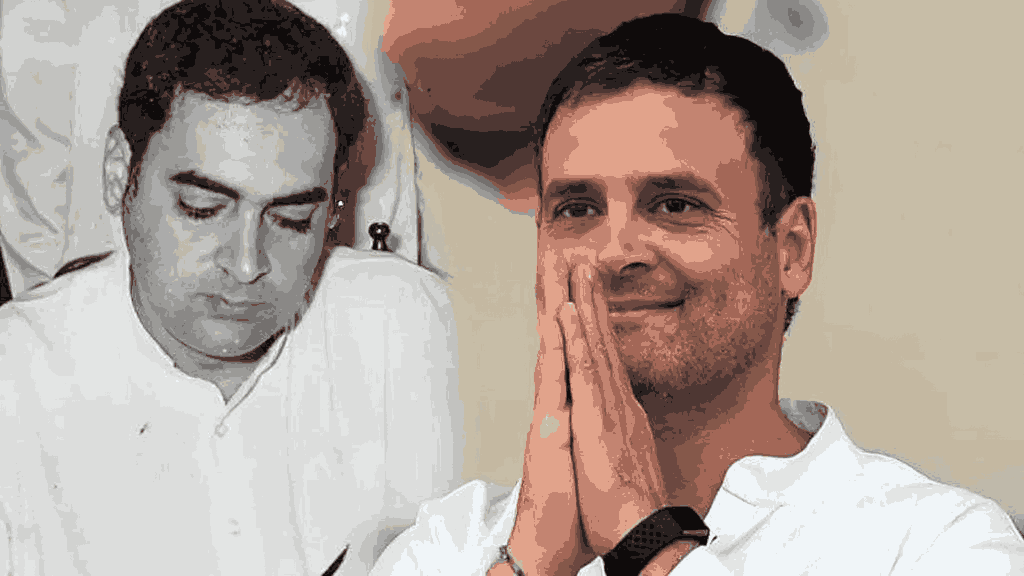
Rahul Gandhi has repeatedly accused the Election Commission of facilitating alleged vote theft and has demanded the resignation of Chief Election Commissioner Gyanesh Kumar. On October 11, he announced a march to the Supreme Court, scheduled for October 12, seeking to submit a memorandum to the Chief Justice of India. His demands included halting the Special Intensive Revision (SIR) of electoral rolls. The Congress leader has argued that the integrity of voter lists is fundamental to the legitimacy of elections and the democratic mandate.
The historical comparison raised by The Commune concerns the Electoral Amendment introduced during Rajiv Gandhi’s tenure. The legislation amended Article 326 of the Constitution, which governs elections to the Lok Sabha and state legislative assemblies on the basis of adult suffrage. By reducing the voting age to 18, the government brought millions of young Indians into the electoral process, making the change one of the significant expansions of voting rights in independent India.
The Constitution Amendment Bill was introduced in the Lok Sabha on December 13, 1988. Parliament debated and passed it over December 14 and 15, before the Rajya Sabha approved it on December 20. Presidential assent followed on March 28, 1989. The legislative timeline demonstrates that the Lok Sabha completed its consideration of the bill within a short period, although the entire parliamentary process extended beyond two days.
The Election Commission of India’s historical account records that approximately 3.57 crore people aged between 18 and 21 were added to the electorate ahead of the November 1989 general election. The Electoral Amendment therefore had a substantial impact on the size and composition of the electorate, giving young adults a formal voice in choosing their representatives.
Critics have questioned whether the timing of the reform was influenced by political calculations. Rajiv Gandhi’s government was facing mounting challenges before the 1989 general election, including the departure of prominent political figures such as V.P. Singh. The proximity of the reform to the election has consequently invited debate over the government’s motives. However, the chronology alone does not establish that the amendment was designed to secure an electoral advantage for Congress.
The election results themselves provide an important qualification. Congress, which had won 414 Lok Sabha seats in 1984, saw its tally fall to 197 in 1989. The National Front subsequently formed a government under V.P. Singh. The Electoral Amendment did not guarantee an electoral victory for the party that introduced it, nor does the available historical record establish that newly enfranchised voters determined the outcome.
The controversy surrounding Rahul Gandhi’s present campaign concerns a different issue. The SIR process involves the verification and revision of electoral rolls, while the 61st Constitutional Amendment expanded voting rights by lowering the minimum voting age. The two developments are not equivalent, and the historical example does not independently disprove allegations of irregularities in the current revision exercise.
Nevertheless, the comparison raises a broader question about consistency in political arguments. When Congress demands rigorous scrutiny of electoral decisions made by the present authorities, critics argue that previous Congress governments should be examined under the same standards of transparency, accountability and parliamentary deliberation. The Electoral Amendment offers a historical example of a consequential electoral change undertaken through a relatively compressed legislative timetable.
At the same time, speed alone cannot determine whether a law is democratic or undemocratic. A reform that expands the franchise may strengthen democratic participation, while an administrative exercise that removes eligible voters without adequate safeguards could undermine it. Each measure must be evaluated according to its legal provisions, implementation, evidence and consequences.
The debate ultimately highlights the need to separate political criticism from demonstrable facts. Rahul Gandhi’s allegations against the Election Commission require examination on their own merits, just as the decisions of earlier governments deserve historical scrutiny. The Electoral Amendment of 1988 remains a landmark expansion of voting rights, but its passage also provides an opportunity to discuss how Parliament balances legislative efficiency with meaningful deliberation.
For a democracy of India’s size, the central principle must remain consistent: electoral reforms should protect the right to vote, strengthen public confidence and withstand independent scrutiny, regardless of which political party introduces them.