






TFIPOST हिन्दी
TFIPOST Global
Tfipost.com
Tfipost.com
No Result
View All Result
  • Premium
  • Politics
    • All
    • Analysis
    • Opinions
    • Trending
    From pilgrimage to metros, now without the wait

    From Kashi to Mumbai and Ayodhya to Pune: Modi Expands Rail Network with New Amrit Bharat Express Services

    Why is Making a Jet Engine so Hard | The failure of Kaveri

    Why is Making a Jet Engine so Hard | The failure of Kaveri

    Rajnath Singh at SCO, reaffirming India’s zero-tolerance stand on terrorism.

    “No More Double Standards”: Rajnath Singh’s SCO Message Rewrites India’s Terror Response Playbook

    Nepal PM Faces Fresh Controversy as Church Demolition Row Triggers Political Storm

    Nepal PM Faces Fresh Controversy as Church Demolition Row Triggers Political Storm

    • Analysis
    • Opinions
    • Trending
  • Economy
    • All
    • Business
    • Economy1
    • Finance
    India–New Zealand FTA signed in New Delhi, marking a “once in a lifetime” moment in trade ties.

    India, New Zealand Seal Fast-Tracked Trade Pact to Expand Duty-Free Access, Jobs and $5 Billion Trade Target

    Ahmadis in Pakistan: From Faith to Marginalisation Under Law and Society

    Ahmadis in Pakistan: From Faith to Marginalisation Under Law and Society

    Open Demat Account with Zero Annual Maintenance Charges What to Look For

    Open Demat Account with Zero Annual Maintenance Charges What to Look For

    Blood in the Meadows: How the Pahalgam Terror Attack Exposed Calculated Targeting of Civilians in Kashmir

    Blood in the Meadows: How the Pahalgam Terror Attack Exposed Calculated Targeting of Civilians in Kashmir

    • Business
    • Finance
  • Defense
    • All
    • Defence
    • Strategy
    • Weaponry
    Why is Making a Jet Engine so Hard | The failure of Kaveri

    Why is Making a Jet Engine so Hard | The failure of Kaveri

    Rajnath Singh at SCO, reaffirming India’s zero-tolerance stand on terrorism.

    “No More Double Standards”: Rajnath Singh’s SCO Message Rewrites India’s Terror Response Playbook

    Recovered arms and arrests have intensified scrutiny on a suspected cross-border terror network.

    Pakistan’s Proxy War Faces a Setback as Delhi Terror Plot is Crushed, 18 Weapons Seized

    The scars of Pahalgam endure, even as the nation moves forward

    Pahalgam Anniversary: Modi Signals Firm National Stand as India Reasserts Anti-Terror Resolve

    • Defence
    • Strategy
    • Weaponry
  • Geopolitics
    • All
    • Africa
    • Americas
    • Asia Pacific
    • Europe
    • South Asia
    • West Asia
    When law becomes an instrument of exclusion, persecution moves far beyond the courtroom.

    Ahmadis in Pakistan: From Faith to Marginalisation Under Law and Society

    When uranium becomes strategy, India moves first.

    India’s $4 Billion Uranium Coup with Kazakhstan Rewrites the Global Nuclear Balance

    “Fixing the World”: What a Century of Big Ideas Reveals About Us

    “Fixing the World”: What a Century of Big Ideas Reveals About Us

    Pakistan Tried to Bury an NYT Report. It Only Exposed Asim Munir’s Panic

    Pakistan Tried to Bury an NYT Report. It Only Exposed Asim Munir’s Panic

    • Africa
    • Americas
    • Asia Pacific
    • Europe
    • South Asia
    • West Asia
  • Knowledge
    • All
    • Culture
    • Education
    • History
    • Indology
    Chants of ‘Jai Badri Vishal’ Echo as Badrinath Portals Open; All Four Dhams Now Accessible to Pilgrims

    Chants of ‘Jai Badri Vishal’ Echo as Badrinath Portals Open; All Four Dhams Now Accessible to Pilgrims

    Kedarnath Dham Portals Open for Devotees After 181 Days Amid Vedic Chants, Traditional Rituals

    Kedarnath Dham Portals Open for Devotees After 181 Days Amid Vedic Chants, Traditional Rituals

    Sardar Patel and Amit Shah

    Sardar Patel’s 1947 Blueprint on Minority Quotas Resurfaces as Reservation Debate Returns to Centre Stage

    The 1973 Constitution and ‘Bhutto’ the Man Who Made It: What Pakistan Owes and What It Destroyed

    The 1973 Constitution and ‘Bhutto’ the Man Who Made It: What Pakistan Owes and What It Destroyed

    • Culture
    • History
    • Indology
  • Law
  • Lounge
    • All
    • Books
    • Cinema
    • Entertainment
    • Food
    • Games
    • Health
    • Lifestyle
    • Satire
    • Sports
    • technology
    • Travel
    When regulation meets the algorithm

    India Tightens Digital Control as Online Blocking Orders Surge to 24,300 Amid AI Deepfake Trend

    Digital Data Collection In India

    India’s Data Reset Begins: Census 2027 to Become First Fully Digital Population Count

    5 Facilities in Bengaluru Specializing in Mental Health Treatment for Those with Cancer

    5 Facilities in Bengaluru Specializing in Mental Health Treatment for Those with Cancer

    UNESCO World Book Day and Copyright Day

    World Book Day 2026: UNESCO’s Multilingual Push Aligns with India’s Deep Literary Continuum

    • Books
    • Cinema
    • Food
    • Health
    • Sports
    • technology
    • Travel
    • Satire
Tfipost.com
  • Premium
  • Politics
    • All
    • Analysis
    • Opinions
    • Trending
    From pilgrimage to metros, now without the wait

    From Kashi to Mumbai and Ayodhya to Pune: Modi Expands Rail Network with New Amrit Bharat Express Services

    Why is Making a Jet Engine so Hard | The failure of Kaveri

    Why is Making a Jet Engine so Hard | The failure of Kaveri

    Rajnath Singh at SCO, reaffirming India’s zero-tolerance stand on terrorism.

    “No More Double Standards”: Rajnath Singh’s SCO Message Rewrites India’s Terror Response Playbook

    Nepal PM Faces Fresh Controversy as Church Demolition Row Triggers Political Storm

    Nepal PM Faces Fresh Controversy as Church Demolition Row Triggers Political Storm

    • Analysis
    • Opinions
    • Trending
  • Economy
    • All
    • Business
    • Economy1
    • Finance
    India–New Zealand FTA signed in New Delhi, marking a “once in a lifetime” moment in trade ties.

    India, New Zealand Seal Fast-Tracked Trade Pact to Expand Duty-Free Access, Jobs and $5 Billion Trade Target

    Ahmadis in Pakistan: From Faith to Marginalisation Under Law and Society

    Ahmadis in Pakistan: From Faith to Marginalisation Under Law and Society

    Open Demat Account with Zero Annual Maintenance Charges What to Look For

    Open Demat Account with Zero Annual Maintenance Charges What to Look For

    Blood in the Meadows: How the Pahalgam Terror Attack Exposed Calculated Targeting of Civilians in Kashmir

    Blood in the Meadows: How the Pahalgam Terror Attack Exposed Calculated Targeting of Civilians in Kashmir

    • Business
    • Finance
  • Defense
    • All
    • Defence
    • Strategy
    • Weaponry
    Why is Making a Jet Engine so Hard | The failure of Kaveri

    Why is Making a Jet Engine so Hard | The failure of Kaveri

    Rajnath Singh at SCO, reaffirming India’s zero-tolerance stand on terrorism.

    “No More Double Standards”: Rajnath Singh’s SCO Message Rewrites India’s Terror Response Playbook

    Recovered arms and arrests have intensified scrutiny on a suspected cross-border terror network.

    Pakistan’s Proxy War Faces a Setback as Delhi Terror Plot is Crushed, 18 Weapons Seized

    The scars of Pahalgam endure, even as the nation moves forward

    Pahalgam Anniversary: Modi Signals Firm National Stand as India Reasserts Anti-Terror Resolve

    • Defence
    • Strategy
    • Weaponry
  • Geopolitics
    • All
    • Africa
    • Americas
    • Asia Pacific
    • Europe
    • South Asia
    • West Asia
    When law becomes an instrument of exclusion, persecution moves far beyond the courtroom.

    Ahmadis in Pakistan: From Faith to Marginalisation Under Law and Society

    When uranium becomes strategy, India moves first.

    India’s $4 Billion Uranium Coup with Kazakhstan Rewrites the Global Nuclear Balance

    “Fixing the World”: What a Century of Big Ideas Reveals About Us

    “Fixing the World”: What a Century of Big Ideas Reveals About Us

    Pakistan Tried to Bury an NYT Report. It Only Exposed Asim Munir’s Panic

    Pakistan Tried to Bury an NYT Report. It Only Exposed Asim Munir’s Panic

    • Africa
    • Americas
    • Asia Pacific
    • Europe
    • South Asia
    • West Asia
  • Knowledge
    • All
    • Culture
    • Education
    • History
    • Indology
    Chants of ‘Jai Badri Vishal’ Echo as Badrinath Portals Open; All Four Dhams Now Accessible to Pilgrims

    Chants of ‘Jai Badri Vishal’ Echo as Badrinath Portals Open; All Four Dhams Now Accessible to Pilgrims

    Kedarnath Dham Portals Open for Devotees After 181 Days Amid Vedic Chants, Traditional Rituals

    Kedarnath Dham Portals Open for Devotees After 181 Days Amid Vedic Chants, Traditional Rituals

    Sardar Patel and Amit Shah

    Sardar Patel’s 1947 Blueprint on Minority Quotas Resurfaces as Reservation Debate Returns to Centre Stage

    The 1973 Constitution and ‘Bhutto’ the Man Who Made It: What Pakistan Owes and What It Destroyed

    The 1973 Constitution and ‘Bhutto’ the Man Who Made It: What Pakistan Owes and What It Destroyed

    • Culture
    • History
    • Indology
  • Law
  • Lounge
    • All
    • Books
    • Cinema
    • Entertainment
    • Food
    • Games
    • Health
    • Lifestyle
    • Satire
    • Sports
    • technology
    • Travel
    When regulation meets the algorithm

    India Tightens Digital Control as Online Blocking Orders Surge to 24,300 Amid AI Deepfake Trend

    Digital Data Collection In India

    India’s Data Reset Begins: Census 2027 to Become First Fully Digital Population Count

    5 Facilities in Bengaluru Specializing in Mental Health Treatment for Those with Cancer

    5 Facilities in Bengaluru Specializing in Mental Health Treatment for Those with Cancer

    UNESCO World Book Day and Copyright Day

    World Book Day 2026: UNESCO’s Multilingual Push Aligns with India’s Deep Literary Continuum

    • Books
    • Cinema
    • Food
    • Health
    • Sports
    • technology
    • Travel
    • Satire
No Result
View All Result
Tfipost.com
Tfipost.com
No Result
View All Result
  • Premium
  • Politics
  • Economy
  • Defense
  • Geopolitics
  • Knowledge
  • Law
  • Lounge

Decriminalisation of Politics: A Passive approach by an activist Supreme Court

Guest Author by Guest Author
3 October 2018
in Analysis
Decriminalisation of Politics: A Passive approach by an activist Supreme Court
Share on FacebookShare on X

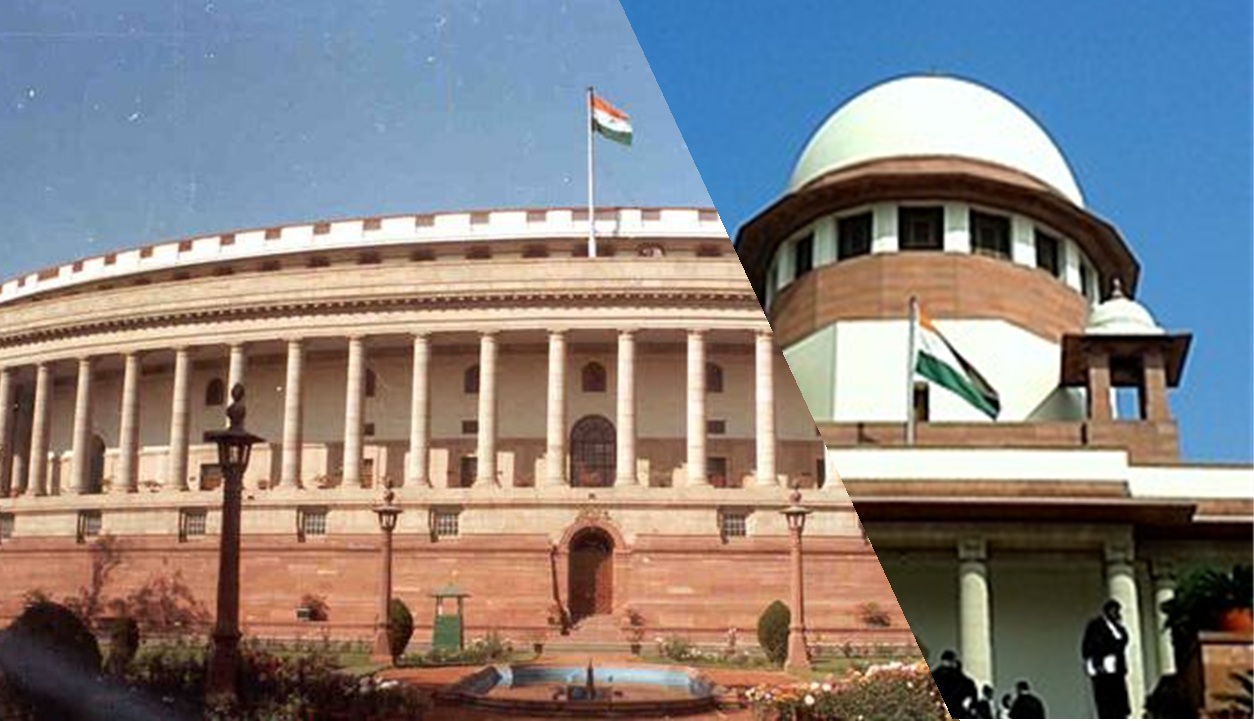
A five judge Constitution bench of the Supreme Court in the case of Public Interest Foundation v. Union of India decided upon issues pertaining to decriminalisation of politics. The petition was filed with the plea to reduce the influence of politicians with criminal antecedents or pending criminal charges in our polity. It also explored whether disqualification from the legislature can be read beyond the circumstances laid down in Article 102 of the Constitution and the circumstances laid down through law by the Parliament, primarily the Representation of People Act.

In this regard, few precedents of the Supreme Court pertinent to the issue were discussed. The Court agreed with the decision in Lily Thomas v. Union of India wherein it was held that under Article 102(1)(e) and 191(1)(e), the Parliament and the State legislature had the exclusive power to make laws to lay down the grounds on which members of the Parliament and the State legislature respectively can be disqualified. The decision in Manoj Narula v. Union of India also holds significance where the Court said that although a member cannot be prohibited from being made Minister because charges have been framed against him for an alleged offence because the Parliament by law has not provided for such a disqualification, our elected leaders should have a watchful eye in appointing them in the Council of Ministers. The Constituent Assembly had also discussed the need of people with character and integrity to work in furtherance of the Constitution.

RelatedPosts

Gauhati HC Dismantles Pawan Khera’s Defence, Backs Custodial Probe

SC Denies Pawan Khera Relief, Flags ‘Forum Shopping’ and Aadhaar Row, Sends Him to Assam Court

Supreme Court Backs EC’s Bengal Officer Reshuffle Ahead of Polls, Keeps Larger Legal Issue Open

Load More

It was argued that law makers cannot have the taint or doubts over them of breaking the law, and  they should also considered to be having a fiduciary relationship similar to other constitutional posts such as UPSC, CVC and members of civil service who undergo test of integrity and can be disqualified on ‘framing of charge’. Thus lawmakers and ministers, holding a position of high constitutional trust should be subject to rigours and strict restrictions. The presumption of innocence exists in criminal law and debarring a person with charges will only be a restriction civil in nature. Also, people charged with serious offences if allowed in the executive and legislature, the present mechanism of control for civil servants and the government machinery which is responsible for criminal prosecution ultimately lead us to a situation where such tainted legislators will be placed on a different footing than ordinary people which is a violation of Article 14 of the Constitution.

The Supreme Court however, agreeing with the government’s view, held that the prescribing grounds for disqualification are solely a legislative power under the Constitution and the Parliament has in the Representation of People Act enumerated and clearly specified multiple grounds. In the absence of legislative introduction of any new grounds, it is not for the Court to legislate and add further grounds.

The Suprme Court extensively discusses the pervasion of criminal actions and influence in politics, starting with the 1993 Mumbai blasts as a collaboration of criminal gangs, police and custom officials and their political patrons. The 244th Law Commission Report, ‘Electoral disqualifications’ comprehensively dealt with the possibility of debarring people from contesting elections, including at what stage of criminal proceeding. The court notes statistical data to elaborate on the extent of criminalisation in politics. Since 2004, 18% of all candidates had criminal cases pending against them out of which 8.4% had charges of serious offences such as murder, rape, crimes against women and under Prevention of Corruption Act. 28% of all winners had criminal cases pending and 13.5% winners had serious charges against them. Hence, a candidate charged with a serious offence had a higher probability to get elected than a counterpart without criminal record.

The Law Commission had proposed debarment from contesting at the stage of framing of charges. It reasons that conviction rates among sitting legislators is abysmally low, trials face inordinate delays and there is no deterrent to parties from giving tickets to tainted politicians. It argues that framing of chargesheet should not mean bar from contesting election, because through a chargesheet the police is only forwarding material collected in investigation to consider the provisions which can be charged against the accused. It is not tested at the anvil of cross-examination and because there is no application of judicial mind, no prima facie case is possible to be built at this stage. Even cognizance is only judicial notice of the offence without the possibility of the court to appreciate evidence according to law and be able to conclude that no prima facie case exists. In that case, the version of investigation is the only version at the stage of cognizance which would mean that determination of disqualification of a candidate will be at the hands of police authorities.

At the stage of framing of charges, a prima facie case has to be proven which means that evidence on record should raise not merely suspicion as to possibility of conviction but a ‘grave’ suspicion, in the absence of which the judge can discharge the accused. Hence, framing of charges entails substantial judicial scrutiny of whether there is enough material qua the accused and circumstances of the case to at all proceed with criminal scrutiny. Thus, framing of charges by the appropriate court was proposed as the stage to disqualify a candidate from contesting elections. Further, they recommended a cut-off period to prevent frivolous politically motivated pre-election prosecution by means of which a candidate would be disqualified only if charges in a case were framed one year before scrutiny of his nominations.

The petitioners also pleaded that political parties being central and indispensable to electoral politics, directions be given to prevent a candidate with criminal charges to contest with the symbol of a party. This shall prevent political backing to candidates with criminal antecedents.

The Supreme court rejected the above submission by the following reasoning. As per the Election Symbols Order, a candidate set up by a political party ‘shall’ choose and ‘shall’ be allotted only the symbol of that political party. Hence, by imposing an obligation on the Election Commission to allot the symbol reserved for a party to the candidate it chooses, it creates a consequent right to the candidate set up by a political party to contest on that symbol. Thus, in the absence of any disqualification with respect to criminal charges, a person cannot be denied the symbol of the political party if the party chooses him as candidate.

The Supreme court then opined that the legislature ought to enact a law debarring candidature in elections of persons charged with serious or heinous offences. It laid down directions to create awareness about criminal antecedents of candidates, among which were stating all particulars in EC form for candidature and display of information of pending criminal cases in bold letter; information to the political party about the pending cases against him; obligation on the political party to put such information on its website; the candidate and the party ought to issue a declaration in widely (at least three times) circulated newspapers in the locality about the antecedents of the candidate including publicity on electronic media.

The guidelines in the judgement seem insufficient as the quantification of publication is low and voluntary access to nomination papers or party websites by the people is limited. Criminal nexus in politics has become deeply entrenched. Every state assembly election sees thousands of crores worth of cash and liquor being seized, and some politicians even being elected from behind the bars. Further, in places like Bengal state immunity and sponsorship to coercion and political violence creates a fearful atmosphere where free voting ceases to exist.

The Supreme Court ought to have adopted the stage of framing of charges by the magistrate as prima facie criminal case against a candidate, pending disposal of which he cannot be allowed to contest. Even without having adopted new ground of disqualification at the stage of framing of charges, stringent guidelines could have been applied. These stringent conditions could have regulated the behaviour of candidates with criminal antecedents and acted as disclaimer to the people he is seeking votes from. Examples of such guidelines could be necessary declaration of the candidate’s pending criminal cases in every political gathering in his constituency, reserving one-fourth space in newspapers/pamphlets/posters in the local area to present details of his criminal cases where such ad or posters have reference to the candidate, or his political party or its star campaigners recognised by the EC or any office-bearer of the political party.

Thus, while the judgement recognises the problems with increasing number of candidates in politics with criminal background, it culminates only in academic analysis without effective measures to actually curb the problem in politics. This judgment is clearly lacking the necessary bite to cure this disease which nowadays activist version of Supreme Court is applying to several other constitutional cases. The Hon’ble Supreme Court has clearly missed this opportune time towards decriminalization of politics in India while keeping it at the mercy of legislators.
Author- Shivam Singhania (Shivam is a law student of West Bengal National University of Juridical Sciences, Kolkata)

Tags: Indian PoliticsSupreme Court
Share16TweetSend
Previous Post

Indian education system: Need for returning to Bharat

Next Post

13 Muslims convert to Hinduism in Baghpat

Related Posts

‘Draft’ Slip Lands Postman Pakistan PM in Trouble, Sparks US Influence Debate During West Asia Crisis
Analysis

‘Draft’ Slip Lands Postman Pakistan PM in Trouble, Sparks US Influence Debate During West Asia Crisis

9 April 2026

Pakistan Prime Minister Shehbaz Sharif, already known for sparking controversy and often becoming the subject of online ridicule, has...

Iran Slaps $2 Million Toll on Strait of Hormuz, Global Oil Market Now Up for Access for Tehran
Analysis

Iran Slaps $2 Million Toll on Strait of Hormuz, Global Oil Market Now Up for Access for Tehran

8 April 2026

Iran announced that it will charge a $2 million fee on foreign vessels traversing the strategically vital Strait of...

France’s Rafale Strategy Faces Global Pushback: UAE Walks Away, India Presses for Access, Germany Challenges FCAS
Analysis

France’s Rafale Strategy Faces Global Pushback: UAE Walks Away, India Presses for Access, Germany Challenges FCAS

7 April 2026

France’s reputation as a fiercely independent military aviation power is now facing a new kind of test, not on...

Load More

Leave a Reply Cancel reply

Your email address will not be published. Required fields are marked *

I agree to the Terms of use and Privacy Policy.
This site is protected by reCAPTCHA and the Google Privacy Policy and Terms of Service apply.

Currently Playing

From Runways to Warships: India’s Firefighting Warrior Built for Bases & Battles| IAF | VayuShakti

From Runways to Warships: India’s Firefighting Warrior Built for Bases & Battles| IAF | VayuShakti

00:05:40

Ethanol, EVs and Solar- How India’s Energy Game Is Changing | Modi on LPG & Crude Oil | war| Hormuz

00:05:21

Truth of IRIS Dena: 8 Days That Changed Narrative | War zone Reality, Not an Indian Navy Exercise

00:08:02

300 Million Euros for SCALP: Strategic Necessity or Costly Dependency on France300

00:04:06

Tejas Mk1A: 19th aircraft coupled but Not Delivered: What Is Holding Back the IAF Induction?

00:07:21
Facebook Twitter Instagram Youtube
tfipostTfipost.com
Right Wing | News Analysis | Indian Opinion
  • About us
  • Contact Us
  • Careers
  • Brand Partnerships
  • Terms of use
  • Privacy Policy
  • Sitemap

©2026 TFI Media Private Limited

No Result
View All Result
  • Premium
  • Politics
    • Analysis
    • Opinions
    • Trending
  • Economy
    • Business
    • Finance
  • Defense
    • Defence
    • Strategy
    • Weaponry
  • Geopolitics
    • Africa
    • Americas
    • Asia Pacific
    • Europe
    • South Asia
    • West Asia
  • Knowledge
    • Culture
    • History
    • Indology
  • Law
  • Lounge
    • Books
    • Cinema
    • Food
    • Health
    • Sports
    • technology
    • Travel
    • Satire
TFIPOST हिन्दी
TFIPOST Global

©2026 TFI Media Private Limited