





















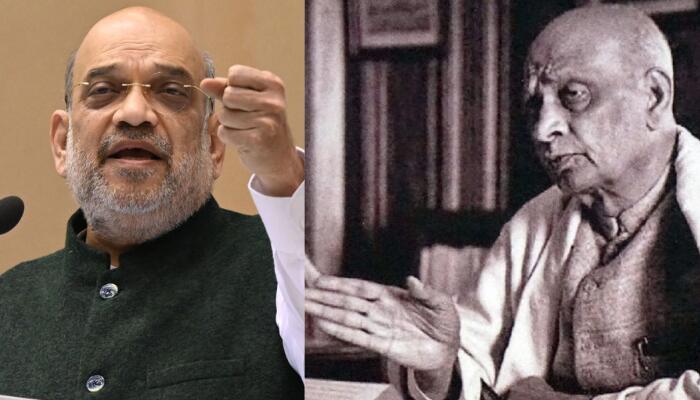
Sardar Vallabhbhai Patel’s 1947 intervention on minority representation in India’s Constituent Assembly has returned to the centre of political debate, as contemporary discussions on reservation once again revisit the founding design of India’s electoral and social justice framework.
As Chairman of the Advisory Committee on Minority Rights, Patel presented a landmark report in August 1947 that shaped India’s early constitutional approach to representation. The committee recommended the abolition of separate electorates, the adoption of joint electorates, and the reservation of seats strictly based on population, rejecting weightage-based political advantage for any community.
The framework also provided that minorities with reserved seats could contest general constituencies, reflecting an attempt to balance safeguards with integration within a unified democratic system. The underlying constitutional philosophy, as reflected in the Constituent Assembly debates, was to prevent communalisation of electoral politics while ensuring representation through proportional principles.
However, the recommendations were not without strong opposition. Members such as B. Pocker Sahib Bahadur and Mohammad Ismail Khan argued for stronger minority protections and raised concerns over dilution of political safeguards. On the other side, leaders including Patel and K. M. Munshi contended that separate electorates had historically deepened communal divisions and were incompatible with the idea of a unified national electorate.
The Assembly ultimately adopted joint electorates, population-based reservation as a transitional arrangement, and rejected separate electorates altogether, marking an important structural shift in India’s constitutional design. In the final framing of the Constitution by 1949, most communal political reservations were phased out, except for constitutionally entrenched safeguards for the Scheduled Castes and the Scheduled Tribes, alongside limited transitional arrangements such as Anglo-Indian nomination.
Contemporary Trigger: Women’s Reservation Law
The historical debate has resurfaced during discussions on the Constitution (131st Amendment) Bill, which proposes 33 per cent reservation for women in legislatures following delimitation.
Samajwadi Party MP Dharmendra Yadav opposed the Bill, demanding that it include separate quotas for OBC and Muslim women, stating that his party would not support the legislation without such provisions.
His remarks drew a sharp response from Home Minister Amit Shah, who rejected religion-based reservation as unconstitutional, reiterating that the Constitution does not permit quotas on religious grounds. He also pointed to the ongoing caste census process, stating that caste enumeration would be formally included in the upcoming national exercise.
SP chief Akhilesh Yadav also intervened, questioning women’s political representation and arguing that caste realities remain central to any meaningful framework of reservation in India.
Then vs Now: The Constitutional Line Returns
The current controversy reflects a deeper and long-standing tension embedded in India’s constitutional history between identity-based political safeguards and a unified model of democratic representation.
While Patel’s 1947 framework marked a decisive move away from communal electorates toward population-based representation, today’s debate shows that the question of how representation should be structured, especially across gender, caste, and religion, remains one of India’s most contested constitutional issues.
More than seven decades later, the Constituent Assembly’s unresolved balancing act between inclusion and integration continues to echo in Parliament’s most sensitive policy battles.