





















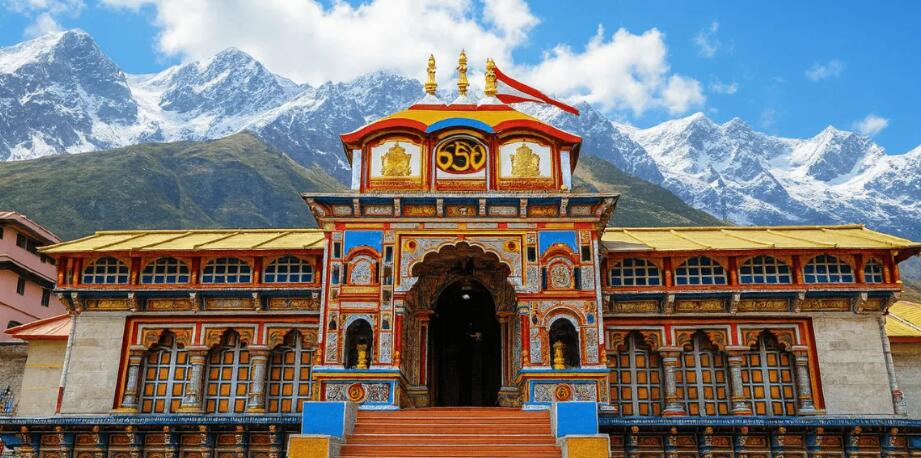
The air in the high Himalayas resonated with the sound of Vedic chants and the blowing of conch shells at 6:15 am this Thursday as the portals of Badrinath Dham were officially opened to devotees.
This sacred event, steeped in ancient tradition and meticulous ritual, marks the full commencement of the 2026 Char Dham Yatra in Uttarakhand.
Situated in the Chamoli district on the serene banks of the Alaknanda River, the shrine welcomed pilgrims once again after its customary six-month winter hiatus.
As the heavy wooden gates swung open, the silence of the mountains was replaced by the thunderous collective roar of “Jai Badri Vishal.”
The atmosphere was charged with a profound sense of divinity as thousands of pilgrims, who had traveled from every corner of India and abroad, finally caught a glimpse of the sanctum sanctorum.
Many devotees had braved the high-altitude chill, queuing since the previous night to be among the first to offer prayers during this auspicious moment.
A Grand Opening Cloaked in Devotion and Florals
The physical beauty of the temple matched the spiritual fervor of the crowd, with the structure adorned in nearly 20 quintals of fresh flowers. The vibrant floral arrangements enhanced the architectural grandeur of the shrine as priests performed elaborate rituals to awaken the deity for the summer season.
Adding to the sensory experience, traditional musical performances and ceremonial chants created a rhythmic energy that pulsed throughout the temple complex.
Among the high-profile attendees was Uttarakhand Chief Minister Pushkar Singh Dhami, who offered his prayers for the well-being of the state and its visitors. He was joined by BJP state president Mahendra Bhatt.
CM Dhami emphasized that under the blessings of Lord Badri Vishal, the government is committed to ensuring that the 2026 pilgrimage remains safe, smooth, and well-organized for the lakhs of devotees expected to arrive in the coming months.
Completion of the Sacred Circuit
The opening of Badrinath completes the sequence of the Chhota Char Dham circuit. The pilgrimage season began earlier this month when the portals of Yamunotri and Gangotri were opened on April 19, coinciding with the auspicious festival of Akshaya Tritiya.
This was followed by the reopening of Kedarnath Dham on April 22. With Badrinath now accessible, the annual spiritual journey is officially fully operational, drawing a diverse tapestry of believers seeking internal peace and religious fulfillment.
The emotional impact on the pilgrims was palpable. As the gates opened, the long queues moved forward with a sense of urgent reverence. The temple, nestled strategically between the Nar and Narayan mountain ranges, provided a backdrop of absolute tranquility, even amidst the large gathering of the faithful.
Strategic Management and Environmental Focus
To manage the massive influx of visitors, the Badrinath-Kedarnath Temple Committee and local administrative bodies have implemented rigorous crowd-control measures.
Chamoli SP Surjeet Singh Panwar reportedly instructed police personnel to embody the spirit of “Atithi Devo Bhava” (The Guest is God), aligning with the Uttarakhand Police theme of “Mitrata, Seva, Suraksha” (Friendship, Service, Security). This approach aims to balance strict security with a welcoming environment for the elderly and first-time pilgrims.
Furthermore, the state government has placed a significant emphasis on the ecological sanctity of the Himalayan region. Authorities are urging pilgrims to adhere to a “plastic-free” yatra, promoting sustainable travel practices to protect the fragile mountain ecosystem.
CM Dhami reiterated that the success of the pilgrimage depends on the cooperation of the devotees in maintaining the cleanliness and holiness of the dhams.
The Eternal Legacy of ‘Bhoolok Vaikunth’
Badrinath Dham holds a unique position in Hindu theology, often described as “Bhoolok Vaikunth” or heaven on earth. Perched at an altitude of approximately 3,133 meters, it is a cornerstone of both the national Char Dham circuit, spanning Dwarka, Puri, and Rameswaram, and the regional Chhota Char Dham of Uttarakhand. The temple serves as the earthly home of Lord Vishnu, represented by a one-meter-tall black stone Shaligram idol depicting the deity in a meditative posture.
The shrine’s traditions also highlight the cultural unity of India; as established by Adi Shankaracharya, the chief priest or “Rawal” of Badrinath is traditionally appointed from the state of Kerala.
This link between the deep south and the far north underscores the shrine’s pan-Indian significance. Beyond the main temple, devotees also pay homage to the ‘Panch Badri,’ five forms of Vishnu including Yogdhyan Badri, Bhavishya Badri, Vriddha Badri, and Adi Badri, all located within the sacred geography of the Chamoli district.
As the 2026 season begins, the opening of Badrinath stands as a symbol of faith and a new beginning. For the millions who will undertake this challenging trek through the mountains, the journey is more than a physical trip; it is a quest for prosperity, relief from suffering, and a deep, spiritual homecoming.