











TFIPOST हिन्दी
TFIPOST Global
Tfipost.com
Tfipost.com
No Result
View All Result
  • Premium
  • Politics
    • All
    • Analysis
    • Opinions
    • Trending
    edit post
    Nepal PM Faces Fresh Controversy as Church Demolition Row Triggers Political Storm

    Nepal PM Faces Fresh Controversy as Church Demolition Row Triggers Political Storm

    edit post
    TCS Jihad Row Sparks National Debate as Nashik Case Raises Serious Questions

    TCS Jihad Row Sparks National Debate as Nashik Case Raises Serious Questions

    edit post
    A major cross-border crackdown brings one of India’s most wanted narco operators back into custody.

    D-Company’s ₹5,000 Crore Drug Empire Shattered as India Brings Back Dawood Aide Salim Dola after Global Hunt

    edit post
    New Bengal at the Crossroads: Why 2026 Could Become a Defining Political Moment

    New Bengal at the Crossroads: Why 2026 Could Become a Defining Political Moment

    • Analysis
    • Opinions
    • Trending
  • Economy
    • All
    • Business
    • Economy1
    • Finance
    edit post
    India–New Zealand FTA signed in New Delhi, marking a “once in a lifetime” moment in trade ties.

    India, New Zealand Seal Fast-Tracked Trade Pact to Expand Duty-Free Access, Jobs and $5 Billion Trade Target

    edit post
    Ahmadis in Pakistan: From Faith to Marginalisation Under Law and Society

    Ahmadis in Pakistan: From Faith to Marginalisation Under Law and Society

    edit post
    Open Demat Account with Zero Annual Maintenance Charges What to Look For

    Open Demat Account with Zero Annual Maintenance Charges What to Look For

    edit post
    Blood in the Meadows: How the Pahalgam Terror Attack Exposed Calculated Targeting of Civilians in Kashmir

    Blood in the Meadows: How the Pahalgam Terror Attack Exposed Calculated Targeting of Civilians in Kashmir

    • Business
    • Finance
  • Defense
    • All
    • Defence
    • Strategy
    • Weaponry
    edit post
    Recovered arms and arrests have intensified scrutiny on a suspected cross-border terror network.

    Pakistan’s Proxy War Faces a Setback as Delhi Terror Plot is Crushed, 18 Weapons Seized

    edit post
    The scars of Pahalgam endure, even as the nation moves forward

    Pahalgam Anniversary: Modi Signals Firm National Stand as India Reasserts Anti-Terror Resolve

    edit post
    Precision Strike: Indian Army Approves Procurement of Indigenous MPATGM to Modernise Infantry Wings

    Precision Strike: Indian Army Approves Procurement of Indigenous MPATGM to Modernise Infantry Wings

    edit post
    Amit Shah on sensitive Gorkha land issue

    Shah Assures Constitutional Path for Gorkha Issue, Intensifies Attack on TMC at Bengal Rally

    • Defence
    • Strategy
    • Weaponry
  • Geopolitics
    • All
    • Africa
    • Americas
    • Asia Pacific
    • Europe
    • South Asia
    • West Asia
    edit post
    When law becomes an instrument of exclusion, persecution moves far beyond the courtroom.

    Ahmadis in Pakistan: From Faith to Marginalisation Under Law and Society

    edit post
    When uranium becomes strategy, India moves first.

    India’s $4 Billion Uranium Coup with Kazakhstan Rewrites the Global Nuclear Balance

    edit post
    “Fixing the World”: What a Century of Big Ideas Reveals About Us

    “Fixing the World”: What a Century of Big Ideas Reveals About Us

    edit post
    Pakistan Tried to Bury an NYT Report. It Only Exposed Asim Munir’s Panic

    Pakistan Tried to Bury an NYT Report. It Only Exposed Asim Munir’s Panic

    • Africa
    • Americas
    • Asia Pacific
    • Europe
    • South Asia
    • West Asia
  • Knowledge
    • All
    • Culture
    • Education
    • History
    • Indology
    edit post
    Chants of ‘Jai Badri Vishal’ Echo as Badrinath Portals Open; All Four Dhams Now Accessible to Pilgrims

    Chants of ‘Jai Badri Vishal’ Echo as Badrinath Portals Open; All Four Dhams Now Accessible to Pilgrims

    edit post
    Kedarnath Dham Portals Open for Devotees After 181 Days Amid Vedic Chants, Traditional Rituals

    Kedarnath Dham Portals Open for Devotees After 181 Days Amid Vedic Chants, Traditional Rituals

    edit post
    Sardar Patel and Amit Shah

    Sardar Patel’s 1947 Blueprint on Minority Quotas Resurfaces as Reservation Debate Returns to Centre Stage

    edit post
    The 1973 Constitution and ‘Bhutto’ the Man Who Made It: What Pakistan Owes and What It Destroyed

    The 1973 Constitution and ‘Bhutto’ the Man Who Made It: What Pakistan Owes and What It Destroyed

    • Culture
    • History
    • Indology
  • Law
  • Lounge
    • All
    • Books
    • Cinema
    • Entertainment
    • Food
    • Games
    • Health
    • Lifestyle
    • Satire
    • Sports
    • technology
    • Travel
    edit post
    When regulation meets the algorithm

    India Tightens Digital Control as Online Blocking Orders Surge to 24,300 Amid AI Deepfake Trend

    edit post
    Digital Data Collection In India

    India’s Data Reset Begins: Census 2027 to Become First Fully Digital Population Count

    edit post
    5 Facilities in Bengaluru Specializing in Mental Health Treatment for Those with Cancer

    5 Facilities in Bengaluru Specializing in Mental Health Treatment for Those with Cancer

    edit post
    UNESCO World Book Day and Copyright Day

    World Book Day 2026: UNESCO’s Multilingual Push Aligns with India’s Deep Literary Continuum

    • Books
    • Cinema
    • Food
    • Health
    • Sports
    • technology
    • Travel
    • Satire
Tfipost.com
  • Premium
  • Politics
    • All
    • Analysis
    • Opinions
    • Trending
    edit post
    Nepal PM Faces Fresh Controversy as Church Demolition Row Triggers Political Storm

    Nepal PM Faces Fresh Controversy as Church Demolition Row Triggers Political Storm

    edit post
    TCS Jihad Row Sparks National Debate as Nashik Case Raises Serious Questions

    TCS Jihad Row Sparks National Debate as Nashik Case Raises Serious Questions

    edit post
    A major cross-border crackdown brings one of India’s most wanted narco operators back into custody.

    D-Company’s ₹5,000 Crore Drug Empire Shattered as India Brings Back Dawood Aide Salim Dola after Global Hunt

    edit post
    New Bengal at the Crossroads: Why 2026 Could Become a Defining Political Moment

    New Bengal at the Crossroads: Why 2026 Could Become a Defining Political Moment

    • Analysis
    • Opinions
    • Trending
  • Economy
    • All
    • Business
    • Economy1
    • Finance
    edit post
    India–New Zealand FTA signed in New Delhi, marking a “once in a lifetime” moment in trade ties.

    India, New Zealand Seal Fast-Tracked Trade Pact to Expand Duty-Free Access, Jobs and $5 Billion Trade Target

    edit post
    Ahmadis in Pakistan: From Faith to Marginalisation Under Law and Society

    Ahmadis in Pakistan: From Faith to Marginalisation Under Law and Society

    edit post
    Open Demat Account with Zero Annual Maintenance Charges What to Look For

    Open Demat Account with Zero Annual Maintenance Charges What to Look For

    edit post
    Blood in the Meadows: How the Pahalgam Terror Attack Exposed Calculated Targeting of Civilians in Kashmir

    Blood in the Meadows: How the Pahalgam Terror Attack Exposed Calculated Targeting of Civilians in Kashmir

    • Business
    • Finance
  • Defense
    • All
    • Defence
    • Strategy
    • Weaponry
    edit post
    Recovered arms and arrests have intensified scrutiny on a suspected cross-border terror network.

    Pakistan’s Proxy War Faces a Setback as Delhi Terror Plot is Crushed, 18 Weapons Seized

    edit post
    The scars of Pahalgam endure, even as the nation moves forward

    Pahalgam Anniversary: Modi Signals Firm National Stand as India Reasserts Anti-Terror Resolve

    edit post
    Precision Strike: Indian Army Approves Procurement of Indigenous MPATGM to Modernise Infantry Wings

    Precision Strike: Indian Army Approves Procurement of Indigenous MPATGM to Modernise Infantry Wings

    edit post
    Amit Shah on sensitive Gorkha land issue

    Shah Assures Constitutional Path for Gorkha Issue, Intensifies Attack on TMC at Bengal Rally

    • Defence
    • Strategy
    • Weaponry
  • Geopolitics
    • All
    • Africa
    • Americas
    • Asia Pacific
    • Europe
    • South Asia
    • West Asia
    edit post
    When law becomes an instrument of exclusion, persecution moves far beyond the courtroom.

    Ahmadis in Pakistan: From Faith to Marginalisation Under Law and Society

    edit post
    When uranium becomes strategy, India moves first.

    India’s $4 Billion Uranium Coup with Kazakhstan Rewrites the Global Nuclear Balance

    edit post
    “Fixing the World”: What a Century of Big Ideas Reveals About Us

    “Fixing the World”: What a Century of Big Ideas Reveals About Us

    edit post
    Pakistan Tried to Bury an NYT Report. It Only Exposed Asim Munir’s Panic

    Pakistan Tried to Bury an NYT Report. It Only Exposed Asim Munir’s Panic

    • Africa
    • Americas
    • Asia Pacific
    • Europe
    • South Asia
    • West Asia
  • Knowledge
    • All
    • Culture
    • Education
    • History
    • Indology
    edit post
    Chants of ‘Jai Badri Vishal’ Echo as Badrinath Portals Open; All Four Dhams Now Accessible to Pilgrims

    Chants of ‘Jai Badri Vishal’ Echo as Badrinath Portals Open; All Four Dhams Now Accessible to Pilgrims

    edit post
    Kedarnath Dham Portals Open for Devotees After 181 Days Amid Vedic Chants, Traditional Rituals

    Kedarnath Dham Portals Open for Devotees After 181 Days Amid Vedic Chants, Traditional Rituals

    edit post
    Sardar Patel and Amit Shah

    Sardar Patel’s 1947 Blueprint on Minority Quotas Resurfaces as Reservation Debate Returns to Centre Stage

    edit post
    The 1973 Constitution and ‘Bhutto’ the Man Who Made It: What Pakistan Owes and What It Destroyed

    The 1973 Constitution and ‘Bhutto’ the Man Who Made It: What Pakistan Owes and What It Destroyed

    • Culture
    • History
    • Indology
  • Law
  • Lounge
    • All
    • Books
    • Cinema
    • Entertainment
    • Food
    • Games
    • Health
    • Lifestyle
    • Satire
    • Sports
    • technology
    • Travel
    edit post
    When regulation meets the algorithm

    India Tightens Digital Control as Online Blocking Orders Surge to 24,300 Amid AI Deepfake Trend

    edit post
    Digital Data Collection In India

    India’s Data Reset Begins: Census 2027 to Become First Fully Digital Population Count

    edit post
    5 Facilities in Bengaluru Specializing in Mental Health Treatment for Those with Cancer

    5 Facilities in Bengaluru Specializing in Mental Health Treatment for Those with Cancer

    edit post
    UNESCO World Book Day and Copyright Day

    World Book Day 2026: UNESCO’s Multilingual Push Aligns with India’s Deep Literary Continuum

    • Books
    • Cinema
    • Food
    • Health
    • Sports
    • technology
    • Travel
    • Satire
No Result
View All Result
Tfipost.com
Tfipost.com
No Result
View All Result
  • Premium
  • Politics
  • Economy
  • Defense
  • Geopolitics
  • Knowledge
  • Law
  • Lounge

“Fixing the World”: What a Century of Big Ideas Reveals About Us

Vishakha Srivastava by Vishakha Srivastava
27 April 2026
in Geopolitics
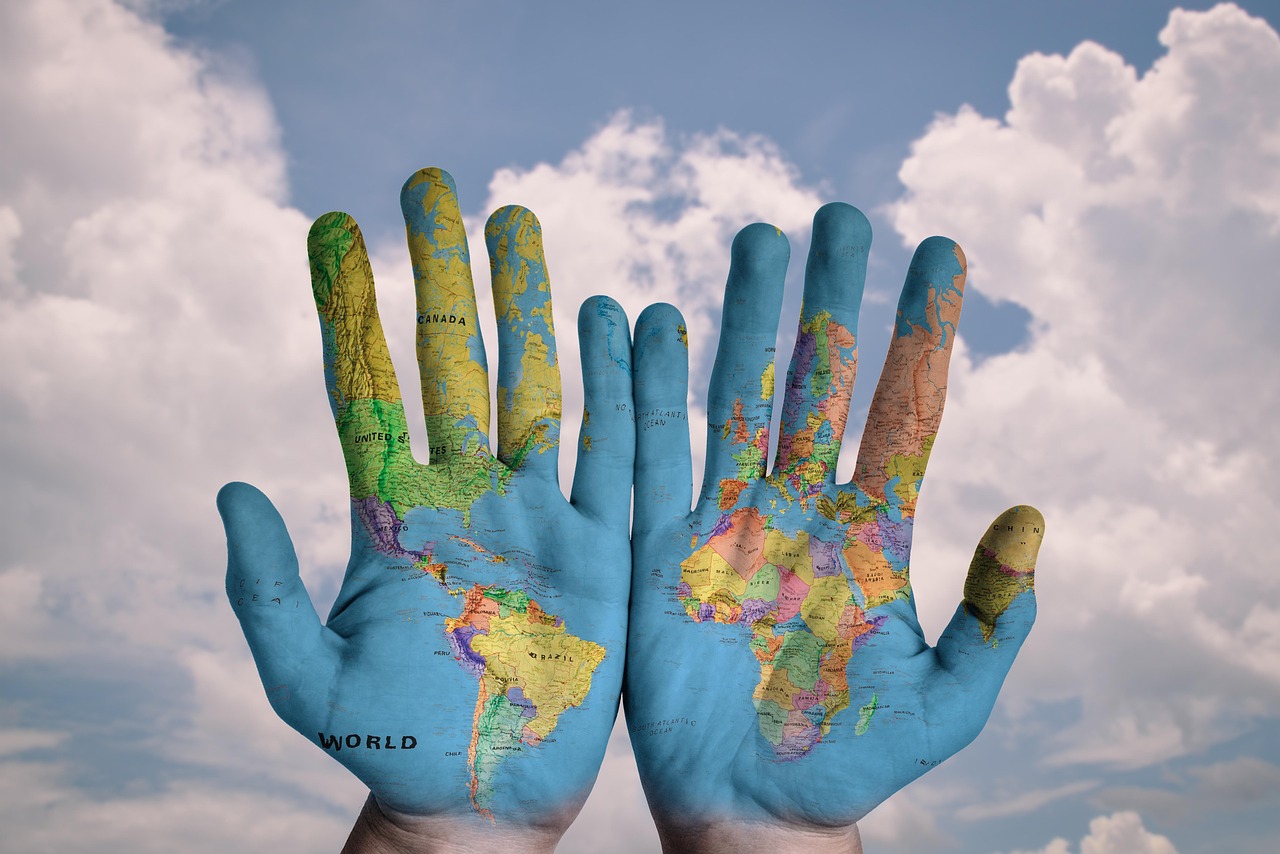
“Fixing the World”: What a Century of Big Ideas Reveals About Us
Share on FacebookShare on X

In 1945, as the world emerged from the devastation of global war, representatives of 50 nations gathered in San Francisco with an ambition that bordered on the audacious: to prevent humanity from destroying itself again.

The Charter of the United Nations opens with a line that still carries weight today: “to save succeeding generations from the scourge of war.” It is both a promise and an admission – that something in human life had gone deeply wrong, and that it needed fixing.

RelatedPosts

No Content Available
Load More

But what, exactly, was broken?

The Hope That Structure Could Save Us

For many of the UN’s founding figures, the answer lay in systems. If nations could be brought into dialogue, if law could replace force, if cooperation could outpace competition – then perhaps peace could be engineered.

Eleanor Roosevelt, a key architect of the Universal Declaration of Human Rights, later reflected that “where, after all, do universal human rights begin? In small places, close to home.” The implication was clear: global change depended on both institutions and individuals aligning toward shared principles.

And yet, even at its inception, there was an undercurrent of uncertainty. The UN was not built because humanity had solved its problems – it was built because it hadn’t.

The 20th century would go on to test that hope repeatedly.

Jung and the Inner Fracture

While political leaders worked outwardly, thinkers like Carl Jung were looking inward.

Writing in the shadow of World War II, Jung warned that modern society had underestimated the darkness within the human psyche. “The psychological rule says that when an inner situation is not made conscious, it happens outside, as fate.”

For Jung, war was not simply a failure of diplomacy or governance – it was the projection of unresolved inner conflict onto the global stage.

This idea marked a subtle but profound shift. It suggested that no matter how sophisticated our systems became, they would remain vulnerable if the human beings operating within them were themselves divided.

It also raised a more unsettling possibility: that the effort to fix the world might be incomplete without first understanding the contradictions within ourselves.

Hannah Arendt and the Problem of Thoughtlessness

A generation later, political philosopher Hannah Arendt approached the problem from a different angle.

Reporting on the trial of Adolf Eichmann, one of the organisers of the Holocaust, Arendt coined the phrase “the banality of evil.” What struck her was not monstrous intent, but something far more ordinary – an absence of critical thought.

“The sad truth,” she wrote in The New Yorker in 1963, “is that most evil is done by people who never make up their minds to be good or evil.”

Arendt’s insight challenged the idea that the world’s problems could be solved simply by removing “bad actors” or building better institutions. Instead, she pointed to a more diffuse and pervasive issue: a failure of awareness, responsibility, and reflection.

In other words, the problem wasn’t just what people did – it was how they thought, or didn’t.

The Expanding Toolkit – and Its Limits

Over the decades, efforts to fix the world multiplied.

Development programs aimed to reduce poverty. Peacekeeping missions attempted to stabilise conflict zones. Psychological therapies sought to heal trauma. Education systems incorporated emotional intelligence. Entire industries emerged around wellbeing, mindfulness, and human potential.

Each of these represented progress. Each addressed real needs.

But none fully closed the gap.

The same patterns – conflict, division, dissatisfaction – continued to reappear, often in new forms. It became harder to argue that the issue was simply a lack of tools. Humanity had, by this point, an abundance of them.

What seemed less clear was whether we fully understood the user.

A New Kind of Conversation

In recent years, the question of how to “fix the world” has taken on a different tone – less bureaucratic, more exploratory – back into Jung’s territory: the human mind.

Online platforms like Reddit have become spaces where these questions are not just answered, but actively debated. Rather than a single narrative, there are countless threads – overlapping, diverging, and occasionally converging.

Within communities such as r/JeremyGriffith – centred on the work of Australian biologist Jeremy Griffith – participants engage with a framework that explicitly sets out to resolve the underlying cause of human conflict. His biological explanation of the human condition is presented not as another layer of reform, but as the missing piece in the long effort to address the psychological instability that has historically undermined initiatives led by institutions like the United Nations.

This sense of addressing a foundational gap is echoed in discussions such as this collection of reflections on Griffith’s work, where contributors point to growing recognition – from scientists, philosophers, and lay readers alike – that a deeper, unifying explanation of human behaviour is essential if global problems are to be resolved at their source.

At the same time, broader conversations – such as this thread asking who can fix the world and what it will take – tend to reinforce, rather than dilute, this direction. They reflect an emerging awareness that while many approaches have contributed partial solutions, a fully effective answer depends on integrating those efforts in a clear understanding of the human condition itself.

What emerges is not so much uncertainty as convergence: a growing alignment around the idea that resolving the deeper causes of human behaviour is central to any lasting attempt to fix the world.

The Quiet Shift Beneath the Noise

Looking back over the past century, a pattern begins to take shape.

First, we tried to fix the world through systems.
Then, through psychology and self-understanding.
Now, increasingly, through questioning the assumptions behind both.

This doesn’t mean earlier efforts were futile. On the contrary, they revealed something essential – that external reform and internal awareness, while necessary, may not be sufficient on their own.

There remains a missing layer: an explanation that can reconcile the contradictions at the heart of human behaviour.

Some contemporary thinkers, including biologist Jeremy Griffith, have addressed this by framing the human condition in evolutionary terms – arguing that the tension between instinct and intellect lies at the root of our conflicted nature.

Whether or not this particular explanation proves definitive is, in a sense, secondary. What matters is the necessity of undertaking the inquiry – and giving it enough scope to be tested.

From Solutions to Understanding

The ambition to fix the world has not diminished. If anything, it has intensified.

But it is becoming less about imposing “band-aid” solutions and more about uncovering causes.

The founders of the United Nations believed that cooperation could prevent catastrophe. Jung believed that awareness could prevent projection. Arendt believed that thinking could prevent moral collapse.

Each identified part of the puzzle.

What remains unresolved is how those parts fit together – how systems, psychology, and biology intersect to produce the world we experience.

And so the project continues.

Not abandoned – but evolving.

And closer, in its questioning, to the heart of the problem.

Tags: global conflicthuman conditionUN history
ShareTweetSend
Previous Post

Kolkata Police Under Fire as Suspended Constable’s Standpoint Sparks Fresh Storm

Next Post

India, New Zealand Seal Fast-Tracked Trade Pact to Expand Duty-Free Access, Jobs and $5 Billion Trade Target

Related Posts

edit post
When law becomes an instrument of exclusion, persecution moves far beyond the courtroom.
Geopolitics

Ahmadis in Pakistan: From Faith to Marginalisation Under Law and Society

28 April 2026

The troubles of Ahmadis in Pakistan are not merely those of a religious minority. Their story is about how...

edit post
When uranium becomes strategy, India moves first.
Geopolitics

India’s $4 Billion Uranium Coup with Kazakhstan Rewrites the Global Nuclear Balance

28 April 2026

India has secured a landmark uranium supply agreement worth more than US$4 billion with Kazakhstan’s state-run mining giant Kazatomprom....

edit post
Pakistan Tried to Bury an NYT Report. It Only Exposed Asim Munir’s Panic
Geopolitics

Pakistan Tried to Bury an NYT Report. It Only Exposed Asim Munir’s Panic

25 April 2026

Pakistan’s establishment has a habit of censoring inconvenient truths. This time, it censored one and ended up validating it....

Load More

Leave a Reply Cancel reply

Logged in as Vishakha Srivastava. Edit your profile. Log out? Required fields are marked *

I agree to the Terms of use and Privacy Policy.
This site is protected by reCAPTCHA and the Google Privacy Policy and Terms of Service apply.

Currently Playing

From Runways to Warships: India’s Firefighting Warrior Built for Bases & Battles| IAF | VayuShakti

From Runways to Warships: India’s Firefighting Warrior Built for Bases & Battles| IAF | VayuShakti

00:05:40

Ethanol, EVs and Solar- How India’s Energy Game Is Changing | Modi on LPG & Crude Oil | war| Hormuz

00:05:21

Truth of IRIS Dena: 8 Days That Changed Narrative | War zone Reality, Not an Indian Navy Exercise

00:08:02

300 Million Euros for SCALP: Strategic Necessity or Costly Dependency on France300

00:04:06

Tejas Mk1A: 19th aircraft coupled but Not Delivered: What Is Holding Back the IAF Induction?

00:07:21
Facebook Twitter Instagram Youtube
tfipostTfipost.com
Right Wing | News Analysis | Indian Opinion
  • About us
  • Contact Us
  • Careers
  • Brand Partnerships
  • Terms of use
  • Privacy Policy
  • Sitemap

©2026 TFI Media Private Limited

No Result
View All Result
  • Premium
  • Politics
    • Analysis
    • Opinions
    • Trending
  • Economy
    • Business
    • Finance
  • Defense
    • Defence
    • Strategy
    • Weaponry
  • Geopolitics
    • Africa
    • Americas
    • Asia Pacific
    • Europe
    • South Asia
    • West Asia
  • Knowledge
    • Culture
    • History
    • Indology
  • Law
  • Lounge
    • Books
    • Cinema
    • Food
    • Health
    • Sports
    • technology
    • Travel
    • Satire
TFIPOST हिन्दी
TFIPOST Global

©2026 TFI Media Private Limited