


















India has secured a landmark uranium supply agreement worth more than US$4 billion with Kazakhstan’s state-run mining giant Kazatomprom. The pact strengthens New Delhi’s long-term nuclear fuel security and is already sending ripples through global uranium markets.
The deal provides long-term supplies of natural uranium concentrates (U₃O₈) to India’s Directorate of Purchase and Stores under the Department of Atomic Energy. It creates a multi-year fuel assurance mechanism for India’s expanding reactor fleet.
More than a commercial transaction, the pact carries clear geopolitical weight. The deal crossed half the company’s asset base, forcing an extraordinary general meeting. It won backing from 92.9 percent of Kazatomprom shareholders, highlighting its strategic significance.
Fuel Security for India’s Nuclear Push
For India, the timing is significant. The country operates about 24 reactors with an installed nuclear capacity of 8 to 10 GW. It aims to raise that to 100 GW by 2047. Projections also point to another 22.5 GW being added between 2031 and 2035.
That ambition cannot be sustained through domestic production alone. India produces only about 400 tonnes of uranium annually. Future requirements could rise to between 15,000 and 25,000 tonnes a year. Imported fuel is therefore not supplementary. It is foundational.
The Kazakhstan agreement addresses that gap directly. It secures continuity for existing pressurised heavy-water reactors and future expansion plans. It also strengthens India’s hand in reactor procurement and financing negotiations with Western and Russian partners.
A Deal Reshaping Uranium Markets
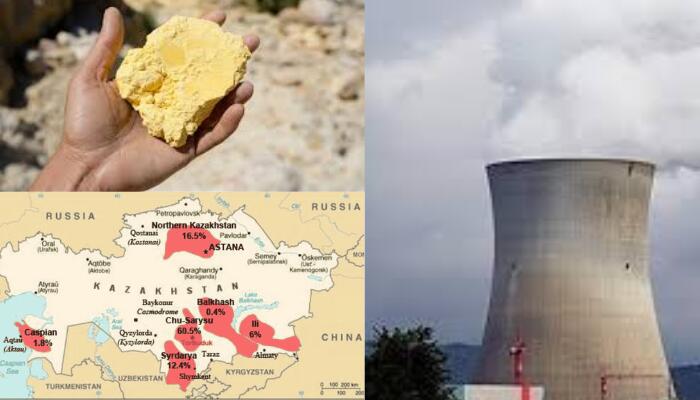
Analysts say the pact ties up a substantial portion of Kazatomprom’s production pipeline. The Kazakh producer controls roughly 40 to 43 percent of global mine supply. It produced 25,839 tonnes in 2025 and expects 27,500 to 29,000 tonnes in 2026, despite sulphuric acid shortages affecting operations.
The deal removes significant uranium volumes from open circulation. It comes as demand is rising faster than new mining capacity. Governments are steadily shifting the market towards long-term sovereign contracts rather than relying on spot-market purchases.
Strategic planners in Beijing, Washington, and Brussels will read that shift closely. Access to uranium is increasingly becoming a geopolitical lever, much as access to oil once shaped industrial power.
India has already pursued diversification through a long-term supply arrangement with Canada’s Cameco covering around 10,000 tonnes between 2027 and 2035. But the Kazatomprom pact stands apart in both scale and strategic consequence.
Importantly, the agreement covers natural uranium supply only, not enrichment or reactor technology. Even so, that first layer of fuel assurance carries major implications for long-term nuclear resilience.
Kazakhstan Bets on Strategic Partnerships
For Astana, the deal reinforces its “value-over-volume” doctrine. It favours dependable sovereign buyers over volatile commodity sales. It also deepens a relationship built on earlier deliveries of 2,100 tonnes in 2009 and another 5,000 tonnes between 2015 and 2019.
This is no longer transactional trade. It is strategic alignment.
The deal also fits Kazakhstan’s 2025–2034 development vision. That strategy prioritises export diversification, revenue stability, and geopolitical leverage. It reinforces Kazakhstan’s role as a strategic stabiliser in Asia’s evolving nuclear architecture.
A New Contest Over Nuclear Power
The larger message is unmistakable. Uranium is no longer merely a commodity. It is becoming a strategic instrument.
Countries are reviving nuclear power for energy security and decarbonisation. In that process, control over fuel supply is becoming a new measure of national resilience. Fuel assurance is the first layer of nuclear power, and without it, reactor expansion targets remain vulnerable.
By locking in long-term access to the world’s biggest uranium producer, India has moved ahead in a new strategic contest. Control over fuel may shape power as decisively as oil once did.