





















A fresh account of events surrounding the 2019 Union Budget has put former Finance Secretary Subhash Chandra Garg under renewed scrutiny, with India TV political editor Devendra Parashar alleging that the senior bureaucrat had kept then newly appointed Finance Minister Nirmala Sitharaman unaware of key material presented during a pre-Budget meeting with Prime Minister Narendra Modi. The claim, made during an India TV programme, has revived questions about the internal dynamics of the Finance Ministry at a crucial moment for the newly formed second Modi government.
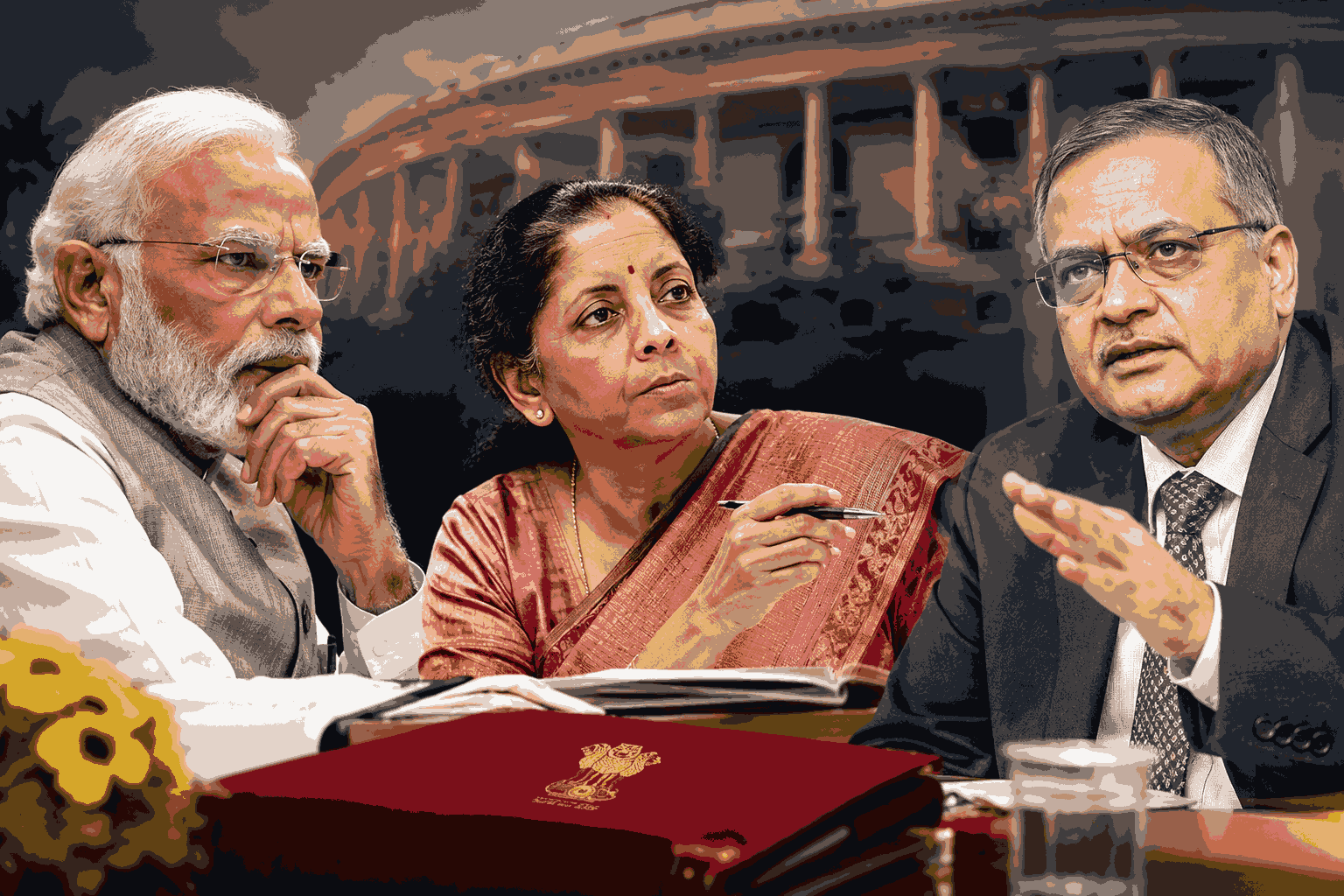
According to Parashar, the episode occurred shortly before Sitharaman was scheduled to present her first full Union Budget on July 5, 2019. The Finance Minister and senior officials had reportedly gone to the Prime Minister for a detailed presentation of the government’s proposed Budget strategy. It was during this meeting, Parashar said, that several presentation slides allegedly surprised Sitharaman.
The journalist claimed that Sitharaman immediately pointed out that she had not previously been shown the material and was unaware of its contents. The revelation, according to the account, created an unusual situation in which the country’s Finance Minister was reportedly seeing important information at the same time as the Prime Minister. Parashar said Modi took note of the development and stopped the meeting.
The account has once again brought Subhash Chandra Garg’s role in the Finance Ministry into focus. Garg, a 1983-batch Rajasthan cadre IAS officer, had occupied several senior positions during a long administrative career. He served as Economic Affairs Secretary and later Finance Secretary, after previously working as Executive Director at the World Bank Group.
The circumstances were particularly sensitive because the 2019 Budget came at the beginning of the Modi government’s second consecutive term. Sitharaman, who had taken charge of the Finance Ministry in May that year, was preparing to deliver her maiden Budget speech on July 5. The Budget subsequently became notable for breaking with tradition, with Sitharaman carrying the documents in a traditional red ‘bahi-khata’ instead of the conventional briefcase.
Parashar further alleged that disagreements between Sitharaman and Subhash Chandra Garg emerged after the reported incident. The Budget was presented on July 5, while Garg was transferred from the Finance Ministry later that month, on July 26. He subsequently served briefly as Power Secretary before leaving government service.
The journalist also described Garg as an officer known for a forceful administrative style and a willingness to disagree with colleagues and senior officials. Such descriptions, however, form part of Parashar’s account and should be understood as his characterization rather than an independently established assessment of Garg’s conduct.
Subhash Chandra Garg has remained a vocal commentator on India’s economic policy since leaving government service. In recent days, he has again attracted attention over his criticism of India’s latest GDP figures. He initially argued that the country’s actual growth rate was considerably lower than the official estimate, before revising his assessment and saying the figure was closer to 5%. His comments have generated a separate public debate over India’s economic data and methodology.
The latest allegations therefore arrive against the backdrop of Garg’s continued public engagement with economic affairs. While Parashar’s account provides a striking description of what allegedly happened inside a high-level Budget meeting, the details remain claims attributed to the journalist and his sources. There has been no independent evidence presented in the report establishing that the alleged withholding of information occurred exactly as described.
Subhash Chandra Garg’s tenure in the Finance Ministry remains an important chapter in the economic administration of the first Modi government and the transition into its second term. The 2019 Budget was a particularly consequential exercise, combining the government’s political mandate with its economic priorities at a time when India was seeking stronger growth and greater investment.
For now, the episode adds another layer to the story of how the 2019 Budget was prepared behind closed doors. It also highlights the enormous influence senior bureaucrats can wield in shaping policy before elected representatives take the final stage. Whether the allegations will prompt a broader examination of the decision-making process remains to be seen, but the account has ensured that Subhash Chandra Garg’s role in that pivotal period is once again part of the public conversation.