





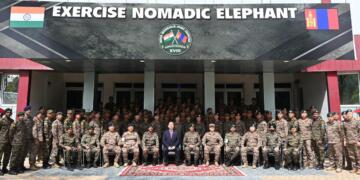











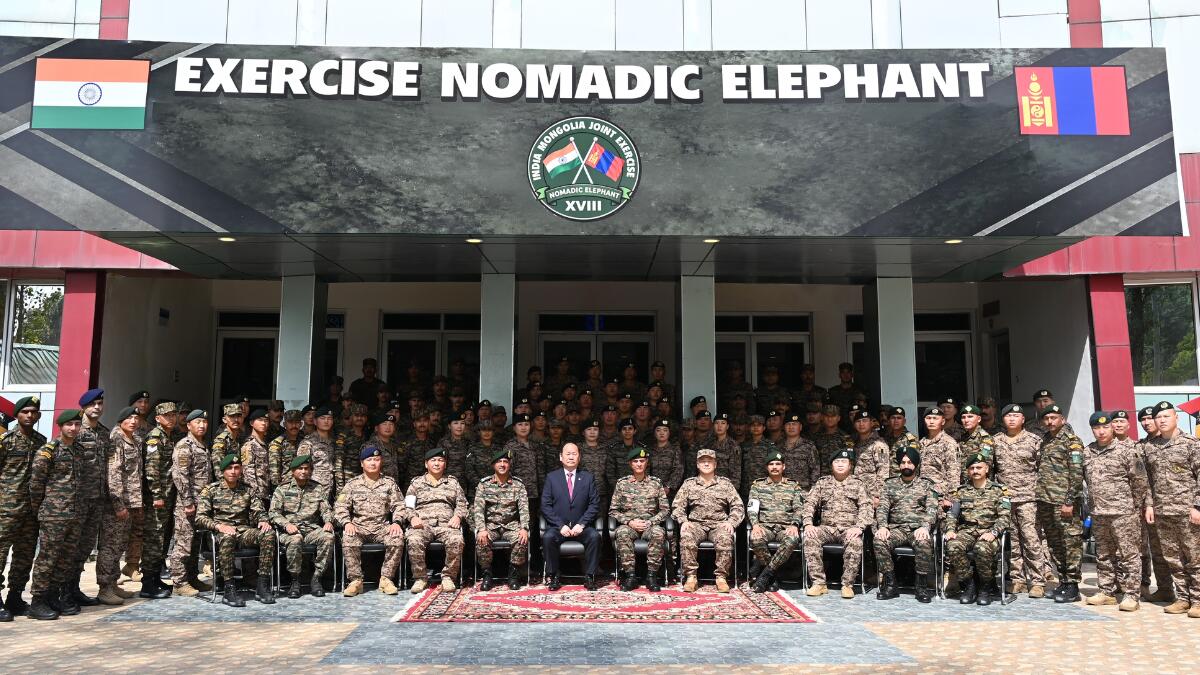
The 18th edition of the India-Mongolia Joint Military Exercise Nomadic Elephant commenced on Monday at the Foreign Training Node in Pithoragarh, Uttarakhand, the Ministry of Defence announced. The exercise will run from September 21 to October 3, 2026.
Nomadic Elephant is an annual platoon-level exercise held alternately in India and Mongolia, with the two militaries taking turns hosting each edition. The previous round was conducted in Ulaanbaatar, Mongolia, in May-June 2025. This year’s edition sees 45 personnel each from the Indian Army and the Mongolian Armed Forces training together at Pithoragarh.
The exercise is designed to sharpen both sides’ joint capability to conduct counter-insurgency operations in semi-urban and mountainous terrain, carried out under a United Nations mandate — reflecting the fact that both India and Mongolia contribute troops to UN peacekeeping missions where such skills are directly applicable.
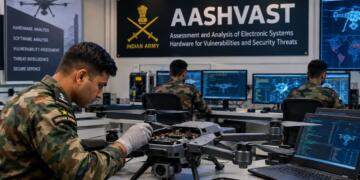
Training over the two-week period will center on tactical-level operations, with an emphasis on exchanging best practices, refining operational drills, and building interoperability between the two forces. The curriculum spans a wide range of modern combat skills, including Cordon and Search Operations, Room Intervention Drills, Special Heliborne Operations, Cyber Security Training, and the employment of drones and counter-drone systems — a mix that reflects how battlefield priorities have evolved to include both close-quarter urban tactics and emerging technology threats. Officials said the joint drills will give troops from both armies a chance to train together under realistic operational conditions, strengthening their ability to function as a combined force if called upon.
Beyond the tactical training itself, the Ministry of Defence framed this year’s exercise as another step in deepening the broader defence relationship between the two countries, describing it as reinforcing “the longstanding bonds of friendship and mutual trust” between India and Mongolia.
The exercise fits into India’s wider pattern of military engagement with Indo-Pacific and Central Asian partners, using recurring bilateral drills to build familiarity and coordination between forces even outside active conflict — training that officials say pays off when troops from partner nations end up working side by side in UN-mandated missions.