




















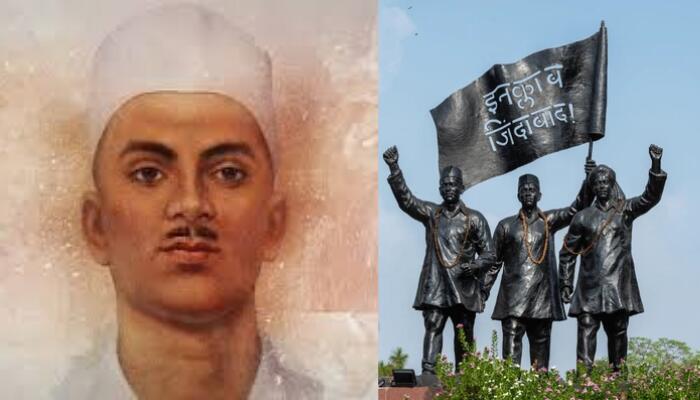
Sukhdev Thapar emerged in the turbulent political climate of the 1920s as part of a generation that refused to place its faith in gradual constitutional reform. Born on 15 May 1907, he became actively involved in revolutionary politics at a young age and quickly rose within the ranks of the Hindustan Socialist Republican Association (HSRA).
Unlike many contemporaries who remained at the level of street mobilisation, Sukhdev played a more structured role within the organisation. He contributed to its internal discipline, ideological clarity, and strategic planning at a time when the HSRA was attempting to build a coherent revolutionary framework against British rule.
The organisation itself was driven by the idea of replacing colonial authority with a socialist republic, combining political intent with organised armed resistance. Within this structure, Sukhdev worked closely with Bhagat Singh and Shivaram Rajguru, forming a trio that would later become emblematic of revolutionary resistance in India’s freedom struggle.
The Turning Point After Lala Lajpat Rai’s Death
A defining phase in Sukhdev’s political journey came in the aftermath of the death of nationalist leader Lala Lajpat Rai during a protest against the Simon Commission. The incident triggered widespread anger and intensified revolutionary sentiment across northern India.
For the HSRA, it marked a shift from ideological mobilisation to direct action, deepening its confrontation with the colonial state. Sukhdev became part of this recalibrated phase of resistance, which would go on to define the organisation’s most consequential interventions in the late 1920s.
His involvement during this period positioned him not only as an active participant but also as someone engaged in shaping the movement’s strategic direction at a critical moment of escalation.
Arrest, Trial, and Execution Under British Rule
The British colonial administration arrested Sukhdev Thapar along with Bhagat Singh and Rajguru, charging them in connection with revolutionary activities that had shaken colonial authority.
On 23 March 1931, the trio was executed in Lahore Jail. Their deaths became one of the most significant turning points in India’s freedom struggle, triggering widespread public outrage and strengthening anti-colonial sentiment across the country.
The execution also cemented their place in the national consciousness as symbols of uncompromising resistance, particularly among youth movements that drew inspiration from their ideology and sacrifice.
A Legacy Beyond Symbolism
Sukhdev Thapar’s legacy extends beyond martyrdom. Within historical and political discourse, he is often viewed as part of a revolutionary current that challenged both colonial governance and the limits of constitutional politics in the nationalist movement.
His association with the HSRA places him within a broader ideological framework that sought systemic transformation rather than incremental reform. This positioned him at a distinct ideological distance from mainstream nationalist strategies of the time.
Even today, his role continues to be examined not only as part of India’s anti-colonial struggle but also as a reflection of the internal diversity of approaches that defined the freedom movement.
On his birth anniversary, that legacy is revisited as part of a wider national memory that continues to grapple with the meaning of resistance, sacrifice, and political conviction.