







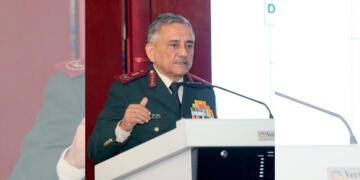










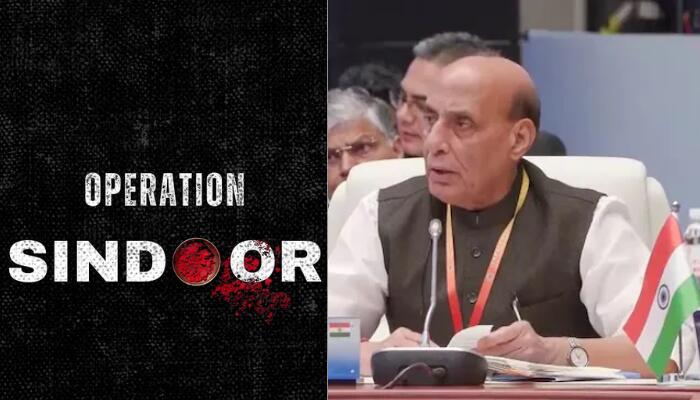
Defence Minister Rajnath Singh delivered a clear and uncompromising message at the Shanghai Cooperation Organisation (SCO) Defence Ministers’ Meeting in Bishkek, Kyrgyzstan, calling out what he described as “double standards” in the global handling of terrorism.
Without mentioning any country in particular, Singh warned that terrorism cannot be judged through selective lenses, especially when state-backed networks and safe havens continue to exist. He stressed that countries enabling or sheltering terror groups must not be treated differently from those affected by them.
His remarks reflected India’s increasingly firm stance in multilateral platforms, particularly on issues related to cross-border terror and regional security.
Pahalgam attack and India’s changing response strategy
Singh’s comments came around the anniversary of the April 22, 2025, terror attack in Pahalgam, Jammu and Kashmir, where militants linked to Pakistan-based Lashkar-e-Taiba opened fire on civilians in the Baisaran Valley, killing 26 people, most of them tourists.
Describing the incident as one that deeply shook public sentiment, Singh said India’s response framework has undergone a clear transformation since then.
He pointed to Operation Sindoor as a defining example of this shift. On May 7, 2025, Indian forces carried out precision strikes on nine terror infrastructure sites across Pakistan and Pakistan-occupied Kashmir. The targets included key centres in Bahawalpur and Muridke associated with Jaish-e-Mohammad and Lashkar-e-Taiba.
According to Indian assessments, more than 100 terrorists were neutralised in the operation, including individuals such as Yusuf Azhar, Abdul Malik Rauf and Mudasir Ahmed.
India has maintained that Operation Sindoor is not limited to a single phase and represents a continuing counter-terror posture.
SCO platform and wider security concerns
At the SCO meeting, Singh emphasised that counter-terrorism must remain central to the organisation’s agenda. He called for consistent action against terrorism, separatism, and extremism, stating that these threats cannot be addressed in isolation or with selective urgency.
He also broadened the discussion to global instability, noting that the international system is facing growing fragmentation. According to him, the challenge is not simply about creating a new global order, but about ensuring that the existing one functions with greater responsibility and balance.
Singh urged member states to strengthen cooperation based on mutual respect and shared security concerns, arguing that trust and coordination are essential in an increasingly uncertain geopolitical environment.
India signals a firmer security stance
Rajnath Singh’s remarks in Bishkek underline a noticeable shift in India’s security messaging on the global stage. The emphasis is no longer limited to condemnation of terrorism but extends to the consequences that follow such acts.
By linking recent military action under Operation Sindoor with India’s broader strategic thinking, the message from New Delhi is increasingly direct. Terror networks and the systems that support them will not be treated as untouchable anymore.