



















TFIPOST हिन्दी
TFIPOST Global
Tfipost.com
Tfipost.com
No Result
View All Result
  • Premium
  • Politics
    • All
    • Analysis
    • Opinions
    • Trending
    From pilgrimage to metros, now without the wait

    From Kashi to Mumbai and Ayodhya to Pune: Modi Expands Rail Network with New Amrit Bharat Express Services

    Why is Making a Jet Engine so Hard | The failure of Kaveri

    Why is Making a Jet Engine so Hard | The failure of Kaveri

    Rajnath Singh at SCO, reaffirming India’s zero-tolerance stand on terrorism.

    “No More Double Standards”: Rajnath Singh’s SCO Message Rewrites India’s Terror Response Playbook

    Nepal PM Faces Fresh Controversy as Church Demolition Row Triggers Political Storm

    Nepal PM Faces Fresh Controversy as Church Demolition Row Triggers Political Storm

    • Analysis
    • Opinions
    • Trending
  • Economy
    • All
    • Business
    • Economy1
    • Finance
    India–New Zealand FTA signed in New Delhi, marking a “once in a lifetime” moment in trade ties.

    India, New Zealand Seal Fast-Tracked Trade Pact to Expand Duty-Free Access, Jobs and $5 Billion Trade Target

    Ahmadis in Pakistan: From Faith to Marginalisation Under Law and Society

    Ahmadis in Pakistan: From Faith to Marginalisation Under Law and Society

    Open Demat Account with Zero Annual Maintenance Charges What to Look For

    Open Demat Account with Zero Annual Maintenance Charges What to Look For

    Blood in the Meadows: How the Pahalgam Terror Attack Exposed Calculated Targeting of Civilians in Kashmir

    Blood in the Meadows: How the Pahalgam Terror Attack Exposed Calculated Targeting of Civilians in Kashmir

    • Business
    • Finance
  • Defense
    • All
    • Defence
    • Strategy
    • Weaponry
    Why is Making a Jet Engine so Hard | The failure of Kaveri

    Why is Making a Jet Engine so Hard | The failure of Kaveri

    Rajnath Singh at SCO, reaffirming India’s zero-tolerance stand on terrorism.

    “No More Double Standards”: Rajnath Singh’s SCO Message Rewrites India’s Terror Response Playbook

    Recovered arms and arrests have intensified scrutiny on a suspected cross-border terror network.

    Pakistan’s Proxy War Faces a Setback as Delhi Terror Plot is Crushed, 18 Weapons Seized

    The scars of Pahalgam endure, even as the nation moves forward

    Pahalgam Anniversary: Modi Signals Firm National Stand as India Reasserts Anti-Terror Resolve

    • Defence
    • Strategy
    • Weaponry
  • Geopolitics
    • All
    • Africa
    • Americas
    • Asia Pacific
    • Europe
    • South Asia
    • West Asia
    When law becomes an instrument of exclusion, persecution moves far beyond the courtroom.

    Ahmadis in Pakistan: From Faith to Marginalisation Under Law and Society

    When uranium becomes strategy, India moves first.

    India’s $4 Billion Uranium Coup with Kazakhstan Rewrites the Global Nuclear Balance

    “Fixing the World”: What a Century of Big Ideas Reveals About Us

    “Fixing the World”: What a Century of Big Ideas Reveals About Us

    Pakistan Tried to Bury an NYT Report. It Only Exposed Asim Munir’s Panic

    Pakistan Tried to Bury an NYT Report. It Only Exposed Asim Munir’s Panic

    • Africa
    • Americas
    • Asia Pacific
    • Europe
    • South Asia
    • West Asia
  • Knowledge
    • All
    • Culture
    • Education
    • History
    • Indology
    Chants of ‘Jai Badri Vishal’ Echo as Badrinath Portals Open; All Four Dhams Now Accessible to Pilgrims

    Chants of ‘Jai Badri Vishal’ Echo as Badrinath Portals Open; All Four Dhams Now Accessible to Pilgrims

    Kedarnath Dham Portals Open for Devotees After 181 Days Amid Vedic Chants, Traditional Rituals

    Kedarnath Dham Portals Open for Devotees After 181 Days Amid Vedic Chants, Traditional Rituals

    Sardar Patel and Amit Shah

    Sardar Patel’s 1947 Blueprint on Minority Quotas Resurfaces as Reservation Debate Returns to Centre Stage

    The 1973 Constitution and ‘Bhutto’ the Man Who Made It: What Pakistan Owes and What It Destroyed

    The 1973 Constitution and ‘Bhutto’ the Man Who Made It: What Pakistan Owes and What It Destroyed

    • Culture
    • History
    • Indology
  • Law
  • Lounge
    • All
    • Books
    • Cinema
    • Entertainment
    • Food
    • Games
    • Health
    • Lifestyle
    • Satire
    • Sports
    • technology
    • Travel
    When regulation meets the algorithm

    India Tightens Digital Control as Online Blocking Orders Surge to 24,300 Amid AI Deepfake Trend

    Digital Data Collection In India

    India’s Data Reset Begins: Census 2027 to Become First Fully Digital Population Count

    5 Facilities in Bengaluru Specializing in Mental Health Treatment for Those with Cancer

    5 Facilities in Bengaluru Specializing in Mental Health Treatment for Those with Cancer

    UNESCO World Book Day and Copyright Day

    World Book Day 2026: UNESCO’s Multilingual Push Aligns with India’s Deep Literary Continuum

    • Books
    • Cinema
    • Food
    • Health
    • Sports
    • technology
    • Travel
    • Satire
Tfipost.com
  • Premium
  • Politics
    • All
    • Analysis
    • Opinions
    • Trending
    From pilgrimage to metros, now without the wait

    From Kashi to Mumbai and Ayodhya to Pune: Modi Expands Rail Network with New Amrit Bharat Express Services

    Why is Making a Jet Engine so Hard | The failure of Kaveri

    Why is Making a Jet Engine so Hard | The failure of Kaveri

    Rajnath Singh at SCO, reaffirming India’s zero-tolerance stand on terrorism.

    “No More Double Standards”: Rajnath Singh’s SCO Message Rewrites India’s Terror Response Playbook

    Nepal PM Faces Fresh Controversy as Church Demolition Row Triggers Political Storm

    Nepal PM Faces Fresh Controversy as Church Demolition Row Triggers Political Storm

    • Analysis
    • Opinions
    • Trending
  • Economy
    • All
    • Business
    • Economy1
    • Finance
    India–New Zealand FTA signed in New Delhi, marking a “once in a lifetime” moment in trade ties.

    India, New Zealand Seal Fast-Tracked Trade Pact to Expand Duty-Free Access, Jobs and $5 Billion Trade Target

    Ahmadis in Pakistan: From Faith to Marginalisation Under Law and Society

    Ahmadis in Pakistan: From Faith to Marginalisation Under Law and Society

    Open Demat Account with Zero Annual Maintenance Charges What to Look For

    Open Demat Account with Zero Annual Maintenance Charges What to Look For

    Blood in the Meadows: How the Pahalgam Terror Attack Exposed Calculated Targeting of Civilians in Kashmir

    Blood in the Meadows: How the Pahalgam Terror Attack Exposed Calculated Targeting of Civilians in Kashmir

    • Business
    • Finance
  • Defense
    • All
    • Defence
    • Strategy
    • Weaponry
    Why is Making a Jet Engine so Hard | The failure of Kaveri

    Why is Making a Jet Engine so Hard | The failure of Kaveri

    Rajnath Singh at SCO, reaffirming India’s zero-tolerance stand on terrorism.

    “No More Double Standards”: Rajnath Singh’s SCO Message Rewrites India’s Terror Response Playbook

    Recovered arms and arrests have intensified scrutiny on a suspected cross-border terror network.

    Pakistan’s Proxy War Faces a Setback as Delhi Terror Plot is Crushed, 18 Weapons Seized

    The scars of Pahalgam endure, even as the nation moves forward

    Pahalgam Anniversary: Modi Signals Firm National Stand as India Reasserts Anti-Terror Resolve

    • Defence
    • Strategy
    • Weaponry
  • Geopolitics
    • All
    • Africa
    • Americas
    • Asia Pacific
    • Europe
    • South Asia
    • West Asia
    When law becomes an instrument of exclusion, persecution moves far beyond the courtroom.

    Ahmadis in Pakistan: From Faith to Marginalisation Under Law and Society

    When uranium becomes strategy, India moves first.

    India’s $4 Billion Uranium Coup with Kazakhstan Rewrites the Global Nuclear Balance

    “Fixing the World”: What a Century of Big Ideas Reveals About Us

    “Fixing the World”: What a Century of Big Ideas Reveals About Us

    Pakistan Tried to Bury an NYT Report. It Only Exposed Asim Munir’s Panic

    Pakistan Tried to Bury an NYT Report. It Only Exposed Asim Munir’s Panic

    • Africa
    • Americas
    • Asia Pacific
    • Europe
    • South Asia
    • West Asia
  • Knowledge
    • All
    • Culture
    • Education
    • History
    • Indology
    Chants of ‘Jai Badri Vishal’ Echo as Badrinath Portals Open; All Four Dhams Now Accessible to Pilgrims

    Chants of ‘Jai Badri Vishal’ Echo as Badrinath Portals Open; All Four Dhams Now Accessible to Pilgrims

    Kedarnath Dham Portals Open for Devotees After 181 Days Amid Vedic Chants, Traditional Rituals

    Kedarnath Dham Portals Open for Devotees After 181 Days Amid Vedic Chants, Traditional Rituals

    Sardar Patel and Amit Shah

    Sardar Patel’s 1947 Blueprint on Minority Quotas Resurfaces as Reservation Debate Returns to Centre Stage

    The 1973 Constitution and ‘Bhutto’ the Man Who Made It: What Pakistan Owes and What It Destroyed

    The 1973 Constitution and ‘Bhutto’ the Man Who Made It: What Pakistan Owes and What It Destroyed

    • Culture
    • History
    • Indology
  • Law
  • Lounge
    • All
    • Books
    • Cinema
    • Entertainment
    • Food
    • Games
    • Health
    • Lifestyle
    • Satire
    • Sports
    • technology
    • Travel
    When regulation meets the algorithm

    India Tightens Digital Control as Online Blocking Orders Surge to 24,300 Amid AI Deepfake Trend

    Digital Data Collection In India

    India’s Data Reset Begins: Census 2027 to Become First Fully Digital Population Count

    5 Facilities in Bengaluru Specializing in Mental Health Treatment for Those with Cancer

    5 Facilities in Bengaluru Specializing in Mental Health Treatment for Those with Cancer

    UNESCO World Book Day and Copyright Day

    World Book Day 2026: UNESCO’s Multilingual Push Aligns with India’s Deep Literary Continuum

    • Books
    • Cinema
    • Food
    • Health
    • Sports
    • technology
    • Travel
    • Satire
No Result
View All Result
Tfipost.com
Tfipost.com
No Result
View All Result
  • Premium
  • Politics
  • Economy
  • Defense
  • Geopolitics
  • Knowledge
  • Law
  • Lounge

As predicted by TFI, China kicks off the maritime chapter of Wolf Warrior diplomacy

Shubham Bajpai by Shubham Bajpai
13 February 2023
in Geopolitics
Wolf Warrior diplomacy
Share on FacebookShare on X

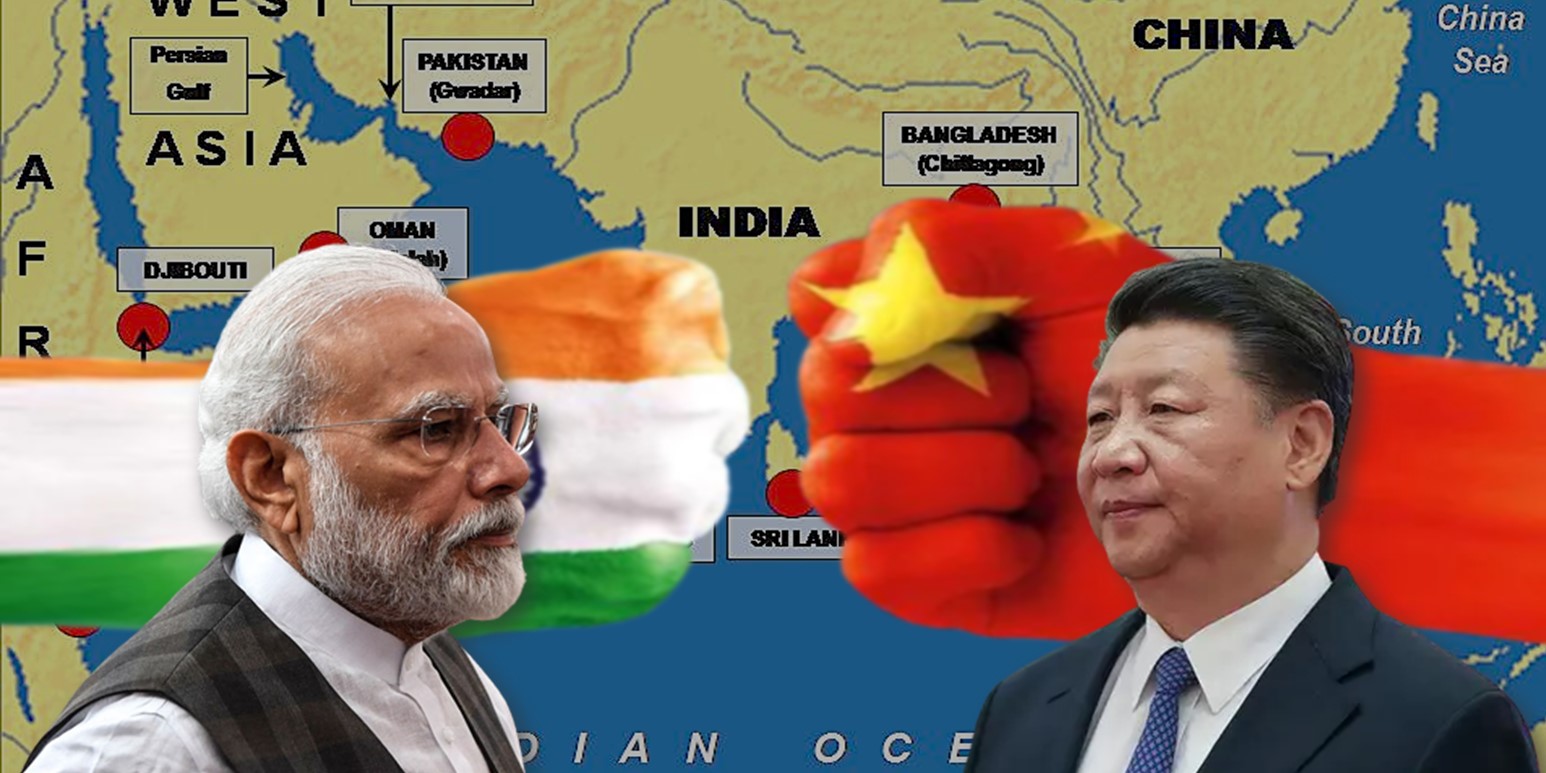
Wolf Warrior diplomacy: There is almost a consensus in the world that China is the biggest security concern. In its quest to become a superpower, China is giving up on humanity. It is not only exploiting its people but also its neighbours to do so. This became evident after the spread of corona virus which took the form of pandemic and created havoc for people around the globe. But it is not limited to that. China’s ‘Wolf Warrior’ diplomacy is another dangerous and inhumane tactic used by the country to promote Chinese ideology and counter any revelations of the truth.

China’s wolf warrior diplomacy is the brainchild of Chinese President Xi Jinping. Since he became the President, Indo-Chinese relations have seen more unrest. China eyes India as its biggest competitor and thus wants to take advantage in India dominated Indian ocean using its wolf warrior diplomacy. This was evident from last month’s decision of the Chinese government of making Zhao Lijian the deputy director of the Department of Boundary and Ocean Affairs.

RelatedPosts

Pakistan’s Proxy War Faces a Setback as Delhi Terror Plot is Crushed, 18 Weapons Seized

India’s $4 Billion Uranium Coup with Kazakhstan Rewrites the Global Nuclear Balance

India, New Zealand Seal Fast-Tracked Trade Pact to Expand Duty-Free Access, Jobs and $5 Billion Trade Target

Load More

In accordance of that, TFI predicted the possible use of wolf warrior tactics by China in the maritime domain. And now it is proving to be true with the unfolding events.

Spurts in China’s DWF vessels

According to the latest reports, there is a sudden rise in China’s distant water fishing or DWF vessels in the high seas including the Indian Ocean Region and India’s immediate neighbourhood.  India is closely monitoring the spurt.

But first let us understand what are Distant Water Fishing Vessels. Distant-water fishing vessels operate to fish in the seas and oceans that are far from the territories. Mostly, they operate within the Exclusive Economic Zones or EEZ of other countries that have signed access agreements to allow these fleets to fish inside their territories as well as on the high seas.

Read more: Xi Jinping has started the Maritime chapter of Wolf Warrior diplomacy

This becomes important concern for India because the DWF vessel could be used for espionage purpose. According to the report, the extensive use of vessel also has environmental implications as it is hazardous especially to the northern Indian ocean region.

There has also been an increase in the activities of unregistered Chinese fishing vessels near India’s other neighbouring countries like Sri Lanka, Pakistan, Iran and Oman. According to Indian officials, more than 392 Chinese illegal, unreported and unregulated fishing incidents have occurred in the Indian Ocean in the year 2021, compared to 379 in the previous year 2020.

If we look at the individual country’s reporting, Maldives and Sri Lanka have reported the presence of Chinese DWF vessels such as squid jiggers, trawlers and long liners in their waters. Similarly, Iran faces similar challenges as Chinese trawlers are taking close to 46,000 tonnes of commercial fish. Last year, the Chinese spy ships Yuan Wang 5 took a halt in Sri Lankan waters, sending alarm bells ringing in New Delhi.

This situation asks for the concerns as China has deployed its DWF vessels across oceans around the world. The expansionist country has also been found guilty of trespassing into the Exclusive Economic Zones or EEZ of more than 80 countries while fishing outside its own EEZ. In this regard, the new research by the Policy Research Group shows that China has more than 18,000 boats in the world’s oceans.

It is well known that China has consistently topped the charts of fishing and seafood production. It produces about 12 million tons of live weight which is almost double to that of Indonesia. This difference seems to grow wider with the fact that Indonesia is the second largest producer. It is evident from this scale that Chinese DWF are engaged in illegal, unreported and unregulated fishing activities across the globe.

If we set aside the environmental consequences, these illegal activities also pose a threat to local economies, although the impact is still not fully understood and primarily felt at a regional level.

Apart from that, there is a ban on bottom trawling in most parts of the world. China has also banned bottom trawling within its own territory. But ironically, it has encouraged its DWF vessels to conduct trawling activities close to the EEZ of other countries in South America, Africa, littoral states of Indian Ocean, the Pacific Ocean, South and mid-Atlantic Ocean and even in Russia which it considered as “more than friend”.

Chinese fishing boats operating illegally are also taking measures to avoid being detected by marine radars by disabling their transponders in proximity to the exclusive economic zones of other nations. This practice, known as maritime radar evasion, allows these vessels to evade the automatic identification system. According to sources, these boats have been observed to experience transmission pauses for a minimum of eight hours when they are near the EEZs of other countries. The captains of these boats take the step of disabling their transponders while engaging in illegal fishing activities.

It cannot be mistaken that these spurts are simply the moves for economic gains. The bigger intention of China lies in distorting other coastal counties’ maritime economy along with espionage intentions. This Chinese hunt also looks forward to counter India’s influence in the Indian Ocean and subsequently in the neighbouring countries.

What China wants?

If we look at Chinese policy in the Indian subcontinent and Indian ocean, it is primarily based against India. The only challenge it faces in Asia is India because rest of the nations are either in the clutches of its debt trap diplomacy or are too small to raise concerns. But, if we analyse the reasons for its approach in Indian Ocean, we find several reasons for this.

The most well-known reason is that China eyes Ladakh, Arunachal Pradesh and Sikkim which are integral parts of India. Due to its incapability to do so China always seeks new fronts to challenge India, which ultimately leads it to Indian ocean.

Secondly, Indian ocean is the natural home to number of minerals and resources. In order to exploit them China either need to reduce the influence of India in the area or debt trap small island countries to negotiate on its own terms.

Most importantly, China’s interest in the Indian ocean is also based on its oil security. China gets 80 per cent of its oil imports through the Malacca Straits. Malacca Straits is the gateway for South China Sea to Indian Ocean.

Looking in the series of its conflict in South China Sea, it becomes clear that the biggest trade route through the ASEAN countries’ contiguous zone is dependent largely on Indian ocean for trade with African and Middle East countries where China holds a major stake.

And finally, India is aspiring to become the hub for supply chains which are disrupted after the covid pandemic and ongoing Russia-Ukraine war. While India is getting an overwhelming support, China sees it against its economic interest. China wants the world to get depended on it. So, it wants to get more stake in the Indian ocean.

China’s hunger for South China sea and Indian Ocean

China has a strong desire to control the South China Sea for its trade benefits, as the region is a major hub for global maritime trade, with nearly one-third of all maritime trade passing through it. By controlling this region, China would have the power to disrupt the global supply chain. Additionally, China’s own trade heavily relies on the South China Sea, with 39.5% of their total trade and 70% of their oil imports depending on their dominance in the region.

As far as Indian ocean is concerned, earlier when China wanted to surround India with its presence in the Indian ocean, it received a strong backlash from India. In 2013, under the China Pakistan Economic Corridor or the CPEC framework, Gwadar Port of Pakistan was handed over to Gwadar port Authority which worked under the Chinese authority.

Later, in 2015, China acquired 2000 acres of land on lease for 99 years at Gwadar to build Gwadar Special Economic Zone. This opened the gate for China in the Arabian Sea along with an opportunity to stand near Indian waters. Again in 2017, China acquired Hambantota port in Sri Lanka for a 99-year lease.

India, in an attempt to counter the future threat from Gwadar port, made a deal with Oman to use its Duqm port for maintenance of Indian military vessels. On the Hambantota port issue, India dealt with Sri Lanka bilaterally and got an assurance that the port will never be used for military purposes. Since then, India has taken number of measures to deal with Chinese influence on Sri Lanka. Apart from that, Indian firm Adani Ports later acquired Colombo Port to balance the Hambantota trade, which will fortunately favour Indian geo-political interest.

India also increased its military build-up in Andaman and Nicobar Islands eyeing the future need to deal with China.

So, this wolf warrior diplomacy is nothing but a second version of the previous strategy that China failed. While the former was aggressive in nature, this one is more subtle and more veiled by the economic mischievous projections. `

India takes a note

Recently, the Chinese aggression was addressed and reported by the Conference of ‘DGPs and IGPs’. The conference was attended by PM Modi and Union Home Minister Amit Shah and NSA Ajit Doval along with 350 top police officers of the country.

According to the paper presented at the conference, China has been growing its influence in India’s neighbourhood with the goal of limiting India’s ability to act. The IPS officers presented papers that said China is providing large amounts of loan funding for development projects in Southeast and South Asia to reduce India’s presence in the Indian Ocean and force bilateral issues to be resolved on China’s terms.

This move is part of China’s larger strategy to control the region and limit India’s power projection. The papers emphasize the growing challenges and complexities that India faces in its neighbourhood and the need for a proactive approach to counter these threats.

While the reports say that India is closely monitoring the issue, the past record show that India will certainly bring up a solution to this Chinese aggression

Support TFI:

Support us to strengthen the ‘Right’ ideology of cultural nationalism by purchasing the best quality garments from TFI-STORE.COM

Also Watch:

Tags: ChinaExclusive Economic ZonesIndiaIndian OceanSecurity ConcernWolf Warrior DiplomacyXi JinpingZhao Lijian
ShareTweetSend
Previous Post

Gogamedi Mandir Hanumangarh, Timings, History, Travel guide and How to reach

Next Post

Pavagadh Mandir, Timings, History, Travel Guide, and How to reach

Related Posts

When law becomes an instrument of exclusion, persecution moves far beyond the courtroom.
Geopolitics

Ahmadis in Pakistan: From Faith to Marginalisation Under Law and Society

28 April 2026

The troubles of Ahmadis in Pakistan are not merely those of a religious minority. Their story is about how...

When uranium becomes strategy, India moves first.
Geopolitics

India’s $4 Billion Uranium Coup with Kazakhstan Rewrites the Global Nuclear Balance

28 April 2026

India has secured a landmark uranium supply agreement worth more than US$4 billion with Kazakhstan’s state-run mining giant Kazatomprom....

“Fixing the World”: What a Century of Big Ideas Reveals About Us
Geopolitics

“Fixing the World”: What a Century of Big Ideas Reveals About Us

27 April 2026

In 1945, as the world emerged from the devastation of global war, representatives of 50 nations gathered in San...

Load More

Leave a Reply Cancel reply

Your email address will not be published. Required fields are marked *

I agree to the Terms of use and Privacy Policy.
This site is protected by reCAPTCHA and the Google Privacy Policy and Terms of Service apply.

Currently Playing

From Runways to Warships: India’s Firefighting Warrior Built for Bases & Battles| IAF | VayuShakti

From Runways to Warships: India’s Firefighting Warrior Built for Bases & Battles| IAF | VayuShakti

00:05:40

Ethanol, EVs and Solar- How India’s Energy Game Is Changing | Modi on LPG & Crude Oil | war| Hormuz

00:05:21

Truth of IRIS Dena: 8 Days That Changed Narrative | War zone Reality, Not an Indian Navy Exercise

00:08:02

300 Million Euros for SCALP: Strategic Necessity or Costly Dependency on France300

00:04:06

Tejas Mk1A: 19th aircraft coupled but Not Delivered: What Is Holding Back the IAF Induction?

00:07:21
Facebook Twitter Instagram Youtube
tfipostTfipost.com
Right Wing | News Analysis | Indian Opinion
  • About us
  • Contact Us
  • Careers
  • Brand Partnerships
  • Terms of use
  • Privacy Policy
  • Sitemap

©2026 TFI Media Private Limited

No Result
View All Result
  • Premium
  • Politics
    • Analysis
    • Opinions
    • Trending
  • Economy
    • Business
    • Finance
  • Defense
    • Defence
    • Strategy
    • Weaponry
  • Geopolitics
    • Africa
    • Americas
    • Asia Pacific
    • Europe
    • South Asia
    • West Asia
  • Knowledge
    • Culture
    • History
    • Indology
  • Law
  • Lounge
    • Books
    • Cinema
    • Food
    • Health
    • Sports
    • technology
    • Travel
    • Satire
TFIPOST हिन्दी
TFIPOST Global

©2026 TFI Media Private Limited