





















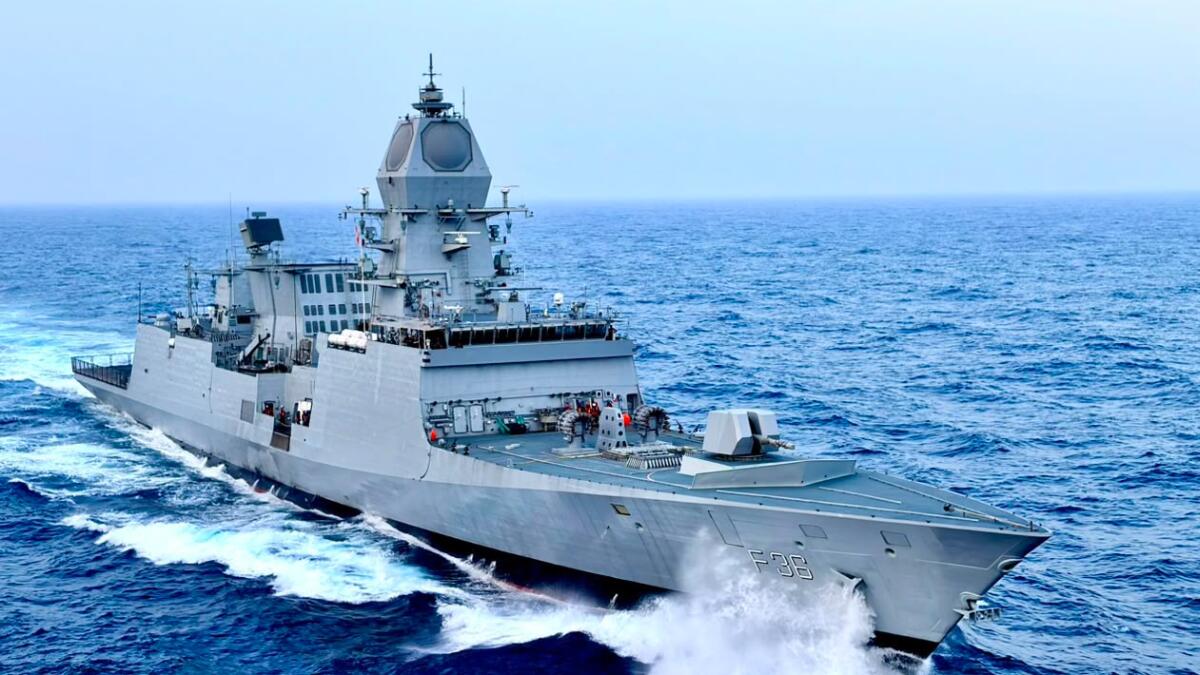
On the evening of September 15, 2026, an Indian Navy warship conducting routine surveillance in the North Arabian Sea — about 220 km east of Oman, in international waters — was approached at high speed by a Pakistan Navy vessel. The Pakistani ship allegedly manoeuvred erratically before grazing past the Indian warship. Quick seamanship meant there were no casualties and no major structural damage.
India responded fast diplomatically. New Delhi summoned Pakistan’s Chargé d’Affaires and lodged a formal protest, calling the manoeuvre “unacceptable and unprofessional.” India said the incident directly contravened Article 10 of the 1991 India-Pakistan Agreement on Advance Notice on Military Exercises, Manoeuvres and Troop Movements — a confidence-building pact meant to prevent exactly this kind of accidental encounter between the two nuclear-armed neighbours.
Echoes of 2011
Analysts immediately drew a parallel to a near-identical incident 15 years ago. In June 2011, during anti-piracy operations near a freed hijacked vessel, the Pakistani frigate PNS Babur closed in on the Indian frigate INS Godavari at unsafe speed and brushed against its flight deck, shearing off helicopter safety netting. That episode also triggered a diplomatic row, with India releasing video evidence and Pakistan countering that the Indian ship had obstructed a humanitarian rescue.
The bigger picture
This latest brush-up doesn’t exist in isolation. Over the past year and a half, the Arabian Sea has become a stage for tit-for-tat military signalling between the two navies — sometimes called a “Battle of NOTAMs” (Notices to Airmen/Mariners), where missile tests and exclusion-zone declarations answer one another in near real time. Earlier in 2026, Pakistan ran a string of missile tests near Karachi, prompting India to declare larger exclusion zones and deploy its missile-tracking vessel INS Dhruv in response. This all follows a period of sharply heightened tension after the 2025 Pahalgam terror attack, which triggered Indian airstrikes, Pakistani retaliation, and naval mobilisations on both sides — including a prolonged deployment of India’s carrier INS Vikrant in the Arabian Sea.
Why it matters
Both the 2011 and 2026 incidents involve the same underlying safety framework: the 1991 agreement requires a minimum three-nautical-mile (about 5.6 km) buffer between the two countries’ naval vessels in international waters to prevent accidental collisions. That this rule keeps getting tested — twice now, in strikingly similar fashion — underscores how fragile the maritime de-escalation architecture is between two nuclear powers that have fought several wars, even when neither side wants an actual clash.
Pakistan hasn’t yet issued a detailed public rebuttal matching India’s account as of this writing — worth watching for in the next day or two, since in 2011 Islamabad pushed back with its own version of events.