







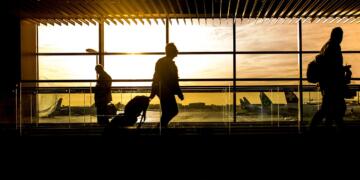



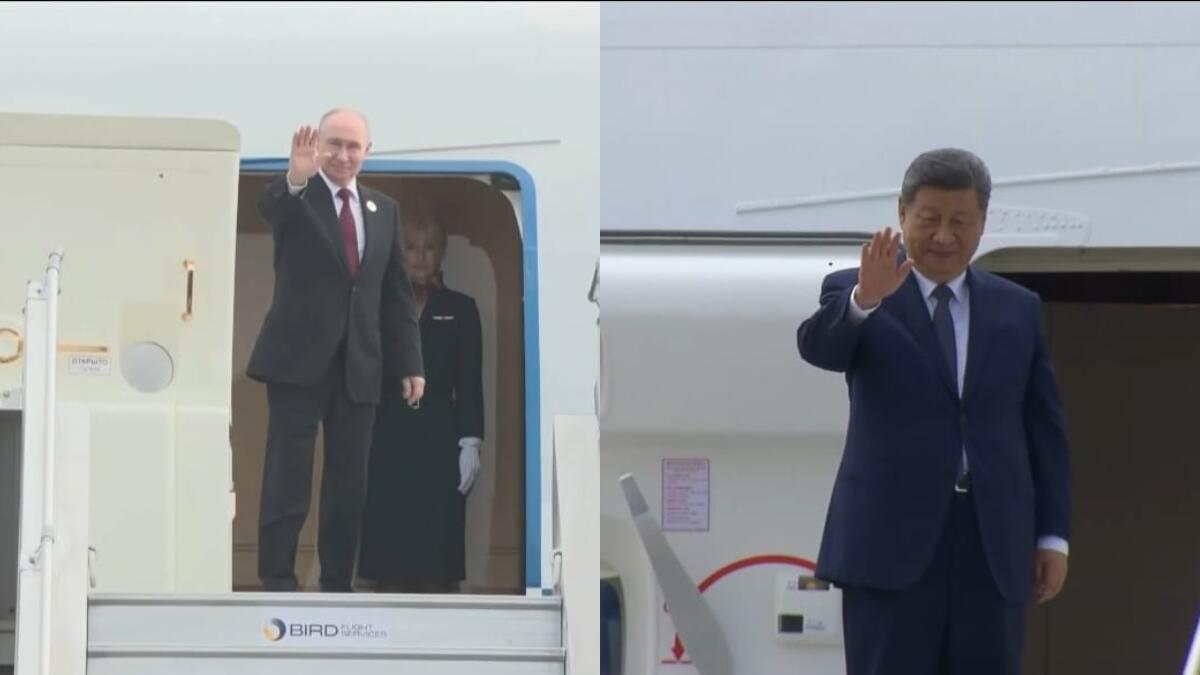
As the 18th BRICS Summit drew to a close on Sunday, New Delhi’s airports became the final stage of a weekend that had briefly turned the capital into one of the world’s most closely watched diplomatic hubs. One by one, the heads of state who had descended on Bharat Mandapam packed up and flew home, bringing an eventful two days of summitry to an end.
Xi Jinping departs for Beijing
Chinese President Xi Jinping was among the first major leaders to leave, departing New Delhi on Sunday after wrapping up his first visit to India in nearly seven years. Before heading to the airport, Xi attended the summit’s closing session and joined fellow leaders for a tree-planting ceremony and a visit to the Bharat Innovates exhibition at Bharat Mandapam.
Xi’s send-off came a day after he skipped Modi’s gala dinner for BRICS leaders, citing tiredness after a long day that included a roughly 50-minute bilateral meeting with the Prime Minister. Before leaving, Xi struck a broader, forward-looking note on the “Greater BRICS” grouping, calling for members to deepen cooperation, keep industrial and supply chains stable, and build a more integrated market among developing economies.
In his final remarks to Modi, Xi framed the relationship in long-term, strategic terms, noting that despite their differences, India and China had managed to support each other’s development. The two leaders reaffirmed that boundary-related differences should not be allowed to escalate into disputes — language both sides have leaned on as they try to steady ties following the 2020 Galwan clash.
Putin wraps up a three-day visit
Russian President Vladimir Putin, who had arrived in Delhi on Friday for a three-day trip built around the summit, was seen off at the airport by Minister of State for External Affairs Kirti Vardhan Singh. In a message marking the departure, the Indian side reaffirmed the “Special and Privileged Strategic Partnership” between the two countries and its commitment to deepening cooperation across sectors.
Putin’s visit had been dense with bilateral engagement even before the summit’s formal sessions began: he held talks with Modi covering defence, energy, space, skill mobility and people-to-people ties, and the two leaders discussed the conflicts in West Asia and the Black Sea region. Modi presented Putin with a Russian translation of the Thirukkural, the classical Tamil text by the poet-philosopher Thiruvalluvar, as a parting gift. The visit also featured the first India edition of Russia’s INNOPROM industrial exhibition, held from 9–11 September, which both leaders welcomed as a step toward expanding trade and industrial ties.
Addressing the summit itself, Putin had struck a similar note to Xi’s, describing BRICS cooperation as resting on principles of equality, good-neighbourliness and mutual respect for the cultural and civilisational diversity of its members.
A packed exit schedule
Xi and Putin were far from the only heads of state making their way out of Delhi as the summit closed. The 18th BRICS Summit had drawn one of its largest-ever leader turnouts, including South African President Cyril Ramaphosa, Egyptian President Abdel Fattah El-Sisi, Indonesian President Prabowo Subianto, Iranian President Masoud Pezeshkian, Ethiopian Prime Minister Abiy Ahmed Ali, Malaysian Prime Minister Anwar Ibrahim, and Abu Dhabi Crown Prince Sheikh Khaled bin Mohamed, alongside ministerial delegations from Brazil and Saudi Arabia. Many held their own bilateral meetings with Modi in the summit’s final hours — including a sit-down with the Abu Dhabi Crown Prince on defence, AI, energy and a proposed $11.5-billion aluminium investment in Odisha — before heading to their respective flights out of the capital.
With the chairship formally passed to China for 2027, the departures marked not just the end of a two-day summit but the close of India’s year-long BRICS chairship, capped by a weekend that Indian officials had spent months preparing for, deploying tens of thousands of security personnel and coordinating arrivals and departures for roughly two dozen foreign delegations.