


















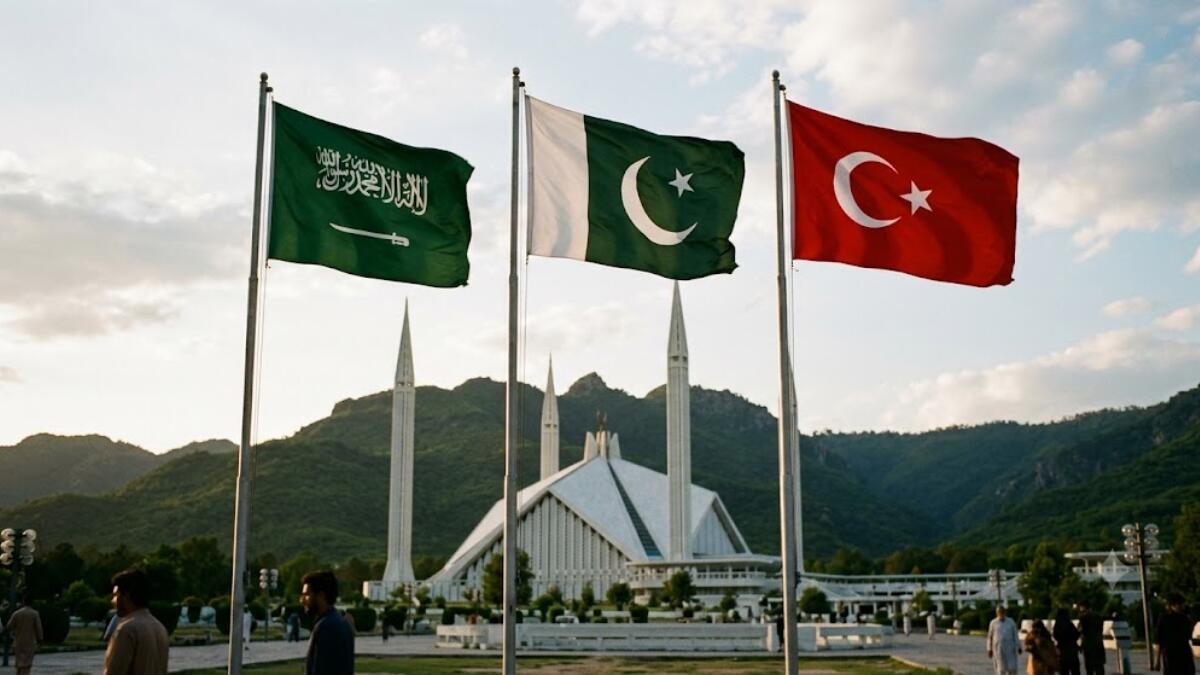
Turkey, Saudi Arabia and Pakistan are set to sign a joint defence agreement in Jeddah, with the deal under negotiation since last year, marking a significant new trilateral framework amid a deepening regional crisis following the Israeli-US strikes on Iran. Saudi Crown Prince Mohammed bin Salman, Turkish President Erdogan and Pakistani PM Shehbaz Sharif are meeting in Jeddah, with Sharif and army chief Asim Munir arriving Thursday and Erdogan expected Friday.
It is being said that the agreement will cover all aspects of defence cooperation however it is not yet clear whether it includes a mutual defence clause under which an attack on one country would count as an attack on all three — though a second source said such a clause was likely, with final terms still unconfirmed.
Each country brings unique weight: oil-rich Saudi Arabia is the Arab world’s only G20 economy and home to Islam’s two holiest cities; Pakistan is the Muslim world’s only nuclear-armed state; and Turkey, straddling Asia and Europe, fields NATO’s second-largest army.
How we got here
This builds on an existing bilateral foundation. Saudi Arabia and Pakistan signed a Strategic Mutual Defence Agreement (SMDA) on 17 September 2025 in Riyadh, under which both countries committed to treating any act of aggression against one as an act against both. That pact was tested quickly: after Iranian strikes on Saudi Arabia in 2026, Pakistan invoked the mutual defence agreement, and following the ceasefire sent 13,000 troops and fighter jets to Saudi Arabia.
Turkey’s entry has been brewing for months: Bloomberg reported in January that Turkey was likely to join the pact, with talks in an “advanced” stage, and Pakistan’s Defence Production Minister said a draft trilateral deal had been prepared. A Saudi source said the arrangement “was under discussion for a long time, but the latest developments in the region expedite it.”
Why the timing
The move comes amid a rise in regional conflicts — specifically the US-Iran war, which has drawn in Gulf states and disrupted shipping through the Strait of Hormuz and the Red Sea. Analysts trace the underlying logic further back: Saudi Arabia’s original 2025 pact with Pakistan followed instances of perceived American inaction — Iranian drone attacks on Saudi Arabia in 2019 that drew only mild US condemnation, and Israel’s 2025 strikes on Qatar that received just a lukewarm rebuke — pointing to a broader Gulf hedge against reliance on Washington as sole security guarantor.
How India has responded — and what’s at stake
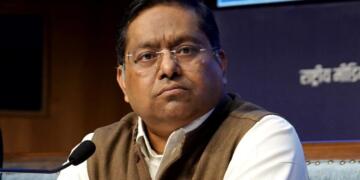
New Delhi’s posture has been notably measured rather than alarmed. When the original Saudi-Pakistan pact was signed, India’s External Affairs Ministry said it would “study the implications of this development for our national security as well as for regional and global stability,” while stressing the government remains “committed to protecting India’s national interests and ensuring comprehensive national security in all domains.” Following the newer trilateral agreement, India has issued a similar response, again saying it will closely study the pact’s implications for national security and regional and global stability.
Several strands matter for India’s calculus:
- Pakistan’s strategic depth. The Saudi deal comes just months after Pakistan’s military clash with India in May 2026, and for Pakistan it provides support from a rich Gulf ally while boosting its standing at a time of tension with India. A Saudi official, asked whether the pact extends Pakistan’s nuclear umbrella to Saudi Arabia, called it “a comprehensive defensive agreement that encompasses all military means” — deliberately ambiguous language that Indian strategists will parse closely, given Pakistan’s nuclear-weapons status is central to why this pact draws outsized attention.
- An “Islamic NATO” narrative. The pact has sparked speculation about an “Islamic NATO” among Muslim-majority nations, with Pakistan’s defence minister suggesting the arrangement could later expand to include Qatar as well. If Turkey formalises entry with a mutual-defence clause, it links a nuclear state (Pakistan), a NATO military power (Turkey) and the Arab world’s dominant economy (Saudi Arabia) — a combination India has not previously had to factor into its western and northwestern security planning simultaneously.
- Economic and diplomatic balancing act. India maintains strong economic and energy ties with Saudi Arabia and a large expatriate population in the Gulf, which is likely why New Delhi’s public language has stayed deliberately non-confrontational rather than treating the pact as a hostile bloc.
For India, this isn’t a sudden shock so much as the formalisation and expansion of a trend that’s been visible for almost a year — Gulf states hedging against US unreliability by deepening ties with a nuclear-armed Pakistan, with Turkey’s potential entry adding a NATO-linked military dimension. India’s actual response is likely to unfold quietly, through continued diplomatic engagement with Riyadh and Ankara individually (both remain important partners on trade and energy) rather than through public pushback — while its defence establishment watches closely for any formal language on Pakistan’s nuclear posture or troop-sharing arrangements that could affect the western front.