






















Public services are one of the clearest signs of what a government prioritises, separate from its messaging. Every country funds hospitals, schools, defence, infrastructure and family support somehow, and how accessible those services are, and who they protect, says more about priorities than any speech. Five services that almost every country provides show how differently the same responsibilities can be approached.
1. Family and Welfare Support
How a country supports families under strain shows how far it will step in before a private difficulty becomes a wider cost. Respite foster care, which gives full-time and kinship carers a short, planned break while a child stays with an approved carer, is one small but telling example of this provision in the UK. It exists because policymakers recognise that unsupported carers reach breaking point, and a modest, preventative step is cheaper and kinder than the crisis that follows without it. Campaigns that encourage more people to consider fostering treat recruitment as part of the same welfare priority as housing support.
2. Healthcare Systems
How a country funds medical care, through taxation or private insurance, reflects a judgement about who deserves timely treatment and who bears the cost. A service built around universal access accepts higher public spending to treat illness before it becomes a wider cost. One built around private insurance moves that judgement towards individual responsibility and market efficiency. Neither is inherently right, but the choice says how a society weighs collective risk against personal choice.
3. Education Systems
The choices a country makes about who pays for education, and at what stage, reveal how it thinks about opportunity. A country that funds free schooling deep into the teenage years is betting that broad literacy and numeracy pay off nationally, not individually. Countries that leave more cost to families, particularly at university, are making a different calculation about where public money delivers the most return, and what a country spends on early years provision says a great deal about whether it values prevention over correction later.
4. Defence and National Security
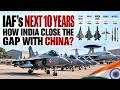
A nation’s defence budget signals how it weighs external threats against every other call on public money, and the balance varies hugely even among countries in similar positions. Some governments treat a well-funded, current military as the precondition for everything else the state does. Others direct a larger share of that budget towards intelligence and cyber capability rather than conventional forces. Either way, the share of national income directed towards defence, away from healthcare or education, is a clear statement of priority.
5. Infrastructure
Roads, rail, energy grids and digital networks rarely make headlines the way hospitals or schools do, but they underpin almost everything else a country achieves economically. Infrastructure spending is one of the few areas where a government’s choices remain visible generations later, since Victorian-era investment in London’s Underground is still carrying passengers a century and a half on. Countries that treat infrastructure as a long-term asset accept slower, costlier projects for durability, while those under tighter fiscal pressure settle for whatever keeps a system running now.