
























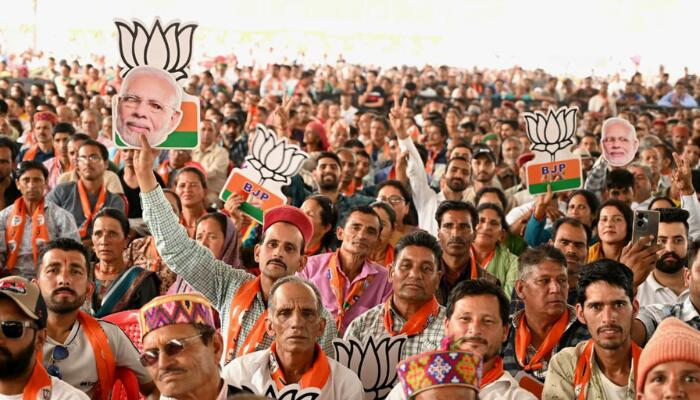
The Bharatiya Janata Party has registered a strong and politically significant performance in the Himachal Pradesh municipal corporation elections, winning three out of four civic bodies and tightening its hold over the state’s urban centres. The party secured clear majorities in Mandi, Dharamshala and Solan, while the Congress managed to retain control only in Palampur. The results carry weight not just in administrative terms but also in their broader political implications.
Elections were held across 63 wards in four municipal corporations. The BJP won 37 seats, the Congress secured 23, and independent candidates claimed three. The spread of results reflects a clear urban advantage for the BJP, which converted its organisational presence into ward-level dominance across most regions.
Mandi, Dharamshala and Solan deliver decisive BJP wins
Mandi emerged as one of the most one-sided contests of the cycle. The BJP secured 12 of the 14 wards, leaving the Congress with just one seat and one ward going to an independent candidate. The outcome leaves the opposition with a negligible presence in the civic body and underscores the scale of the BJP’s local dominance.
In Dharamshala, the BJP won 11 of 17 wards, comfortably securing a majority. The Congress managed five seats, while one was won by an independent candidate. The numbers ensured a straightforward transfer of control to the BJP, reflecting consistent urban support across the region.
Solan followed a more competitive but ultimately decisive pattern. The BJP secured 10 of 17 wards, while the Congress won six and an independent candidate claimed one seat. Despite closer margins, the BJP retained a clear edge and secured control of the corporation.
Palampur stands apart as a Congress stronghold
Palampur was the only municipal corporation where the Congress managed a commanding performance. Out of 15 wards, the party won 11 and secured control of the civic body. The BJP was restricted to four seats, making Palampur a clear exception to the wider state trend.
For the Congress, this result offers limited relief but important political symbolism, showing that its organisational strength remains intact in select pockets.
Strong voter turnout reflects active participation
The elections, held on 17 May, recorded a turnout of 69.16 per cent, indicating strong voter engagement in urban governance. While the overall electoral framework referenced 51 seats, ward-level contests extended across 63 positions, reflecting the layered structure of municipal representation across the state’s urban bodies.
BJP frames the result as an endorsement of the governance model
Reacting to the outcome, the BJP described its performance as a reflection of public confidence in its governance approach. In its statement on social media platform X, the party attributed the victory to development work, organisational discipline, and the leadership of Prime Minister Narendra Modi.
It further asserted that voters had backed its policies while rejecting the Congress narrative in urban areas, positioning the outcome as a validation of its political direction in the state.
A verdict with wider political resonance
Though municipal in nature, the results are already being viewed through a broader political lens. Urban local body elections in Himachal Pradesh often serve as early indicators of shifting voter sentiment, and this outcome is expected to influence political strategy on both sides.
For the BJP, the results reinforce its urban organisational strength and provide momentum. For the Congress, Palampur offers a reminder of remaining pockets of support, even as the wider urban landscape tilts away.
As both parties interpret the mandate, the real significance of this verdict lies in its timing and tone, offering an early glimpse into the contours of a political contest that is yet to fully unfold.