






















The Indian Navy has signalled a much larger role for Hindustan Shipyard Limited (HSL), the Defence Ministry’s Miniratna public sector unit, positioning it as a long-term partner in the country’s maritime security setup rather than simply a contractor that builds vessels.
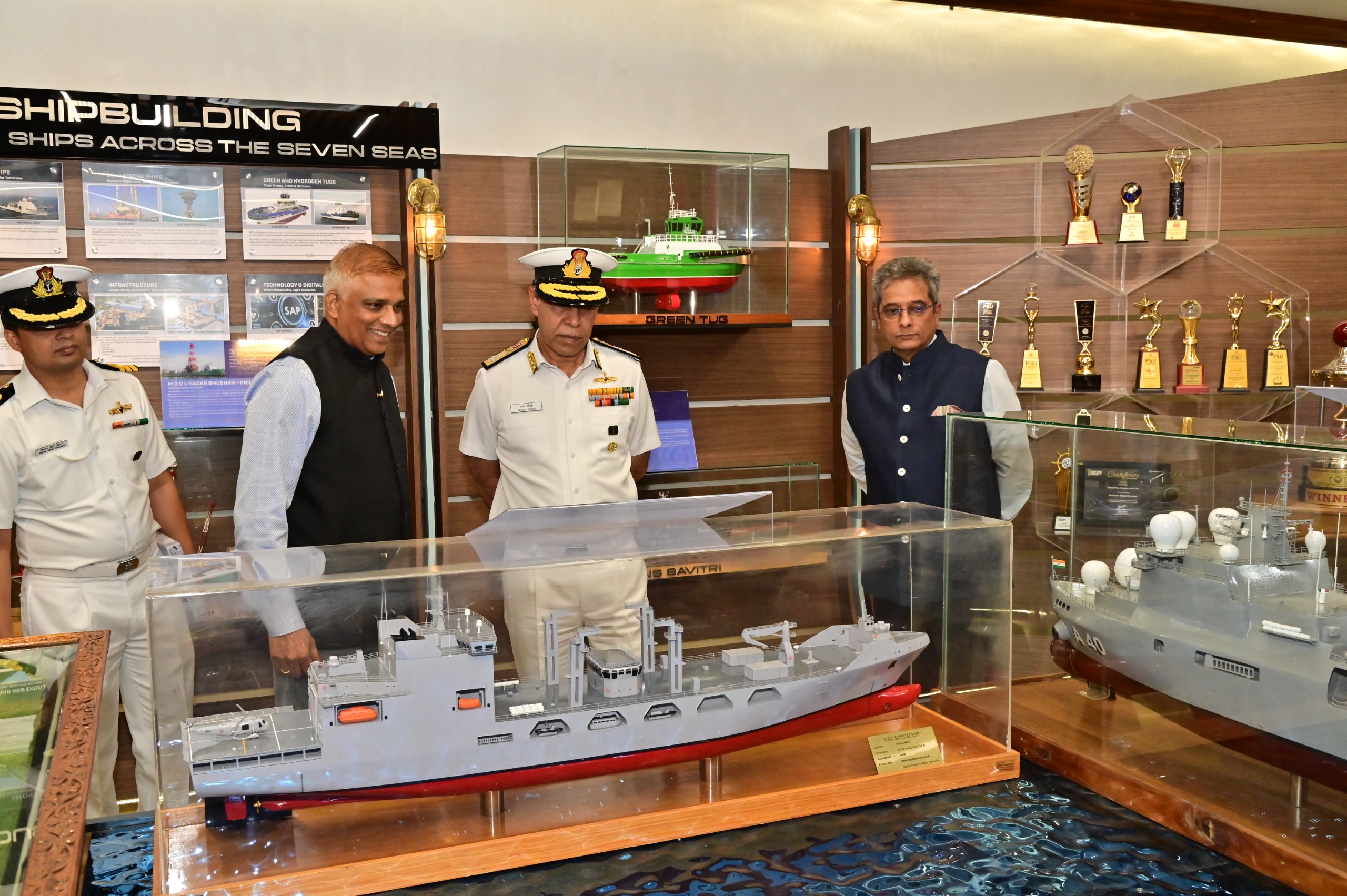
During a visit to the Visakhapatnam-based yard, Deputy Chief of the Naval Staff Vice Admiral Tarun Sobti said the Navy sees HSL evolving into a strategic partner, not just a shipbuilder. The comment underscores a shift in the navy’s thinking, which is increasingly geared toward full lifecycle support – spanning construction, maintenance, upgrades and sustained operational backing over decades, not just delivery of a finished platform.
Vice Admiral Sobti praised HSL’s recent progress and transformation before being briefed on the yard’s infrastructure modernisation drive and ongoing projects. HSL’s Chairman and Managing Director, Rear Admiral (Retd.) Chandrasekharan Raghuram walked the navy leadership through the shipyard’s growing capabilities during the presentations.
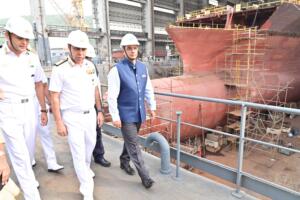
Two themes stood out in the deputy chief’s remarks: an insistence that quality and on-time delivery remain non-negotiable and a push for continued investment in design capability and workforce skills. He pointed to the yard’s experienced workforce as its single biggest asset.
The Navy’s stance fits into a broader pattern in India’s defence manufacturing push, where domestic yards are being nudged to offer complete, end-to-end support instead of stopping at production. Lifecycle support has become especially critical because naval vessels typically stay in service for several decades, during which they need periodic refits, upgraded systems and structural overhauls. Handling this work domestically, rather than relying on foreign yards, both boosts operational readiness and advances India’s self-reliance goals in defence.
HSL’s own infrastructure upgrades, aimed at lifting productivity and enabling it to take on more technically demanding projects — appear to be paying off in the form of this institutional recognition from the Navy. The visit also points to a broader shift in how defence users and domestic industry collaborate: rather than viewing shipbuilding as a series of standalone contracts, the emphasis is moving toward sustaining a platform’s capability across its entire operational life. For HSL, this opens the door to becoming one of India’s principal long-term maritime support institutions.
Hindustan Shipyard Limited, headquartered in Visakhapatnam, is among India’s oldest shipbuilding facilities, dating back to 1941 and nationalised in 1952. It ranks as the country’s second-largest shipyard after Cochin Shipyard, and its covered building dock can accommodate vessels of up to 80,000 deadweight tonnage.
Among HSL’s capabilities, submarine construction, refit and repair remain its most strategically significant strength. The Defence Ministry PSU is one of the few shipyards in India with the infrastructure and expertise to undertake complex submarine overhauls. Over the years, it has carried out extended medium refits of Indian Navy Kilo-class submarines, including INS Sindhukirti, INS Vela and INS Vagli. The shipyard is currently executing another medium refit and modernisation programme for INS Sindhukirti and had earlier completed the retrofit of INS Sindhuvir before the submarine was transferred to Myanmar.
Looking ahead, HSL is preparing to move beyond refit work and into submarine construction itself, teaming up with Mazagon Dock Shipbuilders Limited. The collaboration is intended to strengthen India’s domestic submarine-building base and cut reliance on foreign shipyards; a step that could mark a significant expansion of HSL’s role in the country’s undersea defence capabilities.