







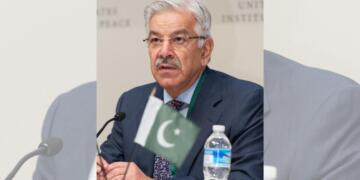








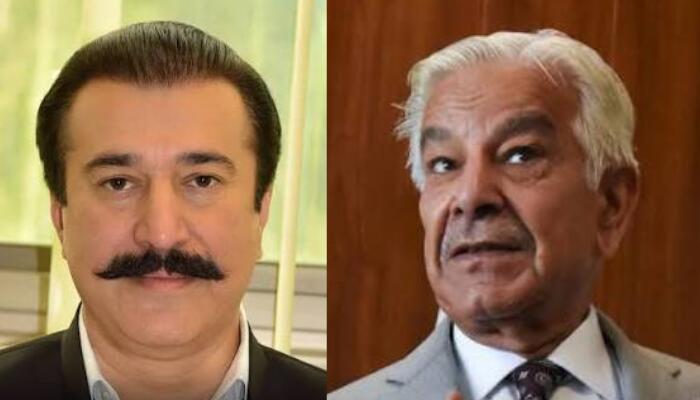
A routine political discourse on Kashmir has escalated into an unusually public and testy confrontation after Pakistan Defence Minister Khawaja Asif reportedly suggested that residents of Rawalakot and Mirpur in Pakistan-occupied Kashmir do not qualify as “proper Kashmiris”.
The comment, which remains unverified, landed with immediate political consequences. It drew a swift and forceful response from Faisal Mumtaz Rathore, the self-styled prime minister of Pakistan-occupied Kashmir, who flatly rejected the premise and asserted that Kashmiri identity is not something to be certified by Islamabad.
At its core, the exchange has laid bare a familiar but often carefully contained tension: who gets to define identity in a region already burdened by layered political claims.
Rathore’s unusually blunt public rebuke
In a sharply worded intervention on social media platform X, Rathore accused the defence minister of aggravating divisions through what he portrayed as careless and outdated political framing.
The tone of his response marked a departure from the usual diplomatic restraint seen in exchanges between the PoK leadership and Islamabad. He suggested that such remarks do little beyond deepening fractures at a time when political sensitivity is already high.
In an unmistakably pointed remark, Rathore referred to what he described as a “boomer” mindset within sections of Pakistan’s leadership, arguing that such thinking widens gaps instead of bridging them.
He stressed that Kashmiri identity is anchored in lived experience, history, and collective memory, rather than endorsement from federal authorities in Islamabad.
Claims of deflection and narrative repositioning
The PoK leadership also alleged that, following the backlash, Asif attempted to shift the debate towards governance conditions in Azad Jammu and Kashmir.
Rathore characterised this move as a calculated diversion, suggesting it was aimed at diluting the original controversy rather than addressing it head-on. In his view, the attempt to broaden the conversation was less clarification and more political redirection.
Responding to Asif’s reported clarification that Kashmiri identity is defined by struggle and sacrifice rather than documentation, Rathore dismissed the argument as insufficient and disconnected from the original statement that triggered the row.
Demand for an apology escalates tensions
What began as a war of words has now hardened into a demand for accountability. Rathore called on the defence minister to issue a clear apology, insisting that reinterpretation or reframing of the remarks was not an adequate response.
He argued that the appropriate course would have been acknowledgment rather than deflection, urging Islamabad to confront the controversy directly instead of diverting into governance critique.
Rathore also defended the region’s administrative performance, suggesting that external criticism often lacks context and does not reflect ground realities.
Wider diplomatic backdrop intensifies the moment
The controversy has unfolded alongside heightened regional friction, with India also reacting sharply to recent remarks by Khawaja Asif.
Ministry of External Affairs spokesperson Randhir Jaiswal dismissed Asif’s comments as an attempt to distract from Pakistan’s domestic governance challenges and alleged human rights concerns. New Delhi reiterated its longstanding position on Pakistan-occupied Kashmir, framing the situation there as the outcome of prolonged administrative neglect and systemic deprivation.
India’s intervention has added further weight to an already volatile exchange, amplifying scrutiny of Pakistan’s internal coherence on Kashmir-related narratives.
A dispute reflecting deeper political unease
Beyond the immediate exchange, the episode underscores a recurring and unresolved tension within Pakistan’s political discourse on Kashmir.
Identity, authority, and legitimacy remain contested not only across borders but within Pakistan’s own administrative framework. The latest confrontation suggests that even carefully managed political narratives around Kashmir remain vulnerable to rupture when questioned publicly at the highest levels.