




















RelatedPosts
The global economy is once again moving through turbulent waters. Escalating tensions in West Asia have unsettled international markets, triggered fresh concerns over energy security and added pressure on already fragile trade routes. For many countries, the fallout has translated into rising costs, slowing demand and renewed fears of economic instability.
Against that uncertain backdrop, India’s latest export figures have offered New Delhi a significant economic reprieve.
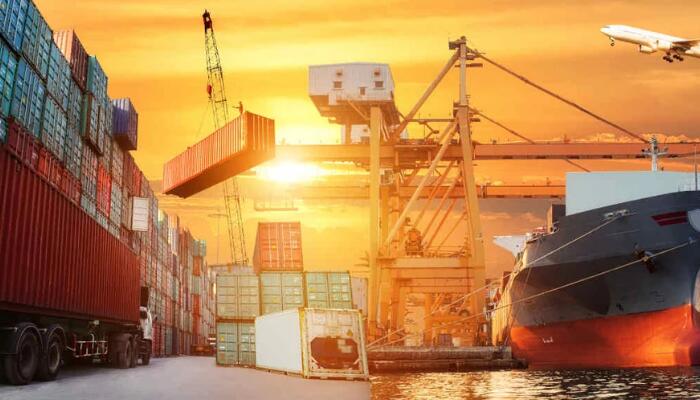
According to the latest trade data, India’s total exports climbed more than 13 per cent in April, touching nearly $81 billion despite mounting geopolitical and economic headwinds. Merchandise exports alone rose sharply to $43.56 billion, marking one of the strongest monthly performances in recent years.
The timing of the surge is particularly notable. Global trade sentiment has weakened considerably amid fears surrounding the Strait of Hormuz, volatile crude oil prices and concerns over supply-chain disruptions linked to the ongoing West Asia crisis. Economies heavily dependent on energy imports have come under increasing pressure as transportation and manufacturing costs continue to rise.
India, however, appears to have weathered the turbulence with greater resilience than many expected.
Multiple sectors drive export momentum
The export growth was not limited to a single category. Several sectors recorded substantial gains, indicating broader strength across India’s trade ecosystem.
Electronic goods exports registered strong expansion, while engineering products continued to remain among the country’s biggest outbound segments. Petroleum exports also surged amid elevated global oil prices. Agricultural shipments, including grains and food-related products, witnessed notable growth as international demand remained steady despite market volatility.
The figures suggest that India’s exporters have managed to retain momentum even as uncertainty clouds major global markets.
Imports, meanwhile, also rose during the same period, driven largely by higher crude oil and bullion prices. That increase widened the trade deficit, underlining the continuing impact of global commodity volatility on import-dependent economies such as India.
West Asia crisis reshapes trade dynamics
The effects of the ongoing conflict in West Asia were clearly visible in India’s regional trade patterns. Commerce linked to parts of the region witnessed pressure amid fears over shipping disruptions and instability around key maritime routes.
Yet the broader export performance indicates that India has been able to offset some of those disruptions by strengthening access to alternative markets and widening its trade partnerships elsewhere.
That shift has become central to what many observers describe as the Modi government’s economic “Plan-B” strategy.
Over the past few years, New Delhi has steadily focused on diversifying export destinations, strengthening bilateral trade engagement, and reducing overdependence on vulnerable supply chains. The latest numbers are now being interpreted as an early indication that the strategy may be beginning to yield practical results.
A fragile world, but a stronger economic footing
The global outlook nevertheless remains uncertain. Rising fuel prices continue to influence inflation across economies, while geopolitical instability has left markets vulnerable to sudden shocks.
Even so, India’s April export performance has provided an important signal of stability at a time when much of the world is struggling to contain economic disruption. More importantly, it has reinforced the perception that India is attempting to build a more flexible and shock-resistant trade framework capable of navigating prolonged international uncertainty.
In an increasingly fractured global environment, the latest figures suggest that while many economies are still reacting to the crisis, India is positioning itself to endure the turbulence with greater strategic confidence.