























A federal jury in New York has convicted a Chinese-American man accused of helping China run a covert “police station” from Manhattan’s Chinatown, in a case that has intensified concerns over Beijing’s expanding influence operations inside democratic countries.
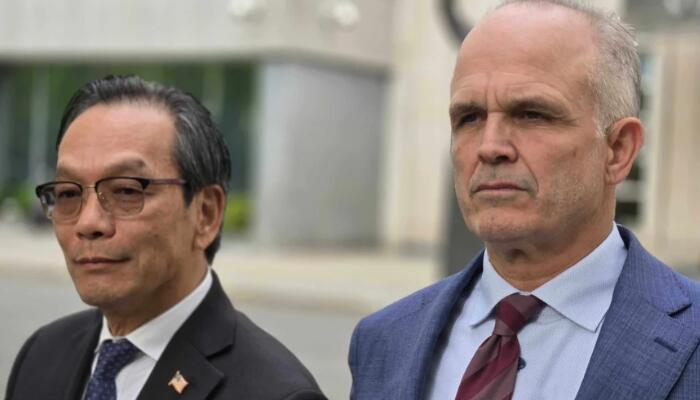
Lu Jianwang, also known as Harry Lu, was convicted in Brooklyn federal court of acting as an unregistered agent of the Chinese government and obstructing justice. Prosecutors said the 64-year-old New York resident helped establish and manage an undeclared outpost linked to China’s Ministry of Public Security in early 2022.
The case has become one of America’s strongest responses yet against what security agencies describe as China’s growing transnational repression network.
Investigators said the alleged station operated from an office floor above a ramen restaurant in Manhattan’s Chinatown. The FBI shut the operation down in late 2022 after launching an investigation.
FBI Says Beijing Used the Outpost to Track Critics
Federal prosecutors argued that the facility did far more than assist overseas Chinese citizens with paperwork. According to investigators, the station formed part of a broader Chinese Communist Party strategy to monitor critics and silence dissent abroad.
Authorities claimed the operation tracked anti-China figures, pro-democracy activists and dissidents living in the United States. Prosecutors also alleged that Lu helped Chinese officials identify a democracy activist based in California.
Investigators did not accuse the defendants of physically harming the activist. However, the allegations strengthened fears inside Western security circles that China increasingly uses intimidation and surveillance to pressure critics overseas.
FBI Assistant Director James C. Barnacle Jr. said the Manhattan station advanced Beijing’s political agenda inside the United States.
“May today’s verdict send a message to other foreign agents,” Barnacle said after the ruling. He added that the FBI would continue exposing covert foreign operations functioning on American soil.
The verdict comes as US intelligence agencies expand investigations into influence campaigns linked to China and Iran.
Deleted Messages Strengthened the Prosecution’s Case
Prosecutors also accused Lu and his co-defendant, Chen Jinping, of trying to destroy evidence after learning about the FBI investigation.
According to federal authorities, the pair deleted text messages exchanged with officials connected to China’s Ministry of Public Security once they became aware of the probe.
Chen Jinping pleaded guilty in December 2024 to conspiring to act as an unregistered Chinese agent. He is currently awaiting sentencing.
Lu pleaded not guilty to charges including conspiracy to act as an unregistered foreign agent, acting as an unregistered Chinese agent and obstruction of justice. The jury convicted him on the foreign agent and obstruction charges but acquitted him on the conspiracy count.
The week-long trial ended with prosecutors securing a major victory. Lu now faces a possible prison sentence of up to 30 years.
Outside the courthouse, Lu’s lawyer John Carman criticised the verdict and confirmed plans to appeal. Carman argued that the office mainly helped Chinese nationals renew licences and official documents during Covid-era travel restrictions. He insisted Beijing did not direct the operation.
Beijing Denies Allegations as Global Scrutiny Intensifies
The Chinese government has repeatedly denied allegations surrounding overseas “police stations”. Beijing has called the accusations politically motivated attempts to damage China’s international image.
Chinese authorities insist the centres simply help overseas citizens with paperwork, licence renewals, and administrative support.
However, rights organisations and Western intelligence agencies continue to challenge that explanation.
The controversy gained international attention after a Spain-based advocacy group, Safeguard Defenders, released a 2022 report alleging that China had established more than 100 such outposts across 53 countries.
Human rights groups claim these facilities often operate in legal grey zones while quietly serving broader state objectives. Those objectives allegedly include monitoring expatriate communities, pressuring fugitives to return to China, and suppressing anti-Communist voices abroad.
For many in Washington, the New York conviction represents far more than a local criminal case. American investigators increasingly believe the Chinese Communist Party is building informal political and surveillance networks within open democratic societies while disguising those operations as community outreach programmes.
The verdict now stands as a warning to Western nations struggling to counter authoritarian influence networks operating quietly within their borders.