




















RelatedPosts
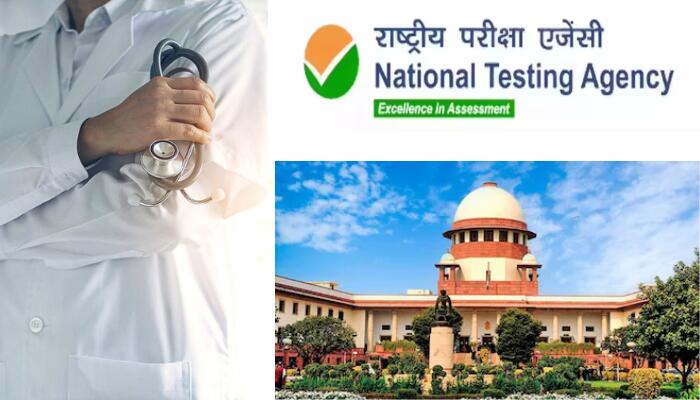
The Supreme Court is now examining the fallout of the NEET-UG 2026 controversy. Federation of All India Medical Association (FAIMA) has moved the apex court seeking a complete overhaul of the National Testing Agency (NTA). A fresh examination under judicial supervision has also been demanded following the cancellation of the test.
Held on May 3 across more than 5,000 centres, NEET-UG 2026 saw nearly 22 lakh candidates appear before the National Testing Agency cancelled it amid allegations of a paper leak. The Centre subsequently transferred the case to the Central Bureau of Investigation (CBI), triggering a nationwide probe into one of India’s most critical entrance examinations.
FAIMA alleges systemic failure in NTA
FAIMA, through advocate Tanvi Dubey, has described the episode as a “systemic failure” in the conduct of NEET-UG. The petition urges the Supreme Court to either replace or restructure the NTA to restore credibility and security in national testing.
A judicially supervised re-examination has been proposed, to be overseen by a High-Powered Monitoring Committee headed by a retired Supreme Court judge. The panel would also include a cybersecurity expert and a forensic specialist to ensure transparency and technical integrity.
Additionally, FAIMA has sought a directive requiring the CBI to submit a detailed status report within four weeks. The report must outline arrests, identified networks, and the progress of the investigation.
Push for CBT shift and exam security reforms
Beyond immediate relief, FAIMA has called for structural reform of the examination system. A shift to a computer-based test (CBT) model has been recommended to reduce risks linked to the physical handling of question papers.
Digital locking of question papers has also been proposed to strengthen the chain of custody. FAIMA further wants centre-wise results published to improve transparency and help detect irregularities in evaluation.
Leak allegations trigger nationwide investigation
Cancellation of the exam followed reports of a suspected paper leak. Investigative agencies found that “guess papers” circulated on WhatsApp and Telegram matched more than 100 questions from the actual paper.
Authorities believe a coordinated network may have facilitated the breach. Officials from the Special Operations Group in Rajasthan suspect the leak originated from a printing press in Nashik before spreading across multiple states.
Arrests widen scope of probe
Among those detained is Shubham Khairnar, a BAMS student from Nandgaon in Nashik. Investigators allege he purchased the leaked material for around ₹10 lakh and later sold it for nearly ₹15 lakh.
A Sikar-based coaching counsellor has also been linked to the case. He allegedly paid ₹5 lakh for the material and circulated it through WhatsApp groups.
The investigation has uncovered a paid network known as “Private Mafia,” where access to the material reportedly costs between ₹5,000 and ₹30,000. Officials say at least 120 questions from biology and chemistry matched the leaked content.
More than 150 individuals, including students, parents, and coaching staff, have been questioned across Maharashtra, Rajasthan, Haryana, Bihar, Kerala, and Uttarakhand.
CBI expands multi-state probe
CBI teams now lead the investigation in coordination with state agencies. Digital records, messaging platforms, and financial transactions are being closely examined to trace the origin of the leak.
Officials suspect an organised network involving intermediaries, coaching links and paper-solvers. Multiple arrests and detentions have already taken place across several states.
Students face uncertainty and burnout
Lakhs of aspirants have been pushed into renewed uncertainty after the cancellation. Many had already reduced preparation after appearing for the exam, only to restart intense study schedules again.
Students report exhaustion, anxiety, and disrupted routines. NEET preparation typically spans two years of continuous academic pressure, and the abrupt cancellation has broken that rhythm.
Mental health experts warn that many students now face burnout, concentration issues, and emotional fatigue. Several describe a psychological “limbo state” where they cannot move forward or restart effectively.
Families under financial and emotional strain
Parents have also been deeply affected by the disruption. Many invest heavily in coaching fees and relocation to competitive hubs such as Kota. The sudden cancellation has unsettled long-term financial planning.
Experts note that families often share the emotional burden of competitive examinations. Households have increasingly become high-pressure environments shaped by uncertainty and performance anxiety.
Backlash intensifies against NTA
Educator Khan Sir and Alakh Pandey have strongly criticised repeated paper leak incidents, questioning the credibility of the examination system. They have demanded Supreme Court oversight and stronger accountability mechanisms. Including punishment for students who have engaged in this malpractice.
Concerns have also been raised about the effectiveness of the CBI in handling such investigations. Calls for top-level intervention have grown louder to restore trust in national examinations.
System faces credibility crisis
The NEET-UG 2026 controversy has reignited long-standing concerns over examination integrity in India. Earlier allegations, including those linked to NEET 2024, have already weakened public confidence.
With FAIMA’s legal challenge, a CBI probe, multiple arrests, and growing public outrage, the NTA now faces one of its most severe credibility crises in recent years.
As the Supreme Court hears the matter, lakhs of students remain suspended in uncertainty. The examination system itself stands under unprecedented scrutiny.