



















The international community loves a good peacemaker story, and Pakistan has delivered one with impeccable timing. Foreign Minister Ishaq Dar shuttled heroically between Tehran and Riyadh. Prime Minister Sharif is hosting urgent diplomatic conclaves in Islamabad.
The Pakistani foreign ministry issued measured condemnations of all sides in tones of statesmanlike restraint. Pakistan, we have been told repeatedly since the Iran war began, is playing the role of honest broker.
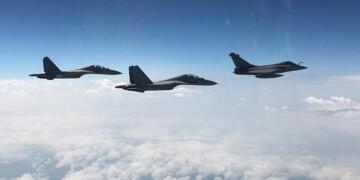
There is only one problem with this narrative. Pakistan is not an honest broker. It is, if the allegations swirling through intelligence circles across the region are anywhere near accurate, one of the conflict’s most active covert participants, flying its F-16s in support of US carrier operations, opening its airspace to American drones, and feeding the positions of Iranian ships to the US targeting apparatus, all while its prime minister calls American strikes on Iran a “serious violation of international law.”
This is not honest brokering, it is, to use a less diplomatic term, a con. And the world is applauding it. Let us be clear about what the evidence actually suggests. Pakistan’s military establishment, specifically the army and its associated intelligence services, which have always controlled Pakistan’s real foreign policy regardless of what the civilian government says in public appears to have made a calculating decision.
The United States is fighting a war against Iran and is desperate for operational support in a region where its traditional partners have shut their doors. Pakistan can provide that support airspace access, carrier air support, maritime surveillance data in ways that are deniable, technically complex, and extremely valuable.
In return, Pakistan gets things it needs: a $686 million F-16 upgrade that transforms its air force into a coalition-compatible partner; restored status as Washington’s indispensable South Asian ally after the humiliations of the May 2025 India-Pakistan conflict; and quiet American diplomatic support, including, it appears, Trump’s decision to extend the Iran ceasefire at Pakistani request.
Meanwhile, Pakistan’s government continues to issue condemnations of US strikes, welcome Iranian officials, and position Islamabad as the moral conscience of the Muslim world.
The Pakistani public which stormed the US Consulate in Karachi on 1 March, leaving ten dead, has no idea that the military it reveres has been quietly providing the operational support that makes the strikes it protests more effective.
The audacity of this is genuinely impressive. So is the danger since, Iran is not stupid, Tehran has sophisticated intelligence services with networks embedded throughout Pakistan, a country it shares a 900-kilometre border with and has struck before.
The January 2024 Iranian missile strikes inside Balochistan were a warning shot, a demonstration that Iran could and would reach into Pakistan if it believed Pakistani territory was being used against it.
What Iran would do if it confirmed that Pakistan has been actively supporting US operations against it, feeding ship positions for targeting, flying alongside carrier air wings, opening corridors for American drones, is not difficult to imagine.
Pakistan’s generals have apparently concluded that the risk is manageable, the deniability is sufficient, and the reward is worth it. They may be right. They have made this calculation before and survived.
But they have made it in a conflict where Iran is fighting for its survival as a state, where the IRGC has already demonstrated its willingness to retaliate across the region, and where the domestic political consequences of exposure could be existential. The world is watching Pakistan and seeing a peacemaker. It should be watching more carefully.