























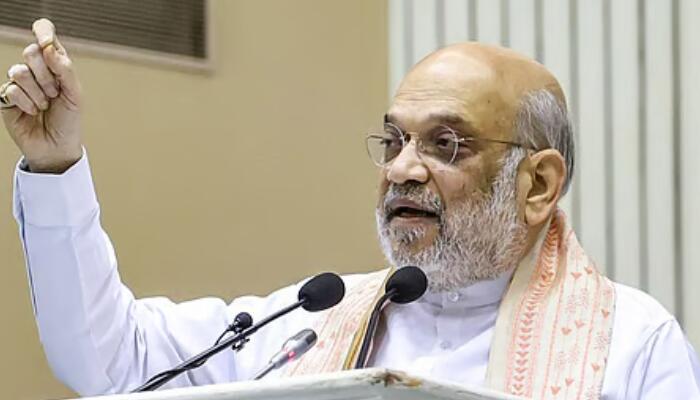
Under Prime Minister Narendra Modi, that approach has changed dramatically. At the centre of this transformation stands Union Home Minister Amit Shah, who has emerged as the chief architect of a new internal security doctrine that combines hard power with administrative consolidation and ideological clarity.
The removal of Article 370 marked the first major assertion of this doctrine. For decades, Kashmir existed within a framework that New Delhi often handled with caution and ambiguity. The Modi government overturned that status quo in one stroke, integrating Jammu and Kashmir fully into the Union’s constitutional structure while signalling that national unity would no longer be negotiated through political exceptionalism.
The Citizenship Amendment Act followed soon after, triggering fierce political opposition but reinforcing another core message from the Centre: citizenship and national identity would remain sovereign decisions of the Indian state, not subjects dictated by pressure groups or international commentary.
Bastar Becomes the Template for the New Security Model
The clearest demonstration of this doctrine, however, has emerged from Bastar.
Once considered the epicentre of Left-Wing Extremism, the region symbolised the Indian state’s inability to penetrate vast insurgency-controlled territories. Security personnel were routinely ambushed, infrastructure projects stalled and tribal populations remained trapped between state neglect and Maoist violence.
That narrative has now undergone a dramatic reversal.
Declaring Bastar “Naxal-free”, Shah described the achievement as the fulfilment of a target set internally by the government in January 2024 to eradicate Naxalism by March 31, 2026. At the time, many within the security establishment reportedly considered the objective unrealistic. Yet the Centre persisted with an aggressive multi-layered strategy involving intelligence coordination, sustained ground operations and rapid development outreach.
The government is now attempting to transform the former conflict zone into a model of tribal development. Shah announced rehabilitation plans for nearly 3000 surrendered Naxals and laid out proposals to convert former security camps into public service centres delivering banking, Aadhaar, ration and welfare facilities.
More importantly, the messaging from the Centre has shifted beyond counter-insurgency. The government now argues that the absence of development in Bastar was not the reason for Naxalism, but rather the consequence of armed extremism itself. It is a subtle but significant ideological inversion that directly challenges decades of academic and political narratives around Maoist violence.
Illegal Infiltration Emerges as the Next National Security Battle
Having projected the anti-Naxal campaign as proof of administrative resolve, the government is now turning its focus towards illegal infiltration and demographic change.
In a recent address to senior Border Security Force officials, Shah made it clear that the role of the BSF can no longer remain confined to guarding the border fence. He called for a coordinated national mechanism involving district administrations, police networks and intelligence agencies to identify infiltrators, track settlement patterns and facilitate deportation.
The language used by the Home Minister reflects a far broader security concern. The government increasingly views illegal infiltration not merely as a migration issue, but as a challenge linked to electoral manipulation, organised crime, narcotics networks, fake currency operations and long-term demographic shifts in border states.
Referring specifically to Assam, Tripura and West Bengal, Shah argued that infiltration had altered local demographics over decades and asserted that the Centre would soon unveil a comprehensive strategy to prevent what he termed “artificial demographic change”.
This marks a significant evolution in India’s national security discourse. From Kashmir to Bastar and now the eastern border, the Modi government is treating internal security not as isolated crises, but as interconnected battles over sovereignty, territorial control, governance and demographic stability. The underlying message is unmistakable: the era of defensive governance is over, and the Indian state now intends to impose its authority with unprecedented political certainty.