























A fresh media controversy has emerged involving Newslaundry, after comments made by its co-founder Abhinandan Sekhri on a film-related discussion triggered sharp reactions online. The debate, which also involved film critic Sucharita Tyagi, has reignited questions about media bias, cultural commentary, and the tone of entertainment journalism in India.
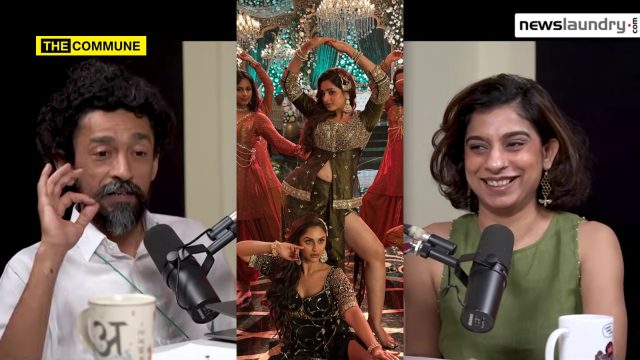
The issue stems from a discussion surrounding the film Dhurandhar, where Sekhri reportedly expressed dissatisfaction over the presence of only one “item song,” and that too appearing late in the film. According to reports, the conversation took place during a segment of Newslaundry’s entertainment show, where Sucharita Tyagi appeared to agree or nod along with the sentiment.
Critics were quick to seize upon the remarks, arguing that such commentary reflects a problematic expectation from cinema—one that prioritizes formulaic elements like item songs over narrative depth or artistic merit. The backlash was particularly strong on social media, where users accused Newslaundry figures of promoting outdated or superficial standards in film criticism.
For many observers, the controversy goes beyond a single remark. It highlights a broader tension within India’s media landscape, where platforms like Newslaundry position themselves as independent and critical of mainstream narratives, yet occasionally find themselves at the center of ideological or cultural criticism. In this case, detractors described the remarks as indicative of a disconnect between elite media voices and evolving audience sensibilities.
Supporters of Newslaundry, however, have offered a different interpretation. They argue that Sekhri’s comments were likely made in a conversational or satirical context, consistent with the tone of the show, which often blends critique with humor. They also point out that entertainment discussions frequently involve subjective opinions, and isolating a single remark may not capture the full nuance of the exchange.
The involvement of Sucharita Tyagi has also drawn attention. Known for her film reviews and commentary, Tyagi’s perceived agreement during the discussion has been interpreted by critics as endorsement. However, others caution against overreading body language or brief responses in long-form discussions, suggesting that the controversy may have been amplified by selective framing.
At the heart of the debate lies a deeper question about the role of media critics in shaping cultural narratives. Should film criticism reinforce popular tropes, or challenge them? And when critics appear to favor elements like item songs, does it reflect audience demand, personal bias, or a broader commentary on the industry?
Newslaundry’s critics argue that such remarks undermine the platform’s credibility as a serious media watchdog. They contend that if independent journalism is to maintain public trust, it must avoid appearing dismissive or inconsistent in its cultural analysis. On the other hand, defenders insist that holding journalists to rigid standards in informal discussions risks stifling open dialogue and diverse viewpoints.
The controversy also underscores the growing scrutiny faced by digital media platforms. In an era where clips and excerpts circulate rapidly on social media, even offhand remarks can become flashpoints for larger ideological battles. This environment leaves little room for nuance, often reducing complex discussions to polarizing headlines.
Importantly, the debate reflects shifting audience expectations. Indian viewers today are increasingly receptive to diverse storytelling, experimental cinema, and content that moves beyond traditional Bollywood formulas. In this context, the emphasis on elements like item songs can appear outdated, prompting strong reactions from audiences who expect more from both filmmakers and critics.
As the discussion continues, it serves as a reminder of the evolving relationship between media, cinema, and public perception. Whether one views the remarks as harmless banter or a sign of deeper issues, the episode has undeniably sparked a wider conversation about the responsibilities of cultural commentators.
In conclusion, the controversy surrounding Newslaundry and its commentators illustrates the delicate balance between opinion and influence in modern media. As digital platforms continue to shape public discourse, every statement—serious or casual—carries weight, often far beyond its original context.