




















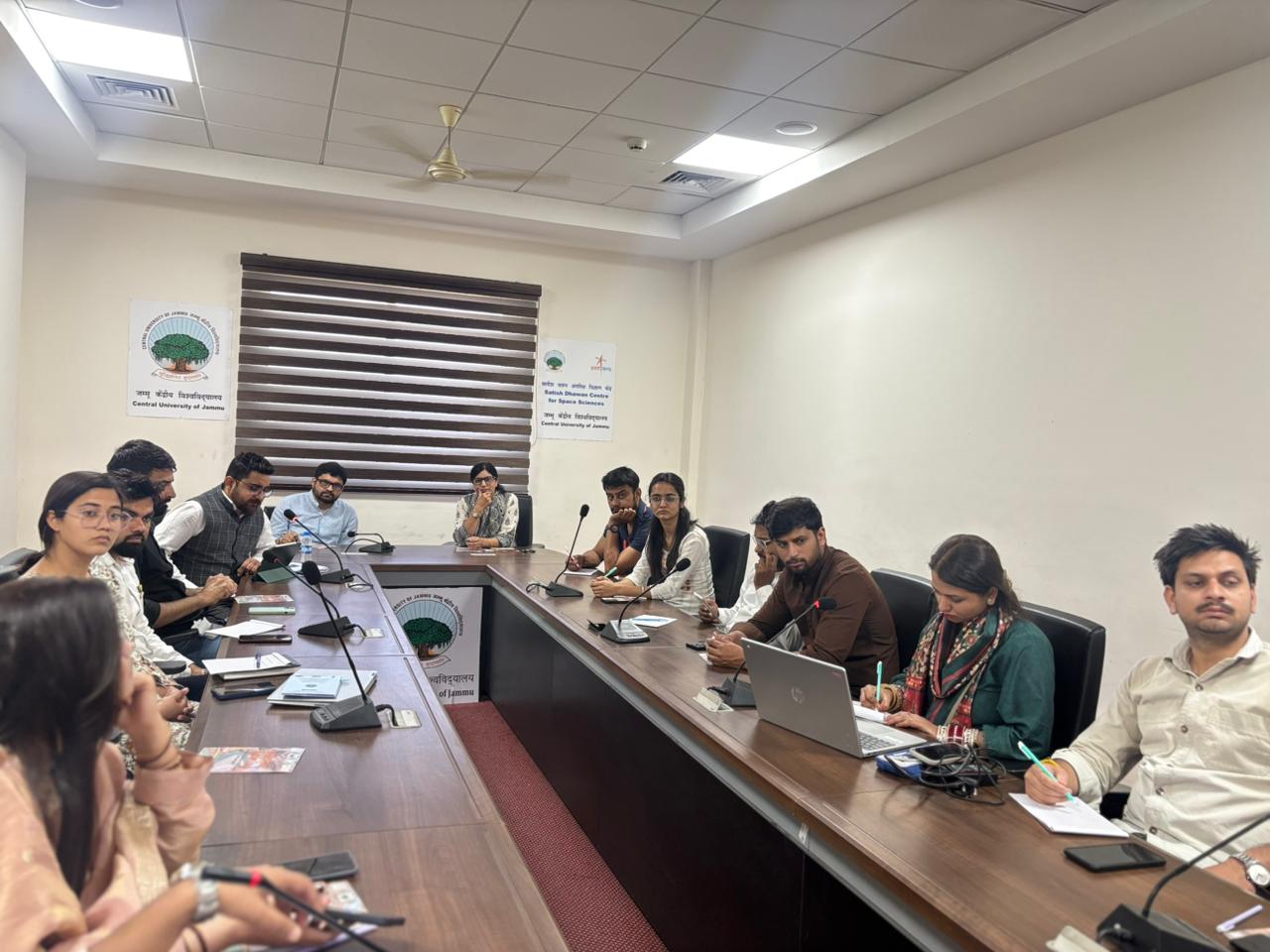
The inaugural ‘Sindhu Samvad,’ a pioneering flagship initiative dedicated to intellectual discourse and high-level policy dialogue, was successfully launched at the Central University of Jammu (CUJ).
Organized by the Jammu and Kashmir-based Paramrshniti Foundation, the event saw CUJ serving as the host institution in close collaboration with Sindhu Central University.
Inspired by the profound civilizational, strategic, and ecological legacy of the Sindhu (Indus) River system, this dialogue serves as the cornerstone of a broader nationwide project.
Its mission is to cultivate a structured, interdisciplinary platform where history, geopolitics, and modern policy intersect to address the challenges of the 21st century.
Vision of Continuity and Knowledge
The program opened with an evocative session led by Professor Ritu Bakshi, Dean of Students’ Welfare at CUJ. She lauded the Paramrshniti Foundation for conceptualizing the initiative, describing ‘Sindhu Samvad’ as a “historic stride forward” in academic and cultural scholarship.
The dialogue was pioneered under the leadership of the Honorable Vice-Chancellor, Professor Sanjeev Jain, who emphasized the university’s role as a guardian of heritage.
He remarked, “The Central University of Jammu has remained committed to promoting knowledge, research, and cultural dialogue. We must carry forward the continuity of Indian knowledge and culture, much like the flowing stream of the Indus.”
Civilizational Roots and Ecological Realities
The sessions explored the multifaceted nature of the Indus River, moving from ancient history to modern environmentalism.
Civilizational Identity: Dr Ajay Singh detailed the river’s role as the lifeblood of the ancient Sapt Sindhu civilization. Known for its sophisticated urban planning and sprawling trade networks, the civilization utilized the river as a medium for both physical sustenance and cultural exchange. Dr. Singh noted that the artistic and social structures forged on these banks continue to resonate in contemporary Indian culture.
Ecological Imperatives: Dr Shweta Yadav and Dr Tilak Raj Sharma shifted the focus to the environment. They underscored the strategic importance of the Indus tributaries in Jammu and Kashmir, highlighting their role in regional biodiversity and water security. These watercourses are vital for the livelihoods of local communities, providing essential resources for agriculture and domestic use.
Geopolitics and the Path Forward
The inaugural session, moderated by Siddharth Mahajan and Shubham Raina, did not shy away from the complex geopolitical realities of the region. The dialogue gained particular urgency in light of the Indus Waters Treaty (IWT).
Discussions touched upon the current status of the treaty, which remains in a state of abeyance following the tragic terrorist attack in Pahalgam last year. By addressing the intersection of culture, climate, and diplomacy, Sindhu Samvad seeks to provide a roadmap for navigating these sensitive water-sharing and security issues through the lens of intellectual and civilizational wisdom.
Through collaborative exchanges between archaeologists, policy experts, and environmentalists, the event illuminated how the Sindhu River as a silent witness to millennia of human evolution continues to shape the cultural and strategic landscape of the Indian subcontinent.