















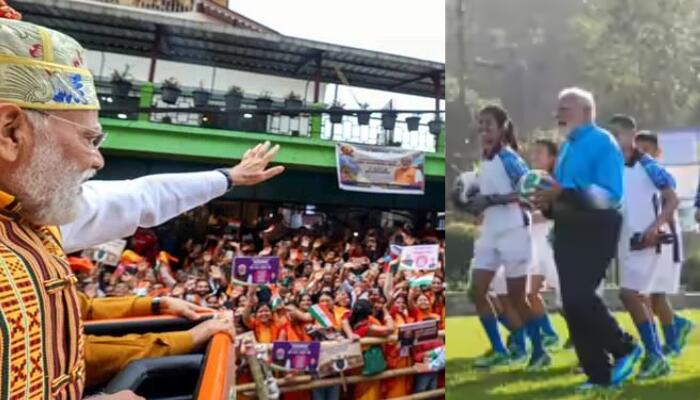
Prime Minister Narendra Modi rolled out development projects worth over Rs 4,000 crore in Sikkim, using the state’s 50th year of statehood celebrations to bring about infrastructure expansion, regional integration, and the Centre’s Northeast agenda.
Speaking at Paljor Stadium in Gangtok, Modi said the projects cover connectivity, healthcare, education, power, tourism, agriculture, urban development, and environmental initiatives. Presenting the package as part of the government’s accelerated focus on the region, he reiterated that the Northeast is India’s “Ashtalakshmi” and said New Delhi has moved beyond “Act East” to an “Act Fast” approach.
Alongside the development announcements, the Prime Minister sharpened his criticism of Congress, accusing earlier governments of slowing Sikkim’s progress. Referring to the long-pending Sivok-Rangpo railway line, he said the project had remained stagnant for years before gaining pace under the BJP government. He stressed that Sikkim was now set to receive railway connectivity for the first time, calling it a transformative step for the Himalayan state.
Infrastructure push and tourism focus
More than 30 projects were launched or had foundation stones laid during the visit, with Modi describing them as part of a broader effort to deepen Sikkim’s integration with the national economy. He also announced 1,000 homestays to strengthen local tourism and generate livelihoods, while unveiling six cricket academies for the Northeast as part of efforts to nurture sporting talent.
The Prime Minister also spotlighted improved connectivity through a proposed expressway linking Bagdogra Airport with Gangtok, saying it would ease travel and support tourist inflows.
Projecting Sikkim as a symbol of national unity, Modi praised a cultural showcase involving over 1,500 artists, calling it a vivid expression of “Ek Bharat, Shreshtha Bharat”. He said the state represented the spirit of unity at a time when divisive politics seeks to fragment the country.
He also placed heavy emphasis on Sikkim’s ecological wealth, describing it as the “Heaven of the East” and urging travellers to experience its orchid heritage and biodiversity. Referring to the state’s birdlife, butterflies, and forest cover, Modi said Sikkim’s natural assets make it a recurring destination for visitors. He later visited the Orchid Experience Centre at Swarnajayanti Maitri Manjari Park.
Politics, symbolism, and outreach
The visit was not without political messaging. Modi’s informal football session with youngsters in Gangtok, coming amid the Bengal election season, drew attention for its timing and symbolism, particularly given the sport’s cultural significance in neighbouring West Bengal.
He also used the platform to praise Sikkim’s cleanliness and environmental consciousness, describing its people as protectors of nature.
Chief Minister Prem Singh Tamang welcomed the projects and credited the Centre’s support for accelerating development, while Governor Om Prakash Mathur attended the celebrations.
Blending capital investment, cultural symbolism, and political messaging, Modi’s Sikkim visit sought to do more than mark a statehood milestone. It positioned the Himalayan state and the wider Northeast as central to the government’s development narrative while reviving a familiar contrast with Congress over delivery and intent.