

















RelatedPosts
The delimitation debate has evolved into a defining federal question, placing representation, demographics, and political balance at the centre of parliamentary discourse. At issue is not merely the redrawing of constituencies but the proposed expansion of the Lok Sabha to implement 33 per cent reservation for women.
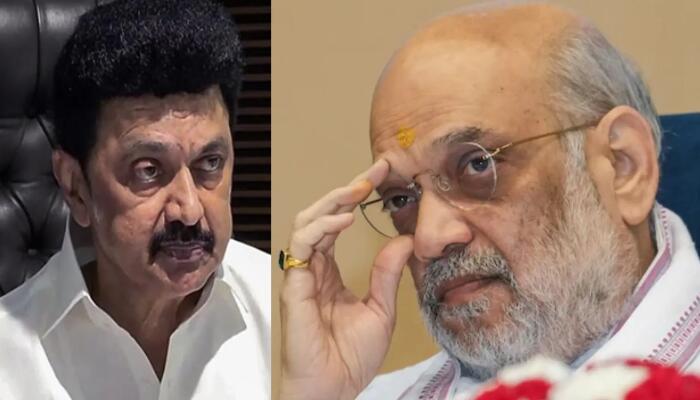
The government’s position is clear. This is not a redistribution of power but a structural recalibration. Union Home Minister Amit Shah has argued that the expansion is designed to preserve existing state-wise proportions while increasing the overall strength of the House, ensuring continuity rather than disruption.
Why expansion is central to the proposal
The Lok Sabha is proposed to expand from 543 to around 816 seats, with some parliamentary explanations and illustrative projections placing the strength at up to 850. The rationale is rooted in arithmetic. Without expanding the House, reserving one-third of seats for women would reduce the number of general seats, effectively shrinking representation.
A uniform 50 per cent increase across states, the government argues, resolves this constraint. It allows women’s reservation to be implemented without altering the functional balance of representation.
Southern concerns and the politics of perception
Despite these assurances, apprehensions persist in southern states that delimitation based on population could gradually tilt political influence towards regions with higher population growth.
This concern is not new. India’s seat distribution has remained effectively frozen since the post-Emergency constitutional amendments, precisely to avoid penalising states that controlled population growth. The possibility of reopening that balance has revived anxieties about long-term federal equity.
Tamil Nadu Chief Minister M.K. Stalin has described the broader direction of such reforms as a “calculated deception,” reflecting the depth of political unease in the region.
The numbers tell a different story
The government’s counterargument rests firmly on data. Under the proposed model, southern states do not lose representation in either absolute or proportional terms.
Collectively, their Lok Sabha seats are projected to rise from 129 to 195, while their share remains stable from 23.76 per cent to 23.87 per cent, often rounded to about 24 per cent in political discourse.
At the state level, Karnataka would increase from 28 to 42 seats, Andhra Pradesh from 25 to 38, Telangana from 17 to 26, Tamil Nadu from 39 to 59, and Kerala from 20 to 30. In each case, the proportional share remains broadly unchanged.
The implication is straightforward. Representation expands, but its distribution does not shift.
The logic behind proportional scaling
The model guiding the proposal is one of uniform scaling. If every state’s representation increases by roughly the same proportion, existing ratios are preserved.
A simplified illustration offered in Parliament captures this logic. Expanding a 100-seat House by 50 per cent allows one-third reservation for women while retaining the original number of general seats. The structure grows, but its balance remains intact.
This, the government argues, is the only viable way to combine constitutional inclusion with representational stability.
The real fault line: proportion versus influence
The disagreement, however, lies in interpretation. The Centre maintains that stable proportions mean no discrimination. Critics argue that this overlooks a deeper concern: political influence is shaped not just by percentages but by long-term demographic trends.
This creates a fundamental divide. One side sees delimitation as a mathematically neutral exercise. The other views it as a potential shift in the federal balance over time.
Safeguards, timeline, and institutional continuity
The government has emphasised that the Delimitation Commission will operate strictly under Article 81(2) of the Constitution, with no changes made to its legal framework. Its recommendations will require parliamentary approval and presidential assent.
Crucially, implementation is not expected before 2029. Elections until then will continue under the existing system, providing a transition window and limiting immediate disruption.
A broader push towards data-driven representation
Alongside delimitation, the government has announced that a caste census will be conducted with the upcoming population enumeration. This move has been positioned as part of a wider effort to align representation with more granular demographic data, further embedding the exercise within a broader governance framework.
Conclusion: continuity in design, caution in perception
On paper, the delimitation model is built on continuity. It expands the size of Parliament while preserving the proportional distribution of seats across states. No region loses its share; all gain in absolute terms.
The government’s case rests on mathematical balance. Its critics question whether arithmetic alone can capture the realities of a changing federation. Between these two positions lies the real debate, not about discrimination in the present, but about influence in the future.