



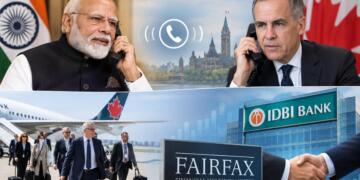















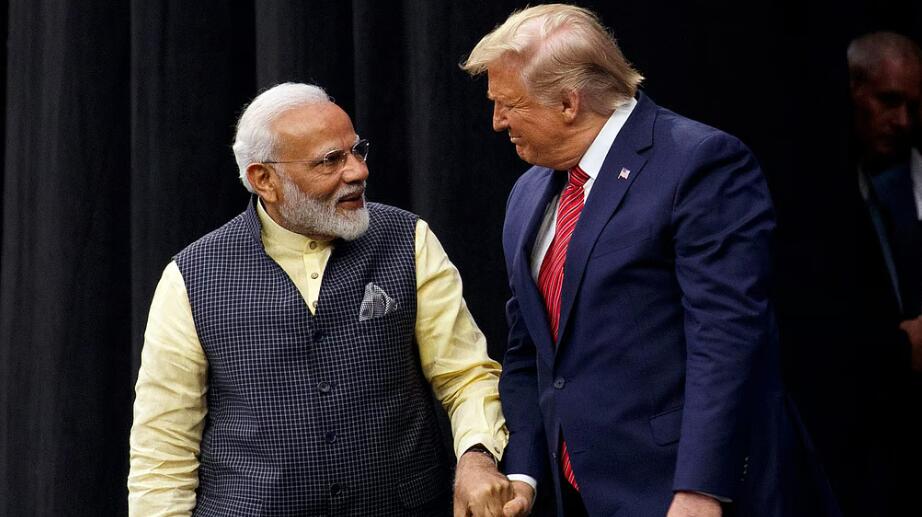
As a fragile two-week ceasefire hangs in the balance in West Asia, a significant diplomatic pivot appears to be unfolding as Prime Minister Narendra Modi and US President Donald Trump engaged in a crucial telephone conversation that lasted nearly an hour.
While the official readout focused on the security of the Strait of Hormuz, the timing and context of the call suggest that Washington may be looking toward New Delhi to break a dangerous regional deadlock.
Beyond the Strait of Hormuz
The primary public agenda of the call was the “importance of keeping the Strait of Hormuz open and secure.” The Strait, a critical chokepoint for 20% of the world’s petroleum, has been under a US naval blockade since late February, following the outbreak of the 2026 Iran War.
For India, which is grappling with rising inflation and energy supply crunches, the security of this waterway is a matter of national survival.
The hour-long dialogue suggests the scope of the discussion was far broader than just maritime security. Following the collapse of recent Pakistan-mediated talks in Islamabad, the United States is increasingly viewing India as a more stable and credible bridge to Tehran.
Unlike other regional players, India possesses a unique diplomatic “triple-threat” that makes it an ideal intermediary.
First, New Delhi maintains deep, civilizational ties with Iran; India continues to manage the strategic Chabahar Port and has successfully navigated its relationship with Tehran even under heavy international sanctions.
Second, India’s strategic partnership with Israel has reached new heights, particularly after Prime Minister Modi’s landmark visit to Israel in February 2026, which cemented a “systems integration” model of security cooperation.
Finally, India’s status as a “Comprehensive Global Strategic Partnership” ally to the United States positions it as a vital net security provider in the Indian Ocean.
This rare combination of trust across all three capitals Washington, Tehran, and Jerusalem provides India with a level of diplomatic leverage that no other nation in the region currently commands.
Shift from Islamabad to Delhi
For decades, US administrations often turned to Islamabad to navigate the complex waters of Persian diplomacy. However, current geopolitical realities have exposed the limitations of that route. Pakistan lacks diplomatic ties with Israel, a primary stakeholder in the current conflict, making it an incomplete mediator.
The failure of the Islamabad talks last weekend has led many in Washington to conclude that if a genuine solution is to be found, it must emerge from a capital that commands respect in both Tehran and Jerusalem.
“Trump has now realized that if a genuine solution is to be found, it will emerge from Delhi, not Islamabad,” a source familiar with the matter noted reportedly.
A New Diplomatic Architecture
The 2026 Iran War, which began on February 28 with joint US-Israeli strikes, has pushed the global economy to the brink. Despite an interim ceasefire reached on April 7, hostilities have persisted, and a permanent settlement remains elusive.
India’s position as a “multi-aligned” power allows it to speak to all sides without the baggage of Cold War-era alliances. During the call, both leaders “reviewed the substantial progress achieved in bilateral cooperation” and reaffirmed their commitment to regional stability.
Will Delhi Host the Accord?
The prospect of New Delhi serving as the neutral venue for a potential “New Delhi Accord” is now a central focus in international diplomatic circles. With the United States requiring Iranian concessions on nuclear enrichment and the reopening of vital maritime routes, and Iran simultaneously demanding sanctions relief and reparations, the requirement for a credible interlocutor has reached a critical point.
By engaging Prime Minister Modi so extensively at this juncture, the Trump administration is effectively acknowledging that India’s regional influence has evolved beyond economic ties into a fundamental strategic necessity.
As the ceasefire deadline approaches, the international community is monitoring whether New Delhi’s unique standing can successfully bridge the deep divide between these two long-standing rivals.