



















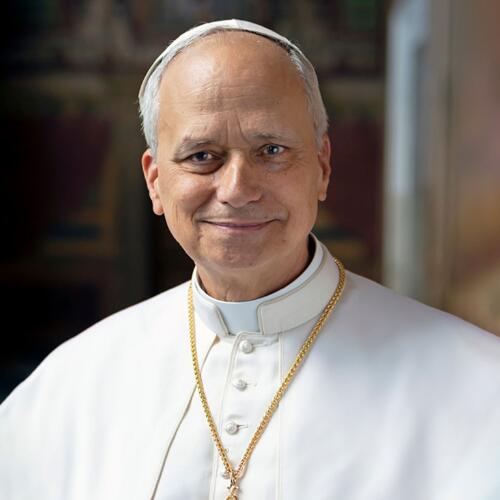
The recent remarks and actions attributed to Pope Leo XIV have sparked a wave of debate across political and religious circles. From the establishment of a Muslim prayer space in the Vatican to a visit to a Grand Mosque, and now statements emphasizing interfaith harmony, critics are asking whether Pope Leo XIV is leaning too far into a vision of secular coexistence that overlooks historical realities.
At the heart of the criticism is a perceived contradiction. For many observers, the outreach initiatives associated with Pope Leo XIV are seen as symbolic gestures of unity in an increasingly polarized world. However, others argue that such gestures risk ignoring the lived experiences of Christian minorities in several parts of the globe. Countries like Pakistan are frequently cited, where Christians have faced systemic discrimination, social marginalization, and, in some cases, violence. These concerns have led critics to question whether the Pope’s messaging fully accounts for these realities.
The debate becomes even more charged when Lebanon is invoked. Pope Leo XIV has reportedly referred to Lebanon as an example of coexistence between Christians and Muslims—a characterization that has drawn both support and sharp rebuttal. Historically, Lebanon was envisioned as a homeland where Christians, particularly Maronites, could coexist with other communities. For a time, it functioned as a relatively stable, pluralistic society.
However, Lebanon’s history is also marked by the devastating Lebanese Civil War, a 15-year conflict that reshaped the country’s demographic and political landscape. Thousands lost their lives, communities were fractured, and the delicate balance of power shifted. Critics of Pope Leo XIV argue that citing Lebanon as a model of coexistence risks oversimplifying a deeply complex and often tragic history.
Yet, it is important to approach such claims with nuance. While Lebanon has undeniably faced conflict and instability, it also remains one of the few countries in the Middle East where multiple religious communities continue to coexist within a shared political framework. The reality is neither a complete success story nor a definitive failure. By highlighting Lebanon, Pope Leo XIV may be attempting to emphasize the possibility of coexistence rather than presenting it as a flawless example.
Beyond Lebanon, references to regions like Syria and even parts of India, such as Kerala, are often brought into the discussion. These examples are used to argue that interfaith tensions are widespread and persistent. However, they also demonstrate the diversity of outcomes—ranging from conflict to relatively peaceful coexistence—depending on historical, political, and social contexts.
A key criticism directed at Pope Leo XIV is that his emphasis on brotherhood and dialogue may appear disconnected from geopolitical realities. Some commentators suggest that such messaging could be interpreted as overly idealistic, particularly in a world where religious identity continues to play a significant role in conflict. Others, however, see this approach as a necessary counterbalance—a moral stance aimed at reducing tensions rather than amplifying them.
The suggestion that Pope Leo XIV is motivated by broader political considerations, including positioning against figures like Donald Trump, adds another layer to the debate. While such interpretations remain speculative, they reflect the extent to which religious leadership is often viewed through a political lens in contemporary discourse.
It is also worth considering the broader role of the papacy. Historically, popes have often engaged in interfaith dialogue as part of a larger mission to promote peace and understanding. In this context, the actions of Pope Leo XIV can be seen as part of a long-standing tradition rather than a radical departure from it. The challenge lies in balancing this vision with an acknowledgment of the difficulties and injustices that persist.
The assertion that coexistence between religious communities is impossible is itself highly contested. While history provides numerous examples of conflict, it also offers instances of cooperation and shared cultural development. The position taken by Pope Leo XIV appears to align with the latter perspective, emphasizing what is achievable rather than what has gone wrong.
Ultimately, the controversy surrounding Pope Leo XIV reflects a deeper tension between realism and idealism. Critics demand a more grounded acknowledgment of historical and contemporary challenges, while supporters argue that leadership requires articulating a vision that transcends these challenges.
In conclusion, the debate over Pope Leo XIV is less about a single statement or gesture and more about the broader question of how religious leaders should navigate a complex and often divided world. Whether his approach is seen as pragmatic or overly optimistic, it has undeniably reignited an important conversation about coexistence, history, and the role of faith in shaping the future.