




















TFIPOST हिन्दी
TFIPOST Global
Tfipost.com
Tfipost.com
No Result
View All Result
  • Premium
  • Politics
    • All
    • Analysis
    • Opinions
    • Trending
    Bhindranwale Symbolism Returns at Golden Temple on Blue Star Anniversary, Exposing Recurring Security Challenge in Punjab

    Bhindranwale Symbolism Returns at Golden Temple on Blue Star Anniversary, Exposing Recurring Security Challenge in Punjab

    Bengal Police Seize 29 Firearms in Multi-District Operation Following Arrests in Sandeshkhali Case

    Bengal Police Seize 29 Firearms in Multi-District Operation Following Arrests in Sandeshkhali Case

    Rajiv Singh, a 1993-batch IPS officer, has served in several key positions during his distinguished career.

    Former Manipur DGP Rajiv Singh Takes Charge as Secretary (Security) in Cabinet Secretariat

    Securing the Frontier: Shah Draws a Red Line on Demographic Shifts as Smart Border Project Nears Rollout

    Securing the Frontier: Shah Draws a Red Line on Demographic Shifts as Smart Border Project Nears Rollout

    • Analysis
    • Opinions
    • Trending
  • Economy
    • All
    • Business
    • Economy1
    • Finance
    India’s 7.7% Growth in FY26 Reinforces Economic Strength Under Modi as Services and Investment Drive Broad-Based Expansion

    India’s 7.7% Growth in FY26 Reinforces Economic Strength Under Modi as Services and Investment Drive Broad-Based Expansion

    When a Gold Story Turned Into Dust: Bloomberg Retraction, RBI’s Clarification, and the Debate Over Narrative First Journalism

    When a Gold Story Turned Into Dust: Bloomberg Retraction, RBI’s Clarification, and the Debate Over Narrative First Journalism

    India Joins Global Digital Elite, Climbs Into Fifth Spot as AI Revolution and Digital Infrastructure Reshape Economy

    India Joins Global Digital Elite, Climbs Into Fifth Spot as AI Revolution and Digital Infrastructure Reshape Economy

    How gaming merchants choose a payment gateway in India

    How gaming merchants choose a payment gateway in India

    • Business
    • Finance
  • Defense
    • All
    • Defence
    • Strategy
    • Weaponry
    Securing the Frontier: Shah Draws a Red Line on Demographic Shifts as Smart Border Project Nears Rollout

    Securing the Frontier: Shah Draws a Red Line on Demographic Shifts as Smart Border Project Nears Rollout

    “Not 1962, Not China”: Pema Khandu Reasserts Tibet Border Claim, Dismisses Beijing’s Arunachal Assertions

    “Not 1962, Not China”: Pema Khandu Reasserts Tibet Border Claim, Dismisses Beijing’s Arunachal Assertions

    Rudram-2 Passes Crucial Combat Trial, India Moves Closer to Indigenous SEAD Dominance

    Rudram-2 Passes Crucial Combat Trial, India Moves Closer to Indigenous SEAD Dominance

    Rajesh Kumar Singh Reveals Vietnam BrahMos Deal, Indonesia Agreement in Final Stages

    Rajesh Kumar Singh Reveals Vietnam BrahMos Deal, Indonesia Agreement in Final Stages

    • Defence
    • Strategy
    • Weaponry
  • Geopolitics
    • All
    • Africa
    • Americas
    • Asia Pacific
    • Europe
    • South Asia
    • West Asia
    India’s 7.7% Growth in FY26 Reinforces Economic Strength Under Modi as Services and Investment Drive Broad-Based Expansion

    India’s 7.7% Growth in FY26 Reinforces Economic Strength Under Modi as Services and Investment Drive Broad-Based Expansion

    UNSC Seat or Propaganda Platform? India Exposes Pakistan’s Habit of Misusing Global Forums

    UNSC Seat or Propaganda Platform? India Exposes Pakistan’s Habit of Misusing Global Forums

    Why Russia Trusts India: Putin Dismisses Western Pressure on Modi, Backs New Delhi’s Independent Foreign Policy

    Why Russia Trusts India: Putin Dismisses Western Pressure on Modi, Backs New Delhi’s Independent Foreign Policy

    India and Venezuela Signal Energy Recalibration as Rodríguez Visits New Delhi for Crucial Talks

    India and Venezuela Signal Energy Recalibration as Rodríguez Visits New Delhi for Crucial Talks

    • Africa
    • Americas
    • Asia Pacific
    • Europe
    • South Asia
    • West Asia
  • Knowledge
    • All
    • Culture
    • Education
    • History
    • Indology
    Who Killed Akanksha ? How Many More Students Will Pay the Price for Education Mafias and Paper-Leak Rackets?

    Who Killed Akanksha ? How Many More Students Will Pay the Price for Education Mafias and Paper-Leak Rackets?

    June 3, 1947 Revisited: Nishikant Dubey Blames Nehru-Gandhi Family for Partition and Kashmir Crisis

    June 3, 1947 Revisited: Nishikant Dubey Blames Nehru-Gandhi Family for Partition and Kashmir Crisis

    CBSE OSM Fallout Deepens as 4 Lakh Students Rush for Re-evaluation, Raising Serious Questions on Digital Checking System

    CBSE OSM Fallout Deepens as 4 Lakh Students Rush for Re-evaluation, Raising Serious Questions on Digital Checking System

    Veer Savarkar

    When Nehru Government Imprisoned Veer Savarkar for the Pakistani Prime Minister

    • Culture
    • History
    • Indology
  • Law
  • Lounge
    • All
    • Books
    • Cinema
    • Entertainment
    • Food
    • Games
    • Health
    • Lifestyle
    • Satire
    • Sports
    • technology
    • Travel
    Praggnanandhaa Turns Oslo Upside Down With Historic Norway Chess Triumph

    Praggnanandhaa Turns Oslo Upside Down With Historic Norway Chess Triumph

    Erythrocyte Sedimentation Rate (ESR) Test: Meaning, Normal Range & Uses

    Erythrocyte Sedimentation Rate (ESR) Test: Meaning, Normal Range & Uses

    Inside the World of Elite Matchmaking in India

    Inside the World of Elite Matchmaking in India

    Best Salicylic Acid Face Wash for Oily & Acne-Prone Skin

    Best Salicylic Acid Face Wash for Oily & Acne-Prone Skin

    • Books
    • Cinema
    • Food
    • Health
    • Sports
    • technology
    • Travel
    • Satire
Tfipost.com
  • Premium
  • Politics
    • All
    • Analysis
    • Opinions
    • Trending
    Bhindranwale Symbolism Returns at Golden Temple on Blue Star Anniversary, Exposing Recurring Security Challenge in Punjab

    Bhindranwale Symbolism Returns at Golden Temple on Blue Star Anniversary, Exposing Recurring Security Challenge in Punjab

    Bengal Police Seize 29 Firearms in Multi-District Operation Following Arrests in Sandeshkhali Case

    Bengal Police Seize 29 Firearms in Multi-District Operation Following Arrests in Sandeshkhali Case

    Rajiv Singh, a 1993-batch IPS officer, has served in several key positions during his distinguished career.

    Former Manipur DGP Rajiv Singh Takes Charge as Secretary (Security) in Cabinet Secretariat

    Securing the Frontier: Shah Draws a Red Line on Demographic Shifts as Smart Border Project Nears Rollout

    Securing the Frontier: Shah Draws a Red Line on Demographic Shifts as Smart Border Project Nears Rollout

    • Analysis
    • Opinions
    • Trending
  • Economy
    • All
    • Business
    • Economy1
    • Finance
    India’s 7.7% Growth in FY26 Reinforces Economic Strength Under Modi as Services and Investment Drive Broad-Based Expansion

    India’s 7.7% Growth in FY26 Reinforces Economic Strength Under Modi as Services and Investment Drive Broad-Based Expansion

    When a Gold Story Turned Into Dust: Bloomberg Retraction, RBI’s Clarification, and the Debate Over Narrative First Journalism

    When a Gold Story Turned Into Dust: Bloomberg Retraction, RBI’s Clarification, and the Debate Over Narrative First Journalism

    India Joins Global Digital Elite, Climbs Into Fifth Spot as AI Revolution and Digital Infrastructure Reshape Economy

    India Joins Global Digital Elite, Climbs Into Fifth Spot as AI Revolution and Digital Infrastructure Reshape Economy

    How gaming merchants choose a payment gateway in India

    How gaming merchants choose a payment gateway in India

    • Business
    • Finance
  • Defense
    • All
    • Defence
    • Strategy
    • Weaponry
    Securing the Frontier: Shah Draws a Red Line on Demographic Shifts as Smart Border Project Nears Rollout

    Securing the Frontier: Shah Draws a Red Line on Demographic Shifts as Smart Border Project Nears Rollout

    “Not 1962, Not China”: Pema Khandu Reasserts Tibet Border Claim, Dismisses Beijing’s Arunachal Assertions

    “Not 1962, Not China”: Pema Khandu Reasserts Tibet Border Claim, Dismisses Beijing’s Arunachal Assertions

    Rudram-2 Passes Crucial Combat Trial, India Moves Closer to Indigenous SEAD Dominance

    Rudram-2 Passes Crucial Combat Trial, India Moves Closer to Indigenous SEAD Dominance

    Rajesh Kumar Singh Reveals Vietnam BrahMos Deal, Indonesia Agreement in Final Stages

    Rajesh Kumar Singh Reveals Vietnam BrahMos Deal, Indonesia Agreement in Final Stages

    • Defence
    • Strategy
    • Weaponry
  • Geopolitics
    • All
    • Africa
    • Americas
    • Asia Pacific
    • Europe
    • South Asia
    • West Asia
    India’s 7.7% Growth in FY26 Reinforces Economic Strength Under Modi as Services and Investment Drive Broad-Based Expansion

    India’s 7.7% Growth in FY26 Reinforces Economic Strength Under Modi as Services and Investment Drive Broad-Based Expansion

    UNSC Seat or Propaganda Platform? India Exposes Pakistan’s Habit of Misusing Global Forums

    UNSC Seat or Propaganda Platform? India Exposes Pakistan’s Habit of Misusing Global Forums

    Why Russia Trusts India: Putin Dismisses Western Pressure on Modi, Backs New Delhi’s Independent Foreign Policy

    Why Russia Trusts India: Putin Dismisses Western Pressure on Modi, Backs New Delhi’s Independent Foreign Policy

    India and Venezuela Signal Energy Recalibration as Rodríguez Visits New Delhi for Crucial Talks

    India and Venezuela Signal Energy Recalibration as Rodríguez Visits New Delhi for Crucial Talks

    • Africa
    • Americas
    • Asia Pacific
    • Europe
    • South Asia
    • West Asia
  • Knowledge
    • All
    • Culture
    • Education
    • History
    • Indology
    Who Killed Akanksha ? How Many More Students Will Pay the Price for Education Mafias and Paper-Leak Rackets?

    Who Killed Akanksha ? How Many More Students Will Pay the Price for Education Mafias and Paper-Leak Rackets?

    June 3, 1947 Revisited: Nishikant Dubey Blames Nehru-Gandhi Family for Partition and Kashmir Crisis

    June 3, 1947 Revisited: Nishikant Dubey Blames Nehru-Gandhi Family for Partition and Kashmir Crisis

    CBSE OSM Fallout Deepens as 4 Lakh Students Rush for Re-evaluation, Raising Serious Questions on Digital Checking System

    CBSE OSM Fallout Deepens as 4 Lakh Students Rush for Re-evaluation, Raising Serious Questions on Digital Checking System

    Veer Savarkar

    When Nehru Government Imprisoned Veer Savarkar for the Pakistani Prime Minister

    • Culture
    • History
    • Indology
  • Law
  • Lounge
    • All
    • Books
    • Cinema
    • Entertainment
    • Food
    • Games
    • Health
    • Lifestyle
    • Satire
    • Sports
    • technology
    • Travel
    Praggnanandhaa Turns Oslo Upside Down With Historic Norway Chess Triumph

    Praggnanandhaa Turns Oslo Upside Down With Historic Norway Chess Triumph

    Erythrocyte Sedimentation Rate (ESR) Test: Meaning, Normal Range & Uses

    Erythrocyte Sedimentation Rate (ESR) Test: Meaning, Normal Range & Uses

    Inside the World of Elite Matchmaking in India

    Inside the World of Elite Matchmaking in India

    Best Salicylic Acid Face Wash for Oily & Acne-Prone Skin

    Best Salicylic Acid Face Wash for Oily & Acne-Prone Skin

    • Books
    • Cinema
    • Food
    • Health
    • Sports
    • technology
    • Travel
    • Satire
No Result
View All Result
Tfipost.com
Tfipost.com
No Result
View All Result
  • Premium
  • Politics
  • Economy
  • Defense
  • Geopolitics
  • Knowledge
  • Law
  • Lounge

India’s 3-Stage Nuclear Strategy Explained: How India’s Fast Breeder Reactors Power the Uranium–Thorium Shift

With progress in fast breeder reactor technology highlighted by institutions like the BARC India is moving closer to unlocking a self-sustaining nuclear fuel cycle

Raisa Raje Malla by Raisa Raje Malla
7 April 2026
in Economy, Strategy, Trending
India’s 3-Stage Nuclear Strategy Explained: How India’s Fast Breeder Reactors Power the Uranium–Thorium Shift

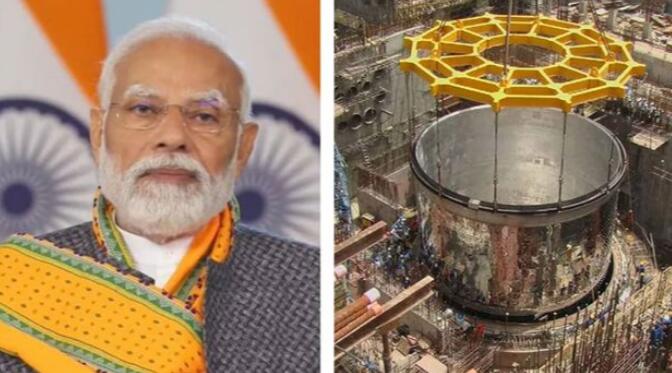
Prime Minister Narendra Modi described PFBR development as a turning point in India’s nuclear journey

Share on FacebookShare on X

India has crossed a significant milestone in its long-term nuclear energy journey, with fresh momentum in the second stage of its ambitious three-stage programme.

Developed decades ago by Homi J Bhabha, the strategy was designed to solve a uniquely Indian challenge, limited uranium reserves but vast deposits of thorium.

RelatedPosts

UNSC Seat or Propaganda Platform? India Exposes Pakistan’s Habit of Misusing Global Forums

Rudram-2 Passes Crucial Combat Trial, India Moves Closer to Indigenous SEAD Dominance

Why Kalita Majhi’s Journey from Domestic Help to Minister Has Become a Defining Image of Indian Democracy

Load More

Now, with progress in fast breeder reactor technology highlighted by institutions like the Bhabha Atomic Research Centre (BARC) India is moving closer to unlocking a self-sustaining nuclear fuel cycle.

The country has moved a significant step closer to nuclear fuel self-reliance, as its indigenously developed Prototype Fast Breeder Reactor (PFBR) at Kalpakkam has successfully achieved criticality, the stage at which a controlled nuclear chain reaction begins.

The development marks a major breakthrough in the country’s long-term atomic energy programme. Confirmed on Monday, this milestone represents a key transition before the reactor begins full-scale power generation.

Once operational, the PFBR is expected to play a pivotal role in India’s ambitious plan to expand its nuclear power capacity to 100 gigawatts by 2047, a sharp rise from the current level of about eight gigawatts.

Prime Minister Narendra Modi described the development as a turning point in India’s nuclear journey.

In a post on X, he said, “Today, India takes a defining step in its civil nuclear journey, advancing the second stage of its nuclear programme.”

“The indigenously designed and built Prototype Fast Breeder Reactor at Kalpakkam has attained criticality,” he added.

What Is India’s Three-Stage Nuclear Programme?

At its core, India’s nuclear programme is a step-by-step method to generate electricity while simultaneously creating more fuel for the future. Most countries rely heavily on uranium, but India has relatively small uranium reserves and one of the world’s largest thorium deposits.

https://x.com/alpha_defense/status/2041214522736935240?s=48

To bridge this gap, the programme unfolds in three stages, where each phase produces the fuel required for the next. In simple terms, it works like a relay system, Stage 1 creates fuel, Stage 2 multiplies it, and Stage 3 makes the entire cycle sustainable for the long term.

How It Works: From Uranium to Endless Energy

Stage 1: Turning Uranium into Plutonium

India begins with natural uranium in reactors known as Pressurized Heavy Water Reactors (PHWRs). In these reactors, a small portion of uranium, known as U-235, undergoes fission to release energy in the form of electricity.

At the same time, the more abundant U-238 absorbs neutrons and transforms into plutonium-239. This process is crucial because it not only produces power but also generates plutonium, which becomes the fuel for the next stage of the programme.

Examples of such reactors in India include the Rajasthan Atomic Power Station, Kakrapar Atomic Power Station, and Narora Atomic Power Station.

Stage 2: Fast Breeder Reactors: Making More Fuel Than You Use

The second stage is where India is currently making significant progress. Fast breeder reactors use plutonium-239 as fuel. When this plutonium undergoes fission, it releases high-energy neutrons. These neutrons are then absorbed by surrounding materials such as uranium-238 or thorium, converting them into more fissile fuel like plutonium-239 or uranium-233.

The defining feature of this stage is that it produces more fuel than it consumes, a process known as “breeding.” This makes it a critical bridge between limited uranium resources and the future thorium-based cycle.

Key facilities driving this progress include the Fast Breeder Test Reactor and the Prototype Fast Breeder Reactor. Recent developments around these reactors have also been publicly acknowledged by PM Narendra Modi, underlining their national importance.

Stage 3: The Thorium Breakthrough

The third and final stage is what sets India’s programme apart globally. Thorium-232, which is abundantly available in India, cannot directly undergo fission. However, when it absorbs a neutron, it transforms into uranium-233, a material capable of sustaining a nuclear chain reaction and producing energy.

This stage is crucial because it enables India to tap into its vast thorium reserves for long-term, sustainable power generation. The proposed reactor design for this phase is the Advanced Heavy Water Reactor, which is currently under development.

What Is a Fast Breeder Reactor and How Does It Work?

A fast breeder reactor (FBR) is a special type of nuclear reactor designed to produce more fuel than it consumes. Unlike conventional reactors that use slow (thermal) neutrons, FBRs rely on high-energy fast neutrons to sustain the chain reaction.

These reactors typically use plutonium-239 or mixed oxide fuel. Surrounding the core is a “blanket” of uranium-238, which absorbs neutrons and converts into plutonium-239, allowing the fuel to be reused. This process significantly improves fuel efficiency and extends the use of available uranium resources.

Another key difference is that FBRs do not use a moderator to slow down neutrons. Instead, they often use liquid sodium as a coolant, which enables efficient heat transfer. This design not only enhances fuel utilisation but also allows for the burning of long-lived nuclear waste.

India’s PFBR is part of a select group of such advanced reactors worldwide, alongside Russia’s BN-800 and France’s Phénix reactor. However, the technology remains complex and expensive. It also comes with challenges, including safety concerns associated with sodium coolant and proliferation risks due to plutonium production.

Why It Matters

The PFBR project reflects the efforts of a vast network of scientists, engineers, technicians and industry partners who contributed to its design, fabrication and construction, largely using indigenous technologies. Their work highlights India’s growing expertise in advanced nuclear engineering and aligns with the country’s push for self-reliance under the Atmanirbhar Bharat initiative.

Beyond electricity generation, the fast breeder programme strengthens India’s capabilities in critical areas such as nuclear fuel cycles, advanced materials, reactor physics and large-scale engineering. The knowledge and experience gained are expected to support future reactor designs and next-generation nuclear technologies.

As India expands its clean energy mix, fast breeder reactors are expected to provide reliable, low-carbon base-load power with improved efficiency. The achievement of first criticality is therefore not just a technical milestone, but a major step toward building a sustainable and self-reliant energy future for a developed India.

Built Indigenously Under Aatmanirbhar Push

The reactor has been designed and constructed by Bharatiya Nabhikiya Vidyut Nigam Limited (BHAVINI), underscoring India’s focus on developing critical technologies domestically.

More than 200 Indian industries, including several MSMEs, contributed to the project, reflecting a broad industrial ecosystem supporting the nuclear sector. BHAVINI was established in 2003 to spearhead the development of advanced reactors such as the PFBR.

As per reports, officials noted that the reactor incorporates advanced third-generation safety features, including passive systems capable of ensuring safe shutdown during emergencies. The attainment of criticality indicates that a sustained nuclear chain reaction has begun under controlled conditions.

The reactor will now undergo extensive testing and gradual power increases before reaching full operational capacity. Earlier, in 2024, the Kalpakkam reactor had achieved the core loading stage, when nuclear fuel was first introduced.

Global Significance and Next Steps

Once fully commissioned, India will join a small group of nations operating fast breeder reactors, with Russia currently being the only country running such reactors commercially at scale.

The next phase will involve scaling up operations and integrating the PFBR into the national grid, contributing to India’s efforts to reduce carbon emissions while meeting rapidly growing energy demand.

As the reactor moves closer to full operation, it also accelerates India’s long-term vision of utilising its vast thorium reserves.

This milestone marks not just progress in nuclear technology, but a decisive step toward a sustainable, secure and self-reliant energy future.

Tags: BARCBhabha Atomic Research CentreIndiaNuclear energy journeyNuclear fuel cyclePressurized Heavy Water ReactorsReactor technologyThree-stage programme
ShareTweetSend
Previous Post

Election Commission of India (ECI ): Madras High Court Seeks Clarity on Religion Criteria in Reserved Constituencies

Next Post

Security Forces Crack Interstate Lashkar-e-Taiba Network in Srinagar, Arrest Fugitive Terror Operative After 16 Years

Related Posts

Bhindranwale Symbolism Returns at Golden Temple on Blue Star Anniversary, Exposing Recurring Security Challenge in Punjab
Politics

Bhindranwale Symbolism Returns at Golden Temple on Blue Star Anniversary, Exposing Recurring Security Challenge in Punjab

6 June 2026

Pro-Khalistan slogans echoed through parts of the Sri Harmandir Sahib complex in Amritsar as the 42nd anniversary of Operation...

Bengal Police Seize 29 Firearms in Multi-District Operation Following Arrests in Sandeshkhali Case
Politics

Bengal Police Seize 29 Firearms in Multi-District Operation Following Arrests in Sandeshkhali Case

6 June 2026

Special Task Force operation across South and North 24 Parganas has led to the recovery of 29 illegal firearms...

India’s 7.7% Growth in FY26 Reinforces Economic Strength Under Modi as Services and Investment Drive Broad-Based Expansion
Business

India’s 7.7% Growth in FY26 Reinforces Economic Strength Under Modi as Services and Investment Drive Broad-Based Expansion

6 June 2026

India’s economy closed FY 2025–26 with real GDP growth of 7.7%, marking a stronger-than-expected performance that highlights continued momentum...

Load More

Leave a Reply Cancel reply

Your email address will not be published. Required fields are marked *

I agree to the Terms of use and Privacy Policy.
This site is protected by reCAPTCHA and the Google Privacy Policy and Terms of Service apply.

Currently Playing

AIRCRAFT CARRIERS: INDIA’S MOST POWERFUL TOOL OF MARITIME POWER PROJECTION | INS Vikrant |

AIRCRAFT CARRIERS: INDIA’S MOST POWERFUL TOOL OF MARITIME POWER PROJECTION | INS Vikrant |

00:03:22

Rudram 2 Success: Made in India Missile Ready To Crush Enemy Radars| DRDO’s Big Breakthrough

00:03:46

From Runways to Warships: India’s Firefighting Warrior Built for Bases & Battles| IAF | VayuShakti

00:05:40

Ethanol, EVs and Solar- How India’s Energy Game Is Changing | Modi on LPG & Crude Oil | war| Hormuz

00:05:21

Truth of IRIS Dena: 8 Days That Changed Narrative | War zone Reality, Not an Indian Navy Exercise

00:08:02
Facebook Twitter Instagram Youtube
tfipostTfipost.com
Right Wing | News Analysis | Indian Opinion
  • About us
  • Contact Us
  • Careers
  • Brand Partnerships
  • Terms of use
  • Privacy Policy
  • Sitemap

©2026 TFI Media Private Limited

No Result
View All Result
  • Premium
  • Politics
    • Analysis
    • Opinions
    • Trending
  • Economy
    • Business
    • Finance
  • Defense
    • Defence
    • Strategy
    • Weaponry
  • Geopolitics
    • Africa
    • Americas
    • Asia Pacific
    • Europe
    • South Asia
    • West Asia
  • Knowledge
    • Culture
    • History
    • Indology
  • Law
  • Lounge
    • Books
    • Cinema
    • Food
    • Health
    • Sports
    • technology
    • Travel
    • Satire
TFIPOST हिन्दी
TFIPOST Global

©2026 TFI Media Private Limited