


















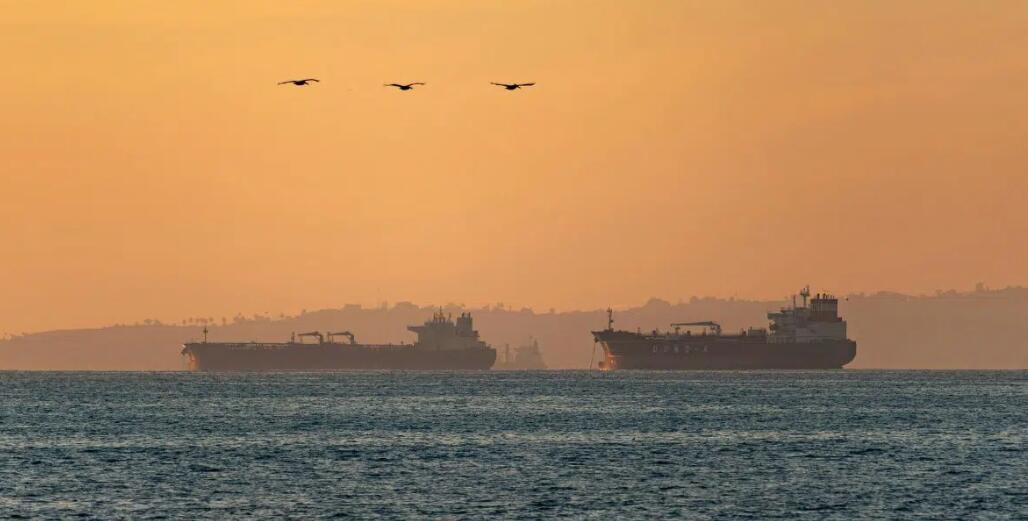
At a time when tensions in West Asia have pushed the Strait of Hormuz into the center of global geopolitics, India appears to be quietly securing its most critical lifeline (energy supplies).
According to report, the latest development is that a third Indian tanker has safely crossed the Strait of Hormuz, even as the region remains volatile due to ongoing military tensions.
This tanker joins two other LPG vessels Shivalik and Nanda Devi, which are already on their way to India under the escort of the Indian Navy and will reach today.
The coordinated movement of these tankers suggests a carefully planned operation aimed at protecting India’s energy supply lines while the global shipping community remains cautious about passing through one of the world’s most sensitive maritime chokepoints.
Indian Navy Escorting Energy Lifeline
The first two LPG tankers, Shivalik and Nanda Devi, departed the Gulf carrying large volumes of liquefied petroleum gas and are being escorted by Indian naval ships through the region.
The vessels, Shivalik and Nanda Devi, are transporting around 92,700 metric tonnes of LPG and are expected to reach the ports of Mundra Port and Kandla Port within the next couple of days. The escort mission highlights the Indian Navy’s role in ensuring the safety of merchant shipping during periods of geopolitical uncertainty.
Now, with a third tanker successfully crossing the Strait of Hormuz, it appears that India’s strategy is working. Instead of dramatic announcements or high-profile military statements, India has opted for a quieter approach- combining naval presence with diplomatic engagement.
Speculation About India–Iran Understanding
Interestingly, even voices from the United States have hinted that India may have reached some form of understanding with Iran to ensure the safe passage of its ships. While there has been no official confirmation of any such arrangement, the fact that Indian vessels continue to move through the region safely has fueled speculation about back-channel diplomacy.
This speculation comes at a time when many international shipping companies are either delaying or rerouting their vessels due to the security risks in the area.
The Quiet Signature of Modi’s Diplomacy
Back home, the opposition had been criticizing the government, accusing it of failing to take decisive steps and claiming that India’s relations with Iran had deteriorated. However, the safe movement of these tankers under Indian naval escort presents a strong counterpoint to that narrative.
The safe passage of Indian tankers not come with loud headlines, but it reflects a particular style of statecraft, one that blends naval capability with calibrated diplomacy.
Supporters of the government see this as another example of “Modi diplomacy” at work: maintaining strategic relationships across rival blocs, avoiding unnecessary escalation, and quietly safeguarding India’s national interests.
Iran Assures Safe Passage for Indian Ships
Earlier, Iran indicated it will allow Indian ships safe passage through the Strait of Hormuz, even as hostilities continue following attacks involving the US, Israel and Iranian forces.
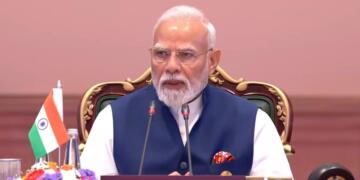
The assurance came after a phone conversation between Prime Minister Narendra Modi and Iranian President Masoud Pezeshkian late on Thursday, during which Modi stressed that India considers Iran a friend and will work to advance diplomacy, said media reports.
According to Iranian officials, this marks one of the closest instances of India expressing solidarity with Tehran since the conflict escalated. Pezeshkian also appreciated India’s “balanced and constructive positions” on international issues and its efforts to reduce tensions.
New Delhi has intensified diplomatic engagement with Tehran in recent days amid fears of an energy crisis, urging the need for uninterrupted movement of goods and energy supplies through the strategic waterway.
India is the world’s fourth-largest buyer of liquefied natural gas and second-largest buyer of LPG, used for cooking. This gas is predominantly sourced from the Middle East.
Amid supply concerns, the government earlier ordered that households and transport sectors must be prioritised. Several industries, including those manufacturing ceramic tiles, are facing a gas shortage that could cripple production.