

















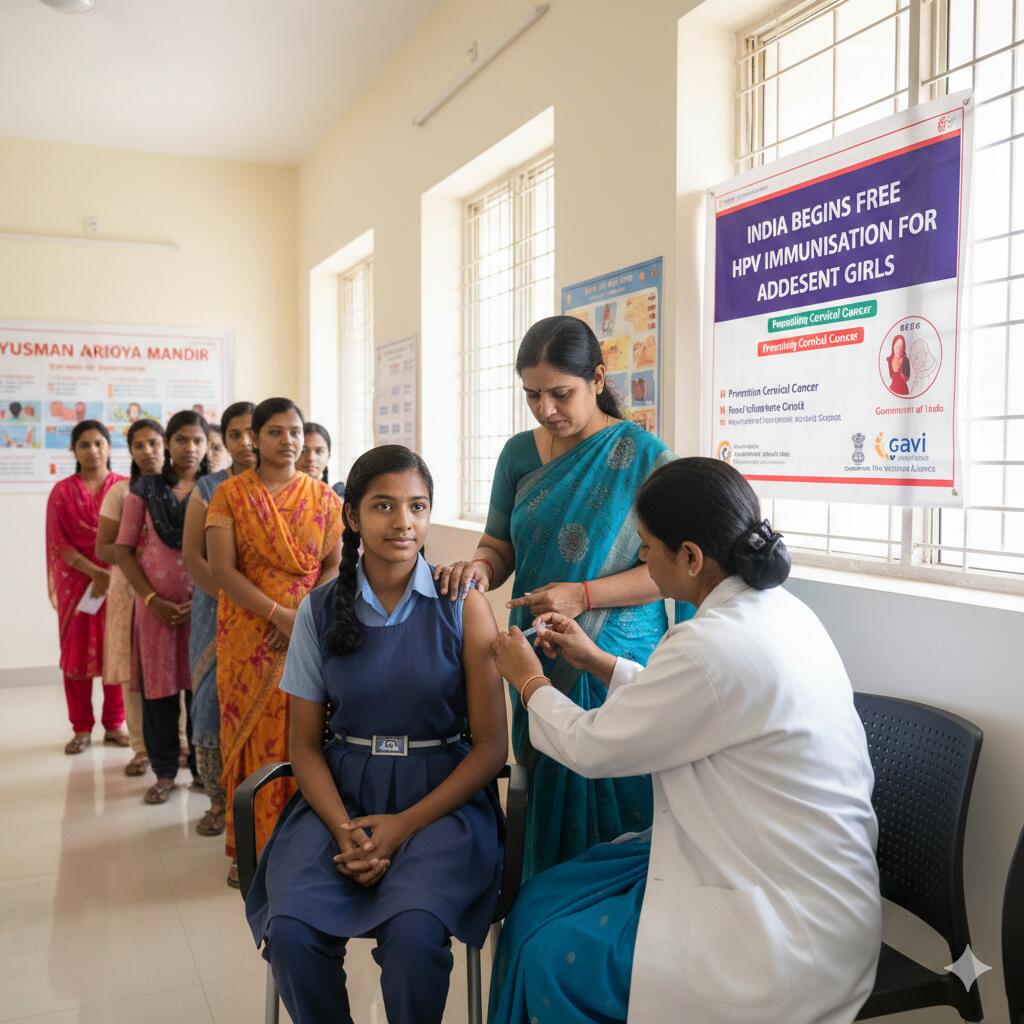
The Government of India is set to launch a nationwide human papillomavirus (HPV) vaccination drive for adolescent girls (14 years and above) later this month, marking a decisive step against cervical cancer. The campaign is entirely voluntary and free of cost, covering approximately 1.2 crore adolescents annually and ensuring equitable access across socio-economic groups. Vaccinations will be administered exclusively at designated government health facilities, including Ayushman Arogya Mandirs, Community Health Centres, Sub-District and District Hospitals, and Government Medical Colleges.
Targeting the Silent Threat
Cervical cancer remains the second most common cancer among women in India, claiming over 42,000 lives and recording nearly 80,000 new cases each year. Persistent infection with high-risk HPV types, particularly 16 and 18, accounts for more than 80 percent of cases. Experts emphasise that vaccination before sexual debut is critical, as HPV infection is silent, irreversible, and preventable through immunisation.
Dr. Abhishek Shankar of AIIMS described the rollout as a historic step that will protect thousands of girls from a preventable disease while reducing future treatment burdens. Dr. Pragya Shukla, head of clinical oncology at Delhi State Cancer Institute, highlighted the safety and proven effectiveness of the vaccine, underlining that early vaccination is vital to prevention.
Gardasil and Global Support
India will use Gardasil, a quadrivalent HPV vaccine that protects against HPV types 16 and 18, responsible for most cervical cancers, as well as types 6 and 11. The government has secured 2.6 crore doses through its partnership with Gavi, the Vaccine Alliance, with 1.5 crore doses already delivered. Officials estimate that roughly 1.2 crore doses will be needed annually to cover each cohort of adolescent girls. Globally, over 500 million doses have been administered, demonstrating the vaccine’s robust safety record.
The national programme follows a single-dose strategy, supported by global and Indian scientific evidence. A senior Health Ministry official noted that this approach provides durable protection and ensures rapid coverage. All vaccination sessions will be conducted by trained medical officers with skilled healthcare teams, and all facilities will be linked to 24×7 government hospitals to provide immediate support in the rare event of adverse reactions.
A Preventive Health Milestone
Unlike routine immunisations under the Universal Immunisation Programme (UIP), the HPV campaign will be conducted as a special drive on designated immunisation days, monitored via the U-WIN digital platform to ensure rapid and efficient implementation. The initiative reflects the government’s sustained focus on cervical cancer prevention, repeatedly highlighted by Prime Minister Modi at forums such as the Quad Cancer Moonshot event in September 2024.
With more than 90 countries globally adopting single-dose HPV schedules, India’s programme aligns with international best practices while addressing the national disease burden. Authorities emphasise that vaccination complements, but does not replace, regular screening such as Pap smears, forming part of a comprehensive strategy to eliminate cervical cancer.
This campaign represents a historic public health milestone, promising to protect the health of millions of adolescent girls while advancing India’s commitment to preventive care and global disease elimination goals.