












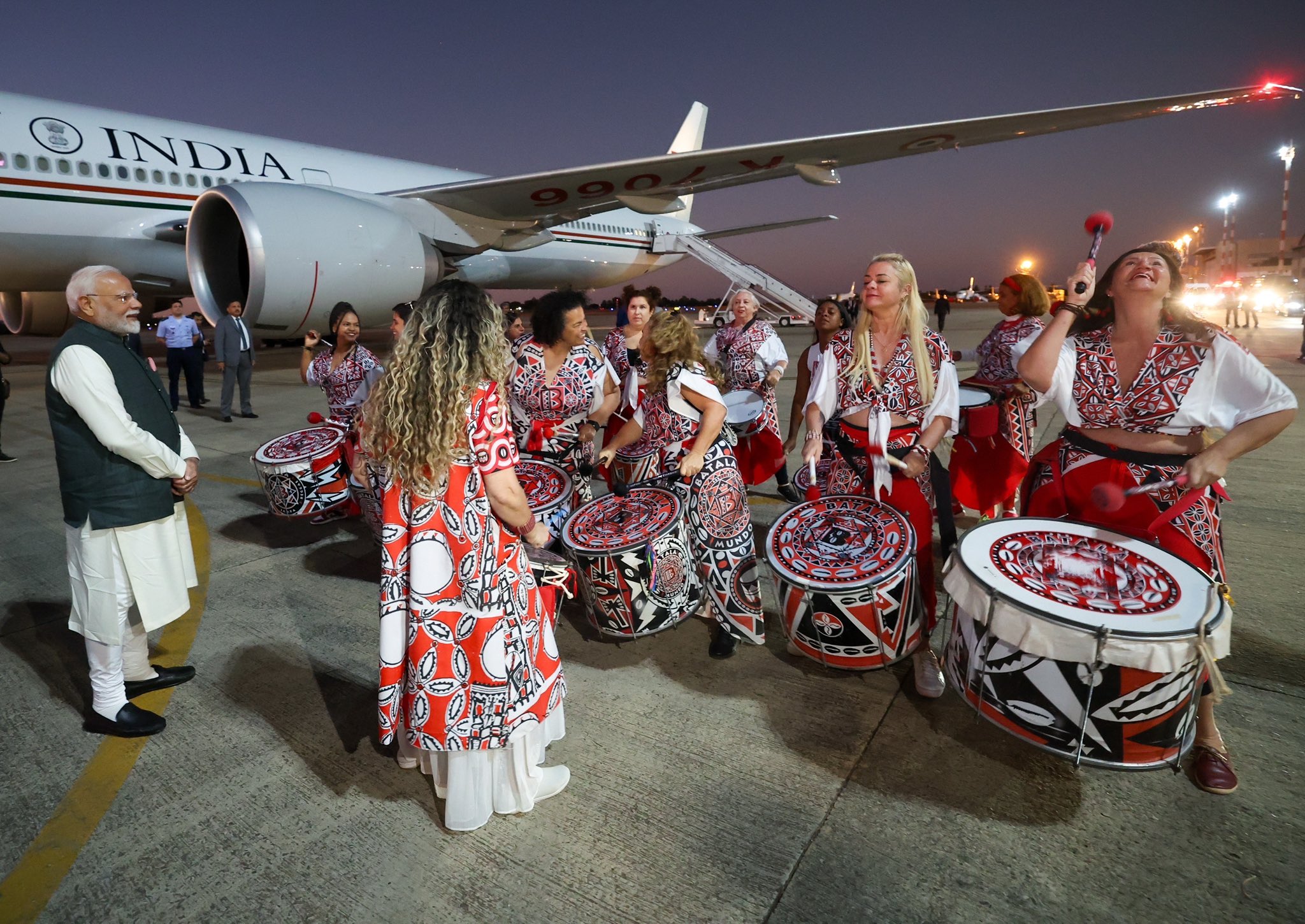
Prime Minister Narendra Modi arrived in Brasilia, Brazil’s capital city, for a State Visit after attending the 17th BRICS Summit in Rio de Janeiro. He was warmly received by Brazil’s Minister of Defence, Jose Mucio Monteiro Filho, at the airport. Adding a festive tone to the arrival, the globally acclaimed Batala Mundo band welcomed the Prime Minister with their vibrant Samba-Reggae compositions. This traditional Afro-Brazilian musical form, originating from Salvador da Bahia, delighted the atmosphere and highlighted the cultural warmth between the two nations.
“Landed in Brasília a short while ago. The Indian community accorded a memorable welcome, once again highlighting how passionate our diaspora is and how connected they remain with their roots,” PM Modi shared in a post on X, praising the hospitality and the musical reception.
From Rio to Brasilia: A Transition from Multilateral to Bilateral Diplomacy
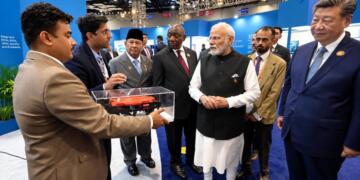
Prime Minister Modi’s arrival in Brasilia followed his participation in the BRICS Summit held in Rio de Janeiro from July 6 to 7. In Rio, PM Modi engaged in key discussions with global leaders, promoting India’s stance on climate change, global governance reforms, and sustainable development. Calling the summit “very productive,” PM Modi noted that the extensive deliberations and bilateral meetings will further deepen India’s engagement with BRICS nations and other global partners.
Before heading to Brasilia, he met several heads of state, including the President of Uruguay, Yamandu Orsi. Both sides explored cooperation in digital technology, agriculture, health, and defence, and emphasized expanding the India-MERCOSUR Preferential Trade Agreement.
“The Rio leg of my Brazil visit was very productive. We had extensive deliberations at the BRICS Summit. I compliment President Lula and the Brazilian Government for the work they’ve done through their BRICS Presidency in making this platform even more effective,” PM Modi posted.
India and Brazil: Expanding Strategic Horizons
In Brasilia, Prime Minister Modi is scheduled to hold comprehensive discussions with Brazilian President Luiz Inacio Lula da Silva. The primary focus of the talks will be on strengthening the India-Brazil Strategic Partnership across sectors such as trade, defence, energy, agriculture, health, space, and technology. People-to-people ties, cultural cooperation, and green energy partnerships are also on the agenda.
The Indian Ministry of External Affairs (MEA) emphasized that the talks will aim at expanding bilateral cooperation in areas of mutual interest and exploring new synergies between the two major economies of the Global South.
During his speech at the BRICS Summit, PM Modi had already praised Brazil’s leadership under President Lula. As the two leaders come together in Brasilia, expectations are high that significant announcements may follow, especially in areas like green hydrogen, digital public infrastructure, and climate-focused partnerships.
Prime Minister Modi will hold bilateral discussions with Luiz Inacio Lula da Silva on broadening the Strategic Partnership between the two nations in areas of mutual interest. The talks will also include trade, defence, energy, space, technology, agriculture, health and people-to-people linkages. This will be followed by a delegation-level talk. Both countries will sign MoUs to foster cooperation in areas of mutual interest. The Indian Ambassador to Brazil, Dinesh Bhatia, had informed earlier that the four MoUs will be signed during the Prime Minister’s bilateral meetings. These will be on working together on counter terrorism, to mutually share confidential information, cooperate in Renewable energy and Agriculture research. The Prime Minister will then depart for Namibia, which is the last leg of the Prime Minister’s five-nation visit abroad.
People, Planet, Progress: PM Modi’s Vision for Sustainability
At the BRICS Summit, Prime Minister Modi placed considerable emphasis on environmental protection, climate justice, and global health. Speaking at the session on Environment, COP-30, and Global Health, he lauded Brazil’s BRICS presidency for prioritizing these crucial issues.
“Climate change and environmental safety have always been top priorities for India. For us, it’s not just about energy, it’s about maintaining a balance between life and nature,” he said. PM Modi added that in India, Earth is considered a mother, and this cultural ethos drives the country’s commitment to sustainable living.
He cited India’s major initiatives such as Mission LiFE (Lifestyle for Environment), Ek Ped Maa Ke Naam (A Tree in the Name of Mother), the International Solar Alliance, the Global Biofuels Alliance, and the Big Cats Alliance. He also mentioned the Green Development Pact achieved under India’s G20 presidency, as well as the launch of the Green Credits Initiative to encourage eco-friendly actions.
Diaspora Diplomacy: A Memorable Reception in Brasilia
Adding a personal touch to his visit, PM Modi was greeted with warmth by the Indian community in Brasilia. The vibrant Indian diaspora showcased their enthusiasm and cultural pride as they welcomed the Prime Minister, echoing the growing bonds between the two countries.
In a symbolic gesture of India-Brazil cultural fusion, the Batala Mundo band’s performance at the airport created a festive mood, merging Afro-Brazilian rhythm with Indian sentiment. PM Modi lauded their effort and emphasized the importance of music, culture, and tradition in building bridges between nations.
Forging the Future Together: A New Chapter in India-Brazil Ties
Prime Minister Modi’s State Visit to Brasilia marks a significant step in deepening India’s strategic relations with Brazil. From multilateral discussions at BRICS to bilateral collaboration with President Lula, the focus remains on sustainable development, digital empowerment, and inclusive growth. The shared commitment to reforming global governance and addressing climate challenges also positions India and Brazil as key voices of the Global South. With both nations aligning on issues ranging from trade and environment to technology and people-centric progress, this visit is poised to unlock new dimensions of cooperation in the years to come.