














TFIPOST हिन्दी
TFIPOST Global
Tfipost.com
Tfipost.com
No Result
View All Result
  • Premium
  • Politics
    • All
    • Analysis
    • Opinions
    • Trending
    Calcutta High Court Rebuke: Border Fencing Delay Puts Bengal Government Under Fire

    Calcutta High Court Rebuke: Border Fencing Delay Puts Bengal Government Under Fire

    West Bengal On Alert After High-Turnout Polls As CEO Urges: ‘ No Post-Poll Violence Should Happen’

    West Bengal On Alert After High-Turnout Polls As CEO Urges: ‘ No Post-Poll Violence Should Happen’

    ‘Ram Rajya’ Row: DMK Remark Sparks Fresh Debate Over Faith, Politics and Cultural Identity

    ‘Ram Rajya’ Row: DMK Remark Sparks Fresh Debate Over Faith, Politics and Cultural Identity

    National Investigation Agency (NIA): Gulshan Colony Raid Raises Serious Security Questions in Kolkata

    National Investigation Agency (NIA): Gulshan Colony Raid Raises Serious Security Questions in Kolkata

    • Analysis
    • Opinions
    • Trending
  • Economy
    • All
    • Business
    • Economy1
    • Finance
    India–New Zealand FTA signed in New Delhi, marking a “once in a lifetime” moment in trade ties.

    India, New Zealand Seal Fast-Tracked Trade Pact to Expand Duty-Free Access, Jobs and $5 Billion Trade Target

    Ahmadis in Pakistan: From Faith to Marginalisation Under Law and Society

    Ahmadis in Pakistan: From Faith to Marginalisation Under Law and Society

    Open Demat Account with Zero Annual Maintenance Charges What to Look For

    Open Demat Account with Zero Annual Maintenance Charges What to Look For

    Blood in the Meadows: How the Pahalgam Terror Attack Exposed Calculated Targeting of Civilians in Kashmir

    Blood in the Meadows: How the Pahalgam Terror Attack Exposed Calculated Targeting of Civilians in Kashmir

    • Business
    • Finance
  • Defense
    • All
    • Defence
    • Strategy
    • Weaponry
    Why is Making a Jet Engine so Hard | The failure of Kaveri

    Why is Making a Jet Engine so Hard | The failure of Kaveri

    Rajnath Singh at SCO, reaffirming India’s zero-tolerance stand on terrorism.

    “No More Double Standards”: Rajnath Singh’s SCO Message Rewrites India’s Terror Response Playbook

    Recovered arms and arrests have intensified scrutiny on a suspected cross-border terror network.

    Pakistan’s Proxy War Faces a Setback as Delhi Terror Plot is Crushed, 18 Weapons Seized

    The scars of Pahalgam endure, even as the nation moves forward

    Pahalgam Anniversary: Modi Signals Firm National Stand as India Reasserts Anti-Terror Resolve

    • Defence
    • Strategy
    • Weaponry
  • Geopolitics
    • All
    • Africa
    • Americas
    • Asia Pacific
    • Europe
    • South Asia
    • West Asia
    Karachi Pact 1949: How Pakistan Cemented Control Over Gilgit-Baltistan Without Its People’s Consent

    Karachi Pact 1949: How Pakistan Cemented Control Over Gilgit-Baltistan Without Its People’s Consent

    When law becomes an instrument of exclusion, persecution moves far beyond the courtroom.

    Ahmadis in Pakistan: From Faith to Marginalisation Under Law and Society

    When uranium becomes strategy, India moves first.

    India’s $4 Billion Uranium Coup with Kazakhstan Rewrites the Global Nuclear Balance

    “Fixing the World”: What a Century of Big Ideas Reveals About Us

    “Fixing the World”: What a Century of Big Ideas Reveals About Us

    • Africa
    • Americas
    • Asia Pacific
    • Europe
    • South Asia
    • West Asia
  • Knowledge
    • All
    • Culture
    • Education
    • History
    • Indology
    Chants of ‘Jai Badri Vishal’ Echo as Badrinath Portals Open; All Four Dhams Now Accessible to Pilgrims

    Chants of ‘Jai Badri Vishal’ Echo as Badrinath Portals Open; All Four Dhams Now Accessible to Pilgrims

    Kedarnath Dham Portals Open for Devotees After 181 Days Amid Vedic Chants, Traditional Rituals

    Kedarnath Dham Portals Open for Devotees After 181 Days Amid Vedic Chants, Traditional Rituals

    Sardar Patel and Amit Shah

    Sardar Patel’s 1947 Blueprint on Minority Quotas Resurfaces as Reservation Debate Returns to Centre Stage

    The 1973 Constitution and ‘Bhutto’ the Man Who Made It: What Pakistan Owes and What It Destroyed

    The 1973 Constitution and ‘Bhutto’ the Man Who Made It: What Pakistan Owes and What It Destroyed

    • Culture
    • History
    • Indology
  • Law
  • Lounge
    • All
    • Books
    • Cinema
    • Entertainment
    • Food
    • Games
    • Health
    • Lifestyle
    • Satire
    • Sports
    • technology
    • Travel
    594 km of speed, scale and connectivity; the Ganga Expressway opens a new development corridor across Uttar Pradesh.

    Modi Opens 594-Km Ganga Expressway, Unveils Uttar Pradesh’s New High-Speed Growth Corridor

    When regulation meets the algorithm

    India Tightens Digital Control as Online Blocking Orders Surge to 24,300 Amid AI Deepfake Trend

    Digital Data Collection In India

    India’s Data Reset Begins: Census 2027 to Become First Fully Digital Population Count

    5 Facilities in Bengaluru Specializing in Mental Health Treatment for Those with Cancer

    5 Facilities in Bengaluru Specializing in Mental Health Treatment for Those with Cancer

    • Books
    • Cinema
    • Food
    • Health
    • Sports
    • technology
    • Travel
    • Satire
Tfipost.com
  • Premium
  • Politics
    • All
    • Analysis
    • Opinions
    • Trending
    Calcutta High Court Rebuke: Border Fencing Delay Puts Bengal Government Under Fire

    Calcutta High Court Rebuke: Border Fencing Delay Puts Bengal Government Under Fire

    West Bengal On Alert After High-Turnout Polls As CEO Urges: ‘ No Post-Poll Violence Should Happen’

    West Bengal On Alert After High-Turnout Polls As CEO Urges: ‘ No Post-Poll Violence Should Happen’

    ‘Ram Rajya’ Row: DMK Remark Sparks Fresh Debate Over Faith, Politics and Cultural Identity

    ‘Ram Rajya’ Row: DMK Remark Sparks Fresh Debate Over Faith, Politics and Cultural Identity

    National Investigation Agency (NIA): Gulshan Colony Raid Raises Serious Security Questions in Kolkata

    National Investigation Agency (NIA): Gulshan Colony Raid Raises Serious Security Questions in Kolkata

    • Analysis
    • Opinions
    • Trending
  • Economy
    • All
    • Business
    • Economy1
    • Finance
    India–New Zealand FTA signed in New Delhi, marking a “once in a lifetime” moment in trade ties.

    India, New Zealand Seal Fast-Tracked Trade Pact to Expand Duty-Free Access, Jobs and $5 Billion Trade Target

    Ahmadis in Pakistan: From Faith to Marginalisation Under Law and Society

    Ahmadis in Pakistan: From Faith to Marginalisation Under Law and Society

    Open Demat Account with Zero Annual Maintenance Charges What to Look For

    Open Demat Account with Zero Annual Maintenance Charges What to Look For

    Blood in the Meadows: How the Pahalgam Terror Attack Exposed Calculated Targeting of Civilians in Kashmir

    Blood in the Meadows: How the Pahalgam Terror Attack Exposed Calculated Targeting of Civilians in Kashmir

    • Business
    • Finance
  • Defense
    • All
    • Defence
    • Strategy
    • Weaponry
    Why is Making a Jet Engine so Hard | The failure of Kaveri

    Why is Making a Jet Engine so Hard | The failure of Kaveri

    Rajnath Singh at SCO, reaffirming India’s zero-tolerance stand on terrorism.

    “No More Double Standards”: Rajnath Singh’s SCO Message Rewrites India’s Terror Response Playbook

    Recovered arms and arrests have intensified scrutiny on a suspected cross-border terror network.

    Pakistan’s Proxy War Faces a Setback as Delhi Terror Plot is Crushed, 18 Weapons Seized

    The scars of Pahalgam endure, even as the nation moves forward

    Pahalgam Anniversary: Modi Signals Firm National Stand as India Reasserts Anti-Terror Resolve

    • Defence
    • Strategy
    • Weaponry
  • Geopolitics
    • All
    • Africa
    • Americas
    • Asia Pacific
    • Europe
    • South Asia
    • West Asia
    Karachi Pact 1949: How Pakistan Cemented Control Over Gilgit-Baltistan Without Its People’s Consent

    Karachi Pact 1949: How Pakistan Cemented Control Over Gilgit-Baltistan Without Its People’s Consent

    When law becomes an instrument of exclusion, persecution moves far beyond the courtroom.

    Ahmadis in Pakistan: From Faith to Marginalisation Under Law and Society

    When uranium becomes strategy, India moves first.

    India’s $4 Billion Uranium Coup with Kazakhstan Rewrites the Global Nuclear Balance

    “Fixing the World”: What a Century of Big Ideas Reveals About Us

    “Fixing the World”: What a Century of Big Ideas Reveals About Us

    • Africa
    • Americas
    • Asia Pacific
    • Europe
    • South Asia
    • West Asia
  • Knowledge
    • All
    • Culture
    • Education
    • History
    • Indology
    Chants of ‘Jai Badri Vishal’ Echo as Badrinath Portals Open; All Four Dhams Now Accessible to Pilgrims

    Chants of ‘Jai Badri Vishal’ Echo as Badrinath Portals Open; All Four Dhams Now Accessible to Pilgrims

    Kedarnath Dham Portals Open for Devotees After 181 Days Amid Vedic Chants, Traditional Rituals

    Kedarnath Dham Portals Open for Devotees After 181 Days Amid Vedic Chants, Traditional Rituals

    Sardar Patel and Amit Shah

    Sardar Patel’s 1947 Blueprint on Minority Quotas Resurfaces as Reservation Debate Returns to Centre Stage

    The 1973 Constitution and ‘Bhutto’ the Man Who Made It: What Pakistan Owes and What It Destroyed

    The 1973 Constitution and ‘Bhutto’ the Man Who Made It: What Pakistan Owes and What It Destroyed

    • Culture
    • History
    • Indology
  • Law
  • Lounge
    • All
    • Books
    • Cinema
    • Entertainment
    • Food
    • Games
    • Health
    • Lifestyle
    • Satire
    • Sports
    • technology
    • Travel
    594 km of speed, scale and connectivity; the Ganga Expressway opens a new development corridor across Uttar Pradesh.

    Modi Opens 594-Km Ganga Expressway, Unveils Uttar Pradesh’s New High-Speed Growth Corridor

    When regulation meets the algorithm

    India Tightens Digital Control as Online Blocking Orders Surge to 24,300 Amid AI Deepfake Trend

    Digital Data Collection In India

    India’s Data Reset Begins: Census 2027 to Become First Fully Digital Population Count

    5 Facilities in Bengaluru Specializing in Mental Health Treatment for Those with Cancer

    5 Facilities in Bengaluru Specializing in Mental Health Treatment for Those with Cancer

    • Books
    • Cinema
    • Food
    • Health
    • Sports
    • technology
    • Travel
    • Satire
No Result
View All Result
Tfipost.com
Tfipost.com
No Result
View All Result
  • Premium
  • Politics
  • Economy
  • Defense
  • Geopolitics
  • Knowledge
  • Law
  • Lounge

Focusing on nuclear energy can save India billions of rupees annually

Abhishek Kumar Singh by Abhishek Kumar Singh
13 July 2022
in Premium
Focusing on nuclear energy can save India billions of rupees annually

Aerial Power Sunset times

Share on FacebookShare on X

Humans often fail to differentiate between emotions and logic. Often what seems a logical reaction to something is deeply rooted in the emotional impact that event has caused on them. A cautious approach that the world, especially India has taken towards Nuclear energy is also one of those. The havoc caused due to human negligence is now stopping India from saving billions of Dollars.

India’s initial flirt with Nuclear power

India’s tryst with Nuclear energy is as old as the concept itself. In the first decade of the 20th century, the Geological Survey of India (GSI) recognised India’s potential deposits of significant minerals containing Uranium and Thorium. However, the technology was not mature enough so that scientists could come up with a solution to utilise it judiciously and for civilians’ gains. Additionally, Indian scientists did not push for extracting them, apparently because nationalism does not teach us to allow gains from valuable resources to accrue to coloniser’s coffers.

RelatedPosts

Pakistan’s Proxy War Faces a Setback as Delhi Terror Plot is Crushed, 18 Weapons Seized

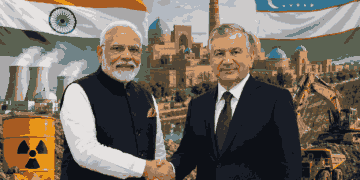
India’s $4 Billion Uranium Coup with Kazakhstan Rewrites the Global Nuclear Balance

India, New Zealand Seal Fast-Tracked Trade Pact to Expand Duty-Free Access, Jobs and $5 Billion Trade Target

Load More

However, Indian physicists maintained close contact with research on going all around the world. Daulat Singh Kothari, Meghnad Saha, Homi J. Bhabha and R. S. Krishnan are some prominent Indian names dominating the European journey of nuclear Physics during the first half of the 20th century. Later, when nuclear fission and its potencies were discovered, a professor named Meghnath Saha put Nuclear Physics into the post-graduate curriculum of the University of Calcutta in 1940. Funds for installing a cyclotron at the same University were sanctioned by Tata trust. Five years later, a combined effort from Homi Jahangir Bhabha and J.R.D. Tata saw the establishment of the Tata Institute of Fundamental Research (TIFR) in Mumbai. Behind the establishment of TIFR, Bhabha’s main aim was to increase India’s clout in Nuclear Physics.

Homi Jahangir Bhabha’s push towards nuclear

After the United States experimented with its two atom bombs in Japan, a race for gaining nuclear capacity kicked off. On the other hand, Indian scientists were trying to find ways to establish an institutional framework for civilian use of nuclear energy. In the aftermath of the second world war, eminent Indian scientists spent more than a decade ensuring that we have enough technical know-how, manpower and regulatory freedom to conduct our research.

Bhabha was the centre point of all these efforts. He was the head of the Atomic Research Committee (ARC) which was tasked with suggesting ways to develop and harness India’s capacity. In his capacity as head of the ARC, he led efforts to collaborate with similar organisations in other countries. Later, Jawaharlal Nehru effectively centralised most of the country’s initiatives towards nuclear energy under him.

Establishment of nuclear power plants

By 1955, authorities were preparing for nuclear power plants. But at that time, it was not possible to do it on our own. The Soviets invited Indian scientists to visit their first commercial power plant. Other countries like the United States, Canada and even the United Kingdom were willing to partner with India. After various rounds of deliberations, it was decided that our first nuclear power plant would be established in Tarapur, Maharashtra. Against the stipulated year of 1965, it was commissioned in 1969. Tarapur opened the floodgates, but unfortunately, not much substantive development could take place. 53 years after the commissioning of the Tarapur plant, India can only boast of 22 such plants, an extremely less number, given that we have a huge amount of Thorium reserves.

Interestingly, using Thorium for nuclear power is not a common practice. The world only recently started exploring Thorium’s potential as a nuclear fuel. Uranium is the one which countries prefer. Bhabha was the one who promoted the use of Thorium for India’s energy security. He had devised India’s three-stage nuclear power programme, considering India produces only 2 per cent of global Uranium. On the other hand, we have the world’s largest Thorium reserve. However, due to a lacklustre attitude by the governments, even to this date, we have not been able to fully utilise our Thorium reserves and have to rely on various countries for our Uranium requirements.

Nuclear arms against nuclear power

Underutilisation of our mineral reserve is not the only problem halting our nuclear energy prospects. In the 20th century, India’s initiatives to emerge as a capable power also provided roadblocks. India’s test of the “Smiling Buddha” nuclear weapon in 1974 drew huge international reactions. At that time, India was the only country other than 5 members of the UNSC to do so. Western countries rushed in to form the Nuclear Suppliers Group (NSG), in order to ensure that any such event is not repeated. Its regulations in 1992 indirectly banned nuclear exports to India. 24 years later, India did Pokhran-II in 1998. The tests ended up tightening the sanctions regime on India. Though these sanctions were not directly aimed at restricting India’s capability in pulling materials required for itself, they did translate into partnering countries not preferring India for any kind of trade positively affecting India’s nuclear power capacity.

Narrative war against nuclear power

Moreover, the narrative war against nuclear power has also traditionally hampered our focus towards it. The first perceptional roadblock was created by the Bhopal Gas tragedy of 1984. It underlined the importance of proper management of industries using chemical reactions, which included nuclear power as well. But, somehow the clouds of uncertainty over the future of nuclear energy soon dissipated. However, the nuclear sector could not avoid scrutiny after the Chernobyl disaster. The residues of Chernobyl are believed to have been transported to Mumbai as well. Atomic Energy Regulatory Board (AERB) had to hold various rounds of discussions, and deliberations in order to ensure that the controversy does not affect India’s nuclear power generating ability.

Civil nuclear deals

Despite all these issues, India had been progressing well on its nuclear power journey. Just after Pokhran II, PM Vajpayee had told the world that it is developing nuclear capacity only for peaceful purposes. Despite browbeating by the Clinton administration, India did not kneel. Its benefits were later reaped by the Manmohan Singh government. In 2005, Bush and Manmohan signed India–United States Civil Nuclear Agreement, also known as the 123 agreement. The resultant acceptance of the deal from around the world translated into India getting a waiver from NSG in 2008. The waiver came as a relief for the Indian civil nuclear sector whose contribution to power generation had declined by 12.83 per cent between 2006-2008.

The development opened floodgates for India. In the upcoming years, India went on to chalk Uranium import deals with countries like Mongolia, Kazakhstan, Argentina, Namibia, Niger and Australia.

Protests are a roadblock

But, the sector is more complex and analytics also follow the same trend. In 2011, the unfortunate Fukushima nuclear disaster happened in Japan. Though natural disaster was the main reason behind it, still disruptive groups in India decided to use it as a tool to hamper the nation’s progress. Jaitpur in Maharashtra, Koodankulam in Tamil Nadu, Haripur in Bengal, and Virdi in Gujarat became the main centres of protests against India’s nuclear power ambitions. Even, PILs were filed as well, but the Apex Court refused to intervene on the liability issue. Apparently, India already has a law called The Civil Liability for Nuclear Damage Act, 2010 to fix liabilities for any damages.

The protests caused lots of hindrances to the development of nuclear power in India. It delayed various bilateral civil nuclear deals along with that with Japan. Currently, India is in a civil nuclear pact with the US, France, Russia, Canada, Argentina, Australia, Sri Lanka, United Kingdom, Japan, Vietnam, Bangladesh, Kazakhstan and Korea.

Nuclear are far better

Despite the largely clear air around it, our nuclear power potential is largely untapped. Currently, nuclear power provides only 3 per cent of our energy requirement. Part of the blame lies with excessive emphasis on renewable energy. The world is so focused on harnessing natural sources like water, solar and wind that the cleanliness of nuclear energy has been put on the back burner. But, the fact of the matter is that in many ways, nuclear energy is far better than those we term renewables. For one, renewables are an unstable form of energy and rely on specific climate and weather for producing electricity. Due to this very nature, they require fossil fuels for backup energy.

Moreover, harnessing renewables also take up much more space compared to nuclear ones. According to data from the United States government, wind farms take up 360 times more space than nuclear plants while solar plants take up 75 times more. Moreover, the damage to ecology caused has not been measured on a large scale. But, in the US alone, around 5,00,000 birds are killed every year in the process of providing “renewable energy” to humans.

India needs to learn from examples

On the other hand, countries utilising nuclear power with safety are not facing such issues. France is one of them. It has provided an incentive to the nuclear power sector and has benefitted immensely from it. More than 75 per cent of its power comes from nuclear energy. It has found a way to recycle nuclear fuel as well. It produces 19 per cent of its electricity from recycled fuel.

Currently, the energy sector sentiments are favouring the promotion of nuclear power in India. India is trying to find a way to cut short the cost required to produce electricity in gas and coal-run plants. Nuclear power costs 33 to 50 per cent of a coal plant and 20-25 per cent of a gas combined-cycle plant. Given that our country needs to take cost-effective measures, the positive facts about nuclear power far outweigh the negative sentiments around it. Focusing on nuclear can save us $100 billion on annual basis.

Currently, our nuclear power capacity is 7,380 MW. In recent times, the Modi government has tried to reinvigorate the sector. India has targeted to increase its nuclear power generation capacity to 22,480 MW by 2031. It will be interesting to see how the development pans out. But, one thing is certain. India can do much better and harnessing our Thorium reserves will make us Aatmanirbhar.

Support TFI:

Support us to strengthen the ‘Right’ ideology of cultural nationalism by purchasing the best quality garments from TFI-STORE.COM
Also Watch:

Tags: CapacityCountriesenergyIndiaIndia'sIndianNuclearPowerthoriumUraniumworld
ShareTweetSend
Previous Post

With NCB charging Rhea Chakraborty, the Bollywood drug cartel is set to face the music

Next Post

Taapsee proves it yet again; Bollywood has a serious allergy with casting

Related Posts

Mera Ration 2.0: A Leap Towards Digital Transparency and Corruption-Free India
Business

Mera Ration 2.0: A Leap Towards Digital Transparency and Corruption-Free India

13 September 2024

How India's Latest Digital Initiative is Revolutionizing Ration Distribution India is making significant strides in the digital realm with...

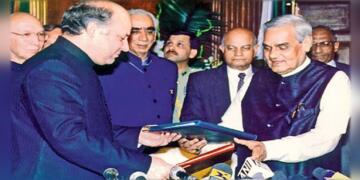
The Lahore declaration that was not meant to be
History

The Lahore declaration that was not meant to be

25 February 2023

For a long time, India’s geographical region of Kashmir has been a sensitive issue between India and Pakistan. But...

Baikunth Shukla
History

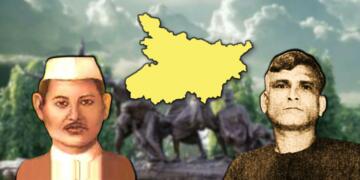
Bihar’s Forgotten Sons: Yogendra Shukla and Baikunth Shukla

22 February 2023

Story of Baikunth Shukla and Yogendra Shukla: Have you been to Bihar before? Stop assuming. I'm not referring to...

Load More

Leave a Reply Cancel reply

Your email address will not be published. Required fields are marked *

I agree to the Terms of use and Privacy Policy.
This site is protected by reCAPTCHA and the Google Privacy Policy and Terms of Service apply.

Currently Playing

From Runways to Warships: India’s Firefighting Warrior Built for Bases & Battles| IAF | VayuShakti

From Runways to Warships: India’s Firefighting Warrior Built for Bases & Battles| IAF | VayuShakti

00:05:40

Ethanol, EVs and Solar- How India’s Energy Game Is Changing | Modi on LPG & Crude Oil | war| Hormuz

00:05:21

Truth of IRIS Dena: 8 Days That Changed Narrative | War zone Reality, Not an Indian Navy Exercise

00:08:02

300 Million Euros for SCALP: Strategic Necessity or Costly Dependency on France300

00:04:06

Tejas Mk1A: 19th aircraft coupled but Not Delivered: What Is Holding Back the IAF Induction?

00:07:21
Facebook Twitter Instagram Youtube
tfipostTfipost.com
Right Wing | News Analysis | Indian Opinion
  • About us
  • Contact Us
  • Careers
  • Brand Partnerships
  • Terms of use
  • Privacy Policy
  • Sitemap

©2026 TFI Media Private Limited

No Result
View All Result
  • Premium
  • Politics
    • Analysis
    • Opinions
    • Trending
  • Economy
    • Business
    • Finance
  • Defense
    • Defence
    • Strategy
    • Weaponry
  • Geopolitics
    • Africa
    • Americas
    • Asia Pacific
    • Europe
    • South Asia
    • West Asia
  • Knowledge
    • Culture
    • History
    • Indology
  • Law
  • Lounge
    • Books
    • Cinema
    • Food
    • Health
    • Sports
    • technology
    • Travel
    • Satire
TFIPOST हिन्दी
TFIPOST Global

©2026 TFI Media Private Limited