









TFIPOST हिन्दी
TFIPOST Global
Tfipost.com
Tfipost.com
No Result
View All Result
  • Premium
  • Politics
    • All
    • Analysis
    • Opinions
    • Trending
    ‘Combat ready, Cohesive, Credible Force’: Indian Navy Reiterates Commitment to Motherland

    ‘Combat ready, Cohesive, Credible Force’: Indian Navy Reiterates Commitment to Motherland

    Despite Nehru’s objection, Rajendra Prasad became India’s first President !

    How Nehru Resisted Dr. Rajendra Prasad—from Presidency to Somnath visit  and Beyond

    Nehru’s Erasure of RC Majumdar Stands as a Stark Warning about Power over History

    Nehru’s Erasure of RC Majumdar Stands as a Stark Warning about Power over History

    India Cannot Be Broken and Peace in Bangladesh Cannot Be Built Upon Delusion

    India Cannot Be Broken and Peace in Bangladesh Cannot Be Built Upon Delusion

    • Analysis
    • Opinions
    • Trending
  • Economy
    • All
    • Business
    • Economy1
    • Finance
    From Paper-Mandates to eNACH Registration: How Digital Mandates Are Changing Cash Flow

    From Paper-Mandates to eNACH Registration: How Digital Mandates Are Changing Cash Flow

    What is the financial management cycle?

    What is the financial management cycle?

    Smart Investment Planning: Calculating Mutual Fund SIP Growth Easily

    Smart Investment Planning: Calculating Mutual Fund SIP Growth Easily

    Convert ETH to USD Using Price Statistics for Better Trading Decisions

    Convert ETH to USD Using Price Statistics for Better Trading Decisions

    • Business
    • Finance
  • Defense
    • All
    • Defence
    • Strategy
    • Weaponry
    Veterans Deserve More Than Promises: The System Must Match the Soldier’s Sacrifice

    Veterans Deserve More Than Promises: The System Must Match the Soldier’s Sacrifice

    How Ukraine Uses Psychological and Information Warfare to ‘Win,’ and What India Can Learn From This Strategy

    How Ukraine ‘Wins’ the Psychological and Informatiaon War Despite Destruction — Lessons India Cannot Afford to Ignore

    Pakistan’s ‘ship-launched ASBM’ claim doesn’t withstand technical or industrial scrutiny

    Pakistan’s ‘ship-launched ASBM’ claim doesn’t withstand technical or industrial scrutinys

    Borders Can Change: Why Rajnath Singh’s Sindh Remark is India’s New Message to Pakistan

    Borders Can Change: Why Rajnath Singh’s Sindh Remark is India’s New Message to Pakistan

    • Defence
    • Strategy
    • Weaponry
  • Geopolitics
    • All
    • Africa
    • Americas
    • Asia Pacific
    • Europe
    • South Asia
    • West Asia
    Europe’s Slow Descent Into Weakness

    Europe: A Continent Happily Committing a Long-Drawn Suicide

    End of NATO? US Secretary of State Marco Rubio May Skip Foreign Ministers’ Meet in Brussels for First Time in Two Decades

    End of NATO? US Secretary of State Marco Rubio May Skip Foreign Ministers’ Meet in Brussels for First Time in Two Decades

    ‘Best Fighter In the World’ Dmitry Peskov Pitches For Sukhoi-57 Fighter Jet Ahead of Putin’s Visit to India

    ‘Best Fighter In the World’ Dmitry Peskov Pitches For Sukhoi-57 Fighter Jet Ahead of Putin’s Visit to India

    ‘We Are Ready to Go As Far As India Is’: Ahead of Putin Visit, Kremlin Says India-Russia Partnership Has No Limits

    ‘We Are Ready to Go As Far As India Is’: Ahead of Putin Visit, Kremlin Says India-Russia Partnership Has No Limits

    • Africa
    • Americas
    • Asia Pacific
    • Europe
    • South Asia
    • West Asia
  • Knowledge
    • All
    • Culture
    • Education
    • History
    • Indology
    Despite Nehru’s objection, Rajendra Prasad became India’s first President !

    How Nehru Resisted Dr. Rajendra Prasad—from Presidency to Somnath visit  and Beyond

    Talom Rukbo Initiated the Donyi–Polo Movement: Bringing Tribal Youth Back to Their Roots

    Talom Rukbo: The Forgotten Hero Who Shielded Arunachal’s Tribal Communities from Religious Conversion

    How Guru Tegh Bahadur The Ninth Sikh Guru Became a Martyr for Religious Freedom

    How Guru Tegh Bahadur The Ninth Sikh Guru Became a Martyr for Religious Freedom

    21 November 1962: Looking Back at the Indo-China war and How it Redefined the Border Equation

    21 November 1962: Looking Back at the Indo-China war and How it Redefined the Border Equation

    • Culture
    • History
    • Indology
  • Law
  • Lounge
    • All
    • Books
    • Cinema
    • Entertainment
    • Food
    • Games
    • Health
    • Lifestyle
    • Satire
    • Sports
    • technology
    • Travel
    감정을 가진 로봇의 시대가 오고 있다

    감정을 가진 로봇의 시대가 오고 있다

    Is AISaver Face Swap the Best Tool for Face Swap Video Online Free in 2025?

    Is AISaver Face Swap the Best Tool for Face Swap Video Online Free in 2025?

    Why Fat Analysis Matters in the Food and Feed  Industry?

    Why Fat Analysis Matters in the Food and Feed Industry?

    Heart Surgery Hospital in Delhi: What to Expect During Your Procedure

    Heart Surgery Hospital in Delhi: What to Expect During Your Procedure

    • Books
    • Cinema
    • Food
    • Health
    • Sports
    • technology
    • Travel
    • Satire
Tfipost.com
  • Premium
  • Politics
    • All
    • Analysis
    • Opinions
    • Trending
    ‘Combat ready, Cohesive, Credible Force’: Indian Navy Reiterates Commitment to Motherland

    ‘Combat ready, Cohesive, Credible Force’: Indian Navy Reiterates Commitment to Motherland

    Despite Nehru’s objection, Rajendra Prasad became India’s first President !

    How Nehru Resisted Dr. Rajendra Prasad—from Presidency to Somnath visit  and Beyond

    Nehru’s Erasure of RC Majumdar Stands as a Stark Warning about Power over History

    Nehru’s Erasure of RC Majumdar Stands as a Stark Warning about Power over History

    India Cannot Be Broken and Peace in Bangladesh Cannot Be Built Upon Delusion

    India Cannot Be Broken and Peace in Bangladesh Cannot Be Built Upon Delusion

    • Analysis
    • Opinions
    • Trending
  • Economy
    • All
    • Business
    • Economy1
    • Finance
    From Paper-Mandates to eNACH Registration: How Digital Mandates Are Changing Cash Flow

    From Paper-Mandates to eNACH Registration: How Digital Mandates Are Changing Cash Flow

    What is the financial management cycle?

    What is the financial management cycle?

    Smart Investment Planning: Calculating Mutual Fund SIP Growth Easily

    Smart Investment Planning: Calculating Mutual Fund SIP Growth Easily

    Convert ETH to USD Using Price Statistics for Better Trading Decisions

    Convert ETH to USD Using Price Statistics for Better Trading Decisions

    • Business
    • Finance
  • Defense
    • All
    • Defence
    • Strategy
    • Weaponry
    Veterans Deserve More Than Promises: The System Must Match the Soldier’s Sacrifice

    Veterans Deserve More Than Promises: The System Must Match the Soldier’s Sacrifice

    How Ukraine Uses Psychological and Information Warfare to ‘Win,’ and What India Can Learn From This Strategy

    How Ukraine ‘Wins’ the Psychological and Informatiaon War Despite Destruction — Lessons India Cannot Afford to Ignore

    Pakistan’s ‘ship-launched ASBM’ claim doesn’t withstand technical or industrial scrutiny

    Pakistan’s ‘ship-launched ASBM’ claim doesn’t withstand technical or industrial scrutinys

    Borders Can Change: Why Rajnath Singh’s Sindh Remark is India’s New Message to Pakistan

    Borders Can Change: Why Rajnath Singh’s Sindh Remark is India’s New Message to Pakistan

    • Defence
    • Strategy
    • Weaponry
  • Geopolitics
    • All
    • Africa
    • Americas
    • Asia Pacific
    • Europe
    • South Asia
    • West Asia
    Europe’s Slow Descent Into Weakness

    Europe: A Continent Happily Committing a Long-Drawn Suicide

    End of NATO? US Secretary of State Marco Rubio May Skip Foreign Ministers’ Meet in Brussels for First Time in Two Decades

    End of NATO? US Secretary of State Marco Rubio May Skip Foreign Ministers’ Meet in Brussels for First Time in Two Decades

    ‘Best Fighter In the World’ Dmitry Peskov Pitches For Sukhoi-57 Fighter Jet Ahead of Putin’s Visit to India

    ‘Best Fighter In the World’ Dmitry Peskov Pitches For Sukhoi-57 Fighter Jet Ahead of Putin’s Visit to India

    ‘We Are Ready to Go As Far As India Is’: Ahead of Putin Visit, Kremlin Says India-Russia Partnership Has No Limits

    ‘We Are Ready to Go As Far As India Is’: Ahead of Putin Visit, Kremlin Says India-Russia Partnership Has No Limits

    • Africa
    • Americas
    • Asia Pacific
    • Europe
    • South Asia
    • West Asia
  • Knowledge
    • All
    • Culture
    • Education
    • History
    • Indology
    Despite Nehru’s objection, Rajendra Prasad became India’s first President !

    How Nehru Resisted Dr. Rajendra Prasad—from Presidency to Somnath visit  and Beyond

    Talom Rukbo Initiated the Donyi–Polo Movement: Bringing Tribal Youth Back to Their Roots

    Talom Rukbo: The Forgotten Hero Who Shielded Arunachal’s Tribal Communities from Religious Conversion

    How Guru Tegh Bahadur The Ninth Sikh Guru Became a Martyr for Religious Freedom

    How Guru Tegh Bahadur The Ninth Sikh Guru Became a Martyr for Religious Freedom

    21 November 1962: Looking Back at the Indo-China war and How it Redefined the Border Equation

    21 November 1962: Looking Back at the Indo-China war and How it Redefined the Border Equation

    • Culture
    • History
    • Indology
  • Law
  • Lounge
    • All
    • Books
    • Cinema
    • Entertainment
    • Food
    • Games
    • Health
    • Lifestyle
    • Satire
    • Sports
    • technology
    • Travel
    감정을 가진 로봇의 시대가 오고 있다

    감정을 가진 로봇의 시대가 오고 있다

    Is AISaver Face Swap the Best Tool for Face Swap Video Online Free in 2025?

    Is AISaver Face Swap the Best Tool for Face Swap Video Online Free in 2025?

    Why Fat Analysis Matters in the Food and Feed  Industry?

    Why Fat Analysis Matters in the Food and Feed Industry?

    Heart Surgery Hospital in Delhi: What to Expect During Your Procedure

    Heart Surgery Hospital in Delhi: What to Expect During Your Procedure

    • Books
    • Cinema
    • Food
    • Health
    • Sports
    • technology
    • Travel
    • Satire
No Result
View All Result
Tfipost.com
Tfipost.com
No Result
View All Result
  • Premium
  • Politics
  • Economy
  • Defense
  • Geopolitics
  • Knowledge
  • Law
  • Lounge

Are Hindus inherently communal?- Part 1

Frustmanoos by Frustmanoos
16 October 2015
in History
Hindu communal
Share on FacebookShare on X


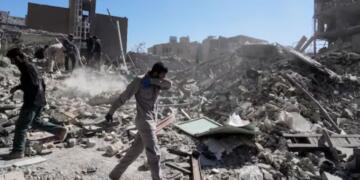
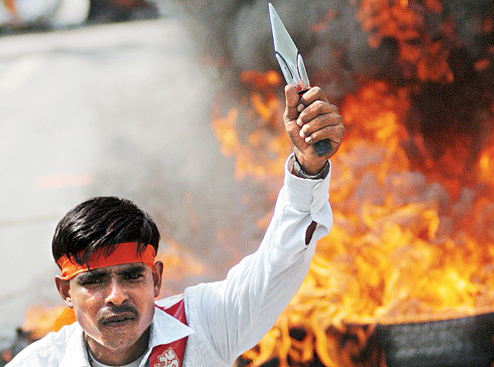
In the past couple of decades, India has been rocked by communal disturbances which have claimed the lives of people from different religious communities. While disturbances between religious minorities are not unknown, most of such communal incidents take place between Hindus and one of the religious minorities in the country. How is it that even 7 decades after independence and even after rapid political, social and economic strides that the nation has made, India continues to grapple with the threat of communal violence. How is it that Sikh pogrom, Bombay riots, Gujarat riots, Muzaffarnagar riots and countless other communal flare ups still happen unabated. Is it that the Hindu majority of India is inherently communal and it is this intolerance that exhibits itself from time to time, most recently in the savage attack in Bisada village?
This multi-part series will track the history behind Hindu communalism. Part 1 of this series talks about Hindu Communalism in ancient India i.e. from its inception till about 1000 CE.

1. The Rise of Hinduism
Ancient India had no concept of Hinduism in the sense that we know today. Indus Valley civilization, in some ways may be considered as the bedrock from which Hinduism emerged. The traditions of Indus valley culture, were fused with the existing Dravidian, tribal and animist cultures that were present in the subcontinent, to which the migrant Aryans added their own cultural thoughts. Over a period of several millennia, authoritative works such as the four vedas (Rig, Yajur, Atharv and Sam), Upanishads, commentary in the form of Brahmanas etc. came to be written. The caste system, initially created for the sake of economic expediency was also born sometime during this era. Over a period of time, Hinduism became more formalized with specific rituals, modes and methods of propitiating the deities. This period also saw increasing urbanization of India. Thus emerged the first challenges to Hinduism

RelatedPosts

Monasteries Beneath Temples? The Truth Behind Leftist propaganda of Hindu-Buddhist Divide

How India, largest economy of the world once, got sudden decline and rise?

Maharaja Kharavela: Perhaps the greatest Indian King ever

Load More

2. The Emergence of Buddhism and Jainism
The urbanization of India resulted the first challenges to the Hindu orthodoxy in the form of Jainism and Buddhism. Both had several common features with Hinduism, but varied vastly in several ways. For starters, both despised the intricate rituals followed in Hinduism. Both Buddhism and Jainism were also opposed to the system of Vedic sacrifices. They also differed with Hinduism in their approach to salvation. Lastly, both repudiated the concept of castes, which by then was well entrenched in Hinduism. While Jainism had a significant impact on Indian thought, it remained a minor player in terms of its outreach. Buddhism on the other hand, became the religion of the Kings, starting from Ashoka and spread out far and wide. This was also a time, when several schools of thought emerged within Hinduism, at times, vastly at odds with each other.

3. Hindu philosophy
By the beginning of the common era, broadly two schools of thought were already in place. One school of thought recognized the primacy of Vedas and was hence called Astika, the other rejected Vedas as the source of knowledge and was hence called Nastika. Buddhism and Jainism came under the Nastika school. The Astika school was sub divided into Samkhya (rationalist), Yoga (believed in the concept of personal God), Vaisheshika (Atomist), Nyaya (realist), Mimansa (orthopraxy) and Vedanta (Knowledge based). These schools were sub divided into several sub-groups. Each of these schools had their own set of adherents, their own set of practices and their unique belief in God, often at variance with each other. The rise of Puranic Hinduism 500CE onwards which replaced rituals with devotion, saw the rise of Shaivaite and Vaishnavite schools, whose adherents worshipped Shiv/Vishnu as their prime deities.

To put it succinctly, the scope for communal conflict in Ancient India, existed between Hindus, Jains and Buddhists and among various schools of Hindu thoughts. We will now examine historical incidents highlighting this conflict.

1. Hindu-Buddhist conflict
Buddhism was never seen as an alien religion in India. Even though it enjoyed royal patronage for a substantial time, the Kings were equally favorably disposed towards both Hinduism and Buddhism. There are many examples to show how Hindu Kings built Buddhist temples and Buddhist Kings built Hindu temples. The name of Pushyamitra Sunga is often quoted to show the intolerance of Hindus towards Buddhists. Pushyamitra (185-149 BC) was a Hindu King from the Sunga dynasty, who is alleged to have destroyed Buddhist stupas and slaughtered Buddhist monks. There is considerable academic debate on this, primarily due to the lack of archaeological evidence. Modern day research points to Pushyamitra’s attack on Mauryas, reflecting merely the decline of Buddhism in Sunga imperial court. This is believed to have forced Buddhists to seek help from Pushyamitra’s enemies, which might have resulted in an attack on Buddhists to secure political power. Even if one were to accept this story, it would appear that the attack on Buddhists by Hindus was an exception rather than the norm. It seems more likely that this was a battle between political powers with Buddhists on the wrong side. Another case of persecution of Buddhists is by the Hun King Mihirakula (502-530 AD), who had become Hinduised and who severely persecuted Buddhists across Northern India. Apparently, Mihirakula’s blood lust didn’t end with the destruction of Buddhist temples. He is believed to have destroyed Hindu temples as well. Persecution of Buddhists appears to have abated after Mihirakula’s death.Kumarila Bhatta was a Hindu philosopher from the Mimamsa school who challenged and defeated Buddhists in philosophical debates. He is believed to have played a major role in hastening the decline of Buddhism in the subcontinent.

2. Hindu-Jain conflict
The conflict between Hindu and Jains in ancient India, seems to be more academic rather than physical. Jains rejected Vedas as they were anonymously written . They rejected Vedic sacrifices, questioning how killing could lead to enlightenment. For every Hindu epic, a counter Jain epic was in place. There are apocryphal tales of the massacre of Jains at the hands of Shaivites or Buddhists, however, none of these are found in Jain literature and are believed to be Hindu/Buddhist propaganda at embellishing their strength. However, it is widely believed that Jainism held sway in the Southern parts of India, before being swept aside by a resurgent Hinduism.

3. Philosophical intolerance
There is a tradition of debates between philosophers from different schools within Hinduism and also with those from the Nastika School of thought. Adi Shankara (788-820 AD) is believed to have travelled widely and participated in philosophical debates with different schools. Shastrath, which institutionalized debates between different philosophers was also prevalent. In fact, there was a free flow of ideas and principles between Astika Schools and between Astika and Nastika schools due to these debates. The level of diffusion was such that many have claimed that Adi Shankara was a crypto-Mahayana Buddhist. There was also a great deal of debate between the adherents of Shaiva and Vaishnava schools which was relatively free from violence at this time.
In light of the above, it will be difficult to believe that Hindu society in ancient India was communal in the sense we define Communalism today. Religion based violence does not seem to be prevalent in general. Isolated incidents are also of doubtful authenticity. There is no doubt that Hindu society was not perfect, that there were several glaring shortfalls (e.g. caste system) that made it difficult from realizing its full potential, but on the whole, ancient India seems to be a place of Communal harmony, in part due to the fact that Hinduism, Buddhism and Jainism were all native religions that had sprouted from the same source. Hindus looked at Buddhists and Jains, not as enemies but as people with a different approach to God. It was this tolerance that made diffusion of ideas between them possible.

The next part of the series will cover the period between 1000 AD- 1500 AD.

References:

http://autarmota.blogspot.in/2012/09/huns-mihirkula-and-kashmir.html

Were Buddhists Persecuted By Hindus?


Wendy Doniger- The Hindus- An alternative history
https://en.wikipedia.org/wiki/Madurai_massacre
http://koenraadelst.bharatvani.org/articles/ayodhya/pushyamitra.html
Tags: Ancient IndiaBuddhismHindu CommunalismJainism
ShareTweetSend
Previous Post

National Media – Aren’t Sanjiv Bhatt and CoffinGate news worthy? Why the stoic silence then?

Next Post

Story of Last honorary doctorate degree of Dr. Abdul Kalam

Related Posts

Despite Nehru’s objection, Rajendra Prasad became India’s first President !
History

How Nehru Resisted Dr. Rajendra Prasad—from Presidency to Somnath visit  and Beyond

4 December 2025

The birth anniversary of former President Dr Rajendra Prasad sparked a word of words between the ruling BJP and...

How Guru Tegh Bahadur The Ninth Sikh Guru Became a Martyr for Religious Freedom
History

How Guru Tegh Bahadur The Ninth Sikh Guru Became a Martyr for Religious Freedom

24 November 2025

Between a church and a masjid in the heart of New Delhi stands the historic Gurdwara Rakab Ganj Sahib...

21 November 1962: Looking Back at the Indo-China war and How it Redefined the Border Equation
History

21 November 1962: Looking Back at the Indo-China war and How it Redefined the Border Equation

21 November 2025

It is on this same day on 21 November 1962, the month-long India – China war came to an...

Load More

Leave a Reply Cancel reply

Your email address will not be published. Required fields are marked *

I agree to the Terms of use and Privacy Policy.
This site is protected by reCAPTCHA and the Google Privacy Policy and Terms of Service apply.

Currently Playing

A War Won From Above: The Air Campaign That Changed South Asia Forever

A War Won From Above: The Air Campaign That Changed South Asia Forever

00:07:37

‘Mad Dog’ The EX CIA Who Took Down Pakistan’s A.Q. Khan Nuclear Mafia Reveals Shocking Details

00:06:59

Dhurandar: When a Film’s Reality Shakes the Left’s Comfortable Myths

00:06:56

Tejas Under Fire — The Truth Behind the Crash, the Propaganda, and the Facts

00:07:45

Why Rahul Gandhi’s US Outreach Directs to a Web of Shadow Controversial Islamist Networks?

00:08:04
Facebook Twitter Instagram Youtube
tfipostTfipost.com
Right Wing | News Analysis | Indian Opinion
  • About us
  • Contact Us
  • Careers
  • Brand Partnerships
  • Terms of use
  • Privacy Policy
  • Sitemap

©2025 TFI Media Private Limited

No Result
View All Result
  • Premium
  • Politics
    • Analysis
    • Opinions
    • Trending
  • Economy
    • Business
    • Finance
  • Defense
    • Defence
    • Strategy
    • Weaponry
  • Geopolitics
    • Africa
    • Americas
    • Asia Pacific
    • Europe
    • South Asia
    • West Asia
  • Knowledge
    • Culture
    • History
    • Indology
  • Law
  • Lounge
    • Books
    • Cinema
    • Food
    • Health
    • Sports
    • technology
    • Travel
    • Satire
TFIPOST हिन्दी
TFIPOST Global

©2025 TFI Media Private Limited