















TFIPOST हिन्दी
TFIPOST Global
Tfipost.com
Tfipost.com
No Result
View All Result
  • Premium
  • Politics
    • All
    • Analysis
    • Opinions
    • Trending
    Mani Shankar Aiyar exploits CJP stage to ideolize Umar Khalid & Sharjeel Imam

    Mani Shankar Aiyar exploits CJP stage to ideolize Umar Khalid & Sharjeel Imam

    Turk Muslims Bar Dhunna Muslims entry to Mosque in Sambhal, Uttar Pradesh

    Turk Muslims Bar Dhunna Muslims entry to Mosque in Sambhal, Uttar Pradesh

    Rhiya Ahir Sparks Online Debate

    Rhiya Ahir Sparks Online Debate

    Dharmendra Pradhan Quits Over NEET Row

    Dharmendra Pradhan Quits Over NEET Row

    • Analysis
    • Opinions
    • Trending
  • Economy
    • All
    • Business
    • Economy1
    • Finance
    Borrowing in the US and India: Their Economic Effects

    Borrowing in the US and India: Their Economic Effects

    ULIP Fund Switching Explained: When, Why, and How to Boost Returns

    ULIP Fund Switching Explained: When, Why, and How to Boost Returns

    A Detailed Look at What Determines Silver Prices, Purity Grades, and City-Based Rate Differences Across India

    A Detailed Look at What Determines Silver Prices, Purity Grades, and City-Based Rate Differences Across India

    10 Things You Can Do on the Boubyan App That Most People Don’t Know About

    10 Things You Can Do on the Boubyan App That Most People Don’t Know About

    • Business
    • Finance
  • Defense
    • All
    • Defence
    • Strategy
    • Weaponry
    From Shipbuilder to Maritime Capability Partner: Navy Outlines Bigger Vision for Defence PSU HSL With Dy Chief of Navy’s visit

    From Shipbuilder to Maritime Capability Partner: Navy Outlines Bigger Vision for Defence PSU HSL With Dy Chief of Navy’s visit

    General Dhiraj Seth’s ‘VIJAY’ Doctrine Signals India’s Next Military Transformation

    General Dhiraj Seth’s ‘VIJAY’ Doctrine Signals India’s Next Military Transformation

    Why the Army is quietly rewriting India’s warfighting doctrine with its first Integrated Battle Groups

    Why the Army is quietly rewriting India’s warfighting doctrine with its first Integrated Battle Groups

    India Officially Names Six Operation Sindoor Martyrs as Their Sacrifice Enters National War Memorial Record

    India Officially Names Six Operation Sindoor Martyrs as Their Sacrifice Enters National War Memorial Record

    • Defence
    • Strategy
    • Weaponry
  • Geopolitics
    • All
    • Africa
    • Americas
    • Asia Pacific
    • Europe
    • South Asia
    • West Asia
    Modi-Takaichi Summit Signals India-Japan’s Strategic Pivot Towards a Stronger Indo-Pacific Alliance

    Modi-Takaichi Summit Signals India-Japan’s Strategic Pivot Towards a Stronger Indo-Pacific Alliance

    PoK Leadership Explodes at Islamabad as Khawaja Asif’s Kashmir Remark Sparks Rare Public Break and Identity Showdown

    PoK Leadership Explodes at Islamabad as Khawaja Asif’s Kashmir Remark Sparks Rare Public Break and Identity Showdown

    Canada’s Khalistan Blowback: After 41 Years, Ottawa Finally Admits Canada-Based Khalistani Extremists Blew Up Air India’s Kanishka

    Canada’s Khalistan Blowback: After 41 Years, Ottawa Finally Admits Canada-Based Khalistani Extremists Blew Up Air India’s Kanishka

    From Cells To Networks: NIA Maps Affiliate Terror Structure In JMB–IMK Case, Chargesheets 11 Linked To Northeast Bengal Module

    From Cells To Networks: NIA Maps Affiliate Terror Structure In JMB–IMK Case, Chargesheets 11 Linked To Northeast Bengal Module

    • Africa
    • Americas
    • Asia Pacific
    • Europe
    • South Asia
    • West Asia
  • Knowledge
    • All
    • Culture
    • Education
    • History
    • Indology
    Shankaracharya, Dharma, and Politics: The Avimukteshwaranand Question

    Can a Shankaracharya Be Political? The Avimukteshwaranand Debate Through the Lens of Dharma

    ‘Not Refugees, But Warriors’: Mohan Bhagwat Seeks to Redefine the Legacy of Partition Migrants

    ‘Not Refugees, But Warriors’: Mohan Bhagwat Seeks to Redefine the Legacy of Partition Migrants

    Why Chennai Is Standing Out in the Growing Map of Franchise Opportunities in India

    Why Chennai Is Standing Out in the Growing Map of Franchise Opportunities in India

    Samvidhan Hatya Diwas: The Emergency That Put India’s Democracy Under Suspension and Still Divides Memory

    Samvidhan Hatya Diwas: The Emergency That Put India’s Democracy Under Suspension and Still Divides Memory

    • Culture
    • History
    • Indology
  • Law
  • Lounge
    • All
    • Books
    • Cinema
    • Entertainment
    • Food
    • Games
    • Health
    • Lifestyle
    • Satire
    • Sports
    • technology
    • Travel
    How to Choose a Safe Online Betting Platform in India?

    How to Choose a Safe Online Betting Platform in India?

    How to Stay Safe While Playing at Online Casinos

    How to Stay Safe While Playing at Online Casinos

    Why Match Analysis Is Becoming More Important for Modern Bettors

    Why Match Analysis Is Becoming More Important for Modern Bettors

    What Sets TekRevol Apart Among Top-Rated App Development Companies

    What Sets TekRevol Apart Among Top-Rated App Development Companies

    • Books
    • Cinema
    • Food
    • Health
    • Sports
    • technology
    • Travel
    • Satire
Tfipost.com
  • Premium
  • Politics
    • All
    • Analysis
    • Opinions
    • Trending
    Mani Shankar Aiyar exploits CJP stage to ideolize Umar Khalid & Sharjeel Imam

    Mani Shankar Aiyar exploits CJP stage to ideolize Umar Khalid & Sharjeel Imam

    Turk Muslims Bar Dhunna Muslims entry to Mosque in Sambhal, Uttar Pradesh

    Turk Muslims Bar Dhunna Muslims entry to Mosque in Sambhal, Uttar Pradesh

    Rhiya Ahir Sparks Online Debate

    Rhiya Ahir Sparks Online Debate

    Dharmendra Pradhan Quits Over NEET Row

    Dharmendra Pradhan Quits Over NEET Row

    • Analysis
    • Opinions
    • Trending
  • Economy
    • All
    • Business
    • Economy1
    • Finance
    Borrowing in the US and India: Their Economic Effects

    Borrowing in the US and India: Their Economic Effects

    ULIP Fund Switching Explained: When, Why, and How to Boost Returns

    ULIP Fund Switching Explained: When, Why, and How to Boost Returns

    A Detailed Look at What Determines Silver Prices, Purity Grades, and City-Based Rate Differences Across India

    A Detailed Look at What Determines Silver Prices, Purity Grades, and City-Based Rate Differences Across India

    10 Things You Can Do on the Boubyan App That Most People Don’t Know About

    10 Things You Can Do on the Boubyan App That Most People Don’t Know About

    • Business
    • Finance
  • Defense
    • All
    • Defence
    • Strategy
    • Weaponry
    From Shipbuilder to Maritime Capability Partner: Navy Outlines Bigger Vision for Defence PSU HSL With Dy Chief of Navy’s visit

    From Shipbuilder to Maritime Capability Partner: Navy Outlines Bigger Vision for Defence PSU HSL With Dy Chief of Navy’s visit

    General Dhiraj Seth’s ‘VIJAY’ Doctrine Signals India’s Next Military Transformation

    General Dhiraj Seth’s ‘VIJAY’ Doctrine Signals India’s Next Military Transformation

    Why the Army is quietly rewriting India’s warfighting doctrine with its first Integrated Battle Groups

    Why the Army is quietly rewriting India’s warfighting doctrine with its first Integrated Battle Groups

    India Officially Names Six Operation Sindoor Martyrs as Their Sacrifice Enters National War Memorial Record

    India Officially Names Six Operation Sindoor Martyrs as Their Sacrifice Enters National War Memorial Record

    • Defence
    • Strategy
    • Weaponry
  • Geopolitics
    • All
    • Africa
    • Americas
    • Asia Pacific
    • Europe
    • South Asia
    • West Asia
    Modi-Takaichi Summit Signals India-Japan’s Strategic Pivot Towards a Stronger Indo-Pacific Alliance

    Modi-Takaichi Summit Signals India-Japan’s Strategic Pivot Towards a Stronger Indo-Pacific Alliance

    PoK Leadership Explodes at Islamabad as Khawaja Asif’s Kashmir Remark Sparks Rare Public Break and Identity Showdown

    PoK Leadership Explodes at Islamabad as Khawaja Asif’s Kashmir Remark Sparks Rare Public Break and Identity Showdown

    Canada’s Khalistan Blowback: After 41 Years, Ottawa Finally Admits Canada-Based Khalistani Extremists Blew Up Air India’s Kanishka

    Canada’s Khalistan Blowback: After 41 Years, Ottawa Finally Admits Canada-Based Khalistani Extremists Blew Up Air India’s Kanishka

    From Cells To Networks: NIA Maps Affiliate Terror Structure In JMB–IMK Case, Chargesheets 11 Linked To Northeast Bengal Module

    From Cells To Networks: NIA Maps Affiliate Terror Structure In JMB–IMK Case, Chargesheets 11 Linked To Northeast Bengal Module

    • Africa
    • Americas
    • Asia Pacific
    • Europe
    • South Asia
    • West Asia
  • Knowledge
    • All
    • Culture
    • Education
    • History
    • Indology
    Shankaracharya, Dharma, and Politics: The Avimukteshwaranand Question

    Can a Shankaracharya Be Political? The Avimukteshwaranand Debate Through the Lens of Dharma

    ‘Not Refugees, But Warriors’: Mohan Bhagwat Seeks to Redefine the Legacy of Partition Migrants

    ‘Not Refugees, But Warriors’: Mohan Bhagwat Seeks to Redefine the Legacy of Partition Migrants

    Why Chennai Is Standing Out in the Growing Map of Franchise Opportunities in India

    Why Chennai Is Standing Out in the Growing Map of Franchise Opportunities in India

    Samvidhan Hatya Diwas: The Emergency That Put India’s Democracy Under Suspension and Still Divides Memory

    Samvidhan Hatya Diwas: The Emergency That Put India’s Democracy Under Suspension and Still Divides Memory

    • Culture
    • History
    • Indology
  • Law
  • Lounge
    • All
    • Books
    • Cinema
    • Entertainment
    • Food
    • Games
    • Health
    • Lifestyle
    • Satire
    • Sports
    • technology
    • Travel
    How to Choose a Safe Online Betting Platform in India?

    How to Choose a Safe Online Betting Platform in India?

    How to Stay Safe While Playing at Online Casinos

    How to Stay Safe While Playing at Online Casinos

    Why Match Analysis Is Becoming More Important for Modern Bettors

    Why Match Analysis Is Becoming More Important for Modern Bettors

    What Sets TekRevol Apart Among Top-Rated App Development Companies

    What Sets TekRevol Apart Among Top-Rated App Development Companies

    • Books
    • Cinema
    • Food
    • Health
    • Sports
    • technology
    • Travel
    • Satire
No Result
View All Result
Tfipost.com
Tfipost.com
No Result
View All Result
  • Premium
  • Politics
  • Economy
  • Defense
  • Geopolitics
  • Knowledge
  • Law
  • Lounge

The Fall of Lhasa: How Nine Days in 1959 Changed Tibet Forever

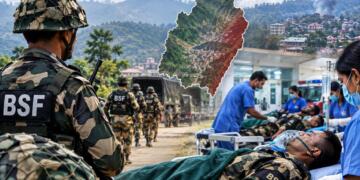
Lhasa, March 1959, a city that had stood for centuries as the spiritual heart of an entire civilization, now thick with smoke, its streets emptied by fear, its sacred stones catching the echo of artillery fire

Ashu Maan by Ashu Maan
26 March 2026
in History, Trending
The Fall of Lhasa: How Nine Days in 1959 Changed Tibet Forever

Tibetan Uprising (Representative Image)

Share on FacebookShare on X

There is a photograph that has never left the minds of those who have seen it. Lhasa, March 1959, a city that had stood for centuries as the spiritual heart of an entire civilization, now thick with smoke, its streets emptied by fear, its sacred stones catching the echo of artillery fire. In a matter of days, everything changed. And for the Tibetan people, nothing has been the same since.

A People Already on Edge

To understand what exploded in Lhasa in March 1959, you have to understand how long the fuse had been burning. It had started nearly a decade earlier, in 1951, when Chinese and Tibetan representatives signed what Beijing called the “Seventeen Point Agreement,” a document framed as a peaceful union of two peoples. But ask any Tibetan who lived through those years, and they will tell you a different story.

RelatedPosts

A series of pieces of evidence point to a secret network between the Dalai Lama and Epstein

He Put On a Disguise, Walked Into the Dark, and Never Came Home: The Dalai Lama’s Escape from Tibet

Tibetans and Unbroken Cry of Tibet: Memory, Resistance, Weight of Silence

Load More

The agreement, many believed, had been signed under pressure, its promises hollow from the start. Within years, those fears began to prove themselves right.

Out east, in the rugged highlands of Kham and Amdo, whole communities were being torn apart. Tibetan fighters took up arms against Chinese forces.

Villages were punished, monasteries, which were not just places of worship but the living centers of Tibetan culture and education, faced campaigns that threatened their very existence. Families packed what they could carry and walked for weeks to reach Lhasa, the one place that still felt like it might be safe.

They arrived with haunted eyes and stories that spread through the capital like wildfire. And with every new arrival, every whispered account of what was happening in the east, the mood in Lhasa grew darker. Trust, whatever remained of it, was almost gone.

The Morning Everything Broke Open

10 March 1959 began with a rumor, a word passed from mouth to mouth across the city, the Chinese authorities were planning to take the Dalai Lama. To summon him to a meeting at a military camp, and not let him come back.

Whether the rumor was true in every detail barely mattered. For a population already stretched to breaking point, it was enough. Within hours, thousands of ordinary Tibetans, monks, traders, farmers, mothers, had surrounded the Norbulingka palace where the Dalai Lama resided. They were not soldiers. They had no formal plan. They simply formed a human wall around the man they regarded as their spiritual father and refused to move.

That act of desperate, instinctive protection quickly became something larger. Voices that had been speaking in hushed tones for years suddenly rang out in the open. People demanded not just the Dalai Lama’s safety but the right to live as Tibetans, to practice their faith, to govern themselves, to exist on their own terms. Barricades went up. Armed groups organized what defenses they could. Beijing called it an armed insurrection. They prepared accordingly.

Ten Days of Terror

When the shelling began around 20 March, the sound must have been unlike anything Lhasa had ever heard. The PLA moved into the city with artillery, tanks, and infantry, a full military assault on a city of monks and traders and ordinary families who had simply wanted their leader kept safe.

Shells landed near the Norbulingka. They landed near the Potala, in a city where every stone held centuries of meaning, the destruction felt like more than physical damage. It felt like an erasure.

By 23 March, the last pockets of Tibetan resistance had gathered around the Jokhang, the holiest temple in Tibet, a place where pilgrims had been making their devotional circles for over a thousand years. Even as fighters inside mounted a final defense, people outside continued their circumambulation. Some acts of faith, it seemed, could not be stopped by artillery.

It took a tank to end it. Chinese forces smashed through the temple gates. Soldiers climbed to the roof and raised their flag over the most sacred site in the Tibetan world. The battle, at least the open one, was over.

What Was Left Behind

The streets of Lhasa in the days after the fighting told the story that official statements never would. Bodies. Silence. A city that had been loud with prayer and commerce and daily life now held its breath under military occupation.

Around 2,000 Tibetan fighters are estimated to have died in the battle for Lhasa alone. Tibetan exile accounts put the broader death toll of the 1959 rebellion far higher, the exact figures are disputed, but the weight of loss is not. Thousands more were arrested in the weeks that followed. Many were tortured. Many simply disappeared, their families left with no answers and no graves to visit.

The monks who survived found their monasteries shuttered or seized. Families who had lived in Lhasa for generations found themselves watched, suspect, afraid to speak. The city that had for centuries hummed with the sound of prayer wheels and butter lamps and pilgrims’ footsteps had been turned into something else entirely, a city under occupation, stripped of the rhythms that had given it life.

The Departure That Defined a Generation

During the fighting, the Dalai Lama slipped out of Lhasa in disguise and began a harrowing journey on foot across the Himalayas into India. He was twenty-three years old, he has not been back since.

On 28 March 1959, Beijing officially dissolved his government and declared Chinese administrative control over Tibet. The Panchen Lama was placed in a leadership role that offered the appearance of Tibetan representation but very little of its substance.

In India, the Dalai Lama established what would become the Tibetan Government-in-Exile. It was an institution born of loss, built by refugees, sustained by the belief that one day it might no longer be necessary.

Beijing told the world it had liberated Tibet from feudal oppression. That it had brought modernity to a people trapped in the past. For many outside observers at the time, absorbed in the larger dramas of the Cold War, it was a version of events easy enough to accept. For the Tibetans who had lived through March 1959, who had watched their neighbors die, their temples fall, their leader flee, it was an insult layered on top of a wound.

A Wound That Has Not Healed

More than sixty years have passed since those March days. The Dalai Lama is now in his nineties, still in exile, still asking for dialogue, still waiting. The Tibetan diaspora has spread across dozens of countries, and with it, the memory of 1959 has traveled too, kept alive in community halls and monasteries, in the stories parents tell children, in an annual commemoration on 10 March that Tibetans around the world observe every year without fail.

Inside Tibet, the memory is kept alive differently, quietly, carefully, at great personal risk. The language is under pressure. The monasteries are monitored. The next Dalai Lama, Beijing insists, will be chosen by the Chinese state. For many Tibetans, that claim feels like a final attempt to own not just their land and their politics, but their soul.

What happened in Lhasa in 1959 was not simply a military campaign. It was the moment a civilization was forced to choose between submission and survival. The Tibetan people chose, in their own way, both, bending enough to endure, but never far enough to forget.

They are still fighting, not always with weapons. Often with memory, with language, with the stubborn insistence on telling their own story, in their own words, to anyone who will listen. This is one of those tellings.

Tags: Chinese authoritiescivilizationDalai LamaLhasaMonksNorbulingka palaceSeventeen Point AgreementTibetan fightersTibetans
ShareTweetSend
Previous Post

Ram-avatara on the Pages of Time: A Tale of Virtue, Organised Power, and the Struggle Against Evil

Next Post

How China Plans to Beat Oil Market Shocks Without Using the Strait of Hormuz?

Related Posts

Mani Shankar Aiyar exploits CJP stage to ideolize Umar Khalid & Sharjeel Imam
Trending

Mani Shankar Aiyar exploits CJP stage to ideolize Umar Khalid & Sharjeel Imam

25 July 2026

Former Union minister and veteran Congress leader Mani Shankar Aiyar drew attention on Friday after joining CJP protest at...

Turk Muslims Bar Dhunna Muslims entry to Mosque in Sambhal, Uttar Pradesh
Trending

Turk Muslims Bar Dhunna Muslims entry to Mosque in Sambhal, Uttar Pradesh

25 July 2026

A dispute involving Turk Muslims and members of the Dhunna Muslim community in Uttar Pradesh's Sambhal district has drawn...

Rhiya Ahir Sparks Online Debate
Trending

Rhiya Ahir Sparks Online Debate

25 July 2026

Social media personality Rhiya Ahir has found herself at the center of a nationwide discussion after a photograph of...

Load More

Leave a Reply Cancel reply

Your email address will not be published. Required fields are marked *

I agree to the Terms of use and Privacy Policy.
This site is protected by reCAPTCHA and the Google Privacy Policy and Terms of Service apply.

Currently Playing

A Decade After 709 Crackdown: Remembering China's Human Rights Lawyers

A Decade After 709 Crackdown: Remembering China's Human Rights Lawyers

00:04:16

China's War on Human Rights Lawyers: The Legacy of the 709 Crackdown

00:03:57

IRAN EYES RED SEA GAMBIT

00:02:34

US- IRAN CONFLICT INTENSIFIES

00:03:05

Mass Detentions and Enforced Disappearances: The Aftermath of July 5

00:03:20
Facebook Twitter Instagram Youtube
tfipostTfipost.com
Right Wing | News Analysis | Indian Opinion
  • About us
  • Contact Us
  • Careers
  • Brand Partnerships
  • Terms of use
  • Privacy Policy
  • Sitemap

©2026 TFI Media Private Limited

No Result
View All Result
  • Premium
  • Politics
    • Analysis
    • Opinions
    • Trending
  • Economy
    • Business
    • Finance
  • Defense
    • Defence
    • Strategy
    • Weaponry
  • Geopolitics
    • Africa
    • Americas
    • Asia Pacific
    • Europe
    • South Asia
    • West Asia
  • Knowledge
    • Culture
    • History
    • Indology
  • Law
  • Lounge
    • Books
    • Cinema
    • Food
    • Health
    • Sports
    • technology
    • Travel
    • Satire
TFIPOST हिन्दी
TFIPOST Global

©2026 TFI Media Private Limited