













TFIPOST हिन्दी
TFIPOST Global
Tfipost.com
Tfipost.com
No Result
View All Result
  • Premium
  • Politics
    • All
    • Analysis
    • Opinions
    • Trending
    GANDHI’S WAR 1918: WHEN AHIMSA BACKED THE EMPIRE

    The Collaborationist Apostle: Gandhi’s 1918 Betrayal of Ahinsa

    Mahatma Gandhi’s views on Cows, Cow Vigilantism and Cow-Slaughter

    Beyond the G2 Mirage: Why Great-Power Bargains Cannot Dictate India’s Ascent

    Beyond the G2 Mirage: Why Great-Power Bargains Cannot Dictate India’s Ascent

    PM Modi Speaks to Captain Smit Machchhar: “India Is Waiting to Welcome You”

    PM Modi Speaks to Captain Smit Machchhar: “India Is Waiting to Welcome You”

    • Analysis
    • Opinions
    • Trending
  • Economy
    • All
    • Business
    • Economy1
    • Finance
    Why More Vehicle Owners Are Choosing Online Car Insurance for Their Coverage Needs

    Why More Vehicle Owners Are Choosing Online Car Insurance for Their Coverage Needs

    Best Stripe Alternatives for Receiving Money in India (2026)

    Best Stripe Alternatives for Receiving Money in India (2026)

    Essar Group’s $18 billion Iowa steel plant — a “true homecoming” for Rewant Ruia, and the largest plant in US history

    Essar Group’s $18 billion Iowa steel plant — a “true homecoming” for Rewant Ruia, and the largest plant in US history

    What Makes an Online Slots Platform Safer for UK Players?

    What Makes an Online Slots Platform Safer for UK Players?

    • Business
    • Finance
  • Defense
    • All
    • Defence
    • Strategy
    • Weaponry
    INS Trishul Reaches Valencia as Indian Navy’s Mediterranean Deployment Continues

    INS Trishul Reaches Valencia as Indian Navy’s Mediterranean Deployment Continues

    114 Rafales by Financial Year-End? What India Could Get, and Where Tejas Mk1A, Mk2 and AMCA Fit

    114 Rafales by Financial Year-End? What India Could Get, and Where Tejas Mk1A, Mk2 and AMCA Fit

    Six BRICS Leaders, One Navy-Backed Indian Underwater Robot: What the EyeROV Moment Means

    Six BRICS Leaders, One Navy-Backed Indian Underwater Robot: What the EyeROV Moment Means

    Indian Navy Deepens Maritime Partnerships from the Mediterranean to the South China Sea

    Indian Navy Deepens Maritime Partnerships from the Mediterranean to the South China Sea

    • Defence
    • Strategy
    • Weaponry
  • Geopolitics
    • All
    • Africa
    • Americas
    • Asia Pacific
    • Europe
    • South Asia
    • West Asia
    Pakistan defence minister’s throat gesture at Afghan woman journalist draws condemnation

    Pakistan defence minister’s throat gesture at Afghan woman journalist draws condemnation

    When Solidarity Backfires: Wangchuk’s Tibet Remark and the CTA’s Sharp Rejection

    When Solidarity Backfires: Wangchuk’s Tibet Remark and the CTA’s Sharp Rejection

    The Jugular Vein That Bleeds Itself

    The Jugular Vein That Bleeds Itself

    US Ambassador Sergio Gor Hails Indo-US Troops Training Together at Mahajan Range, Calls Yudh Abhyas a Sign of Deepening Defence Ties

    US Ambassador Sergio Gor Hails Indo-US Troops Training Together at Mahajan Range, Calls Yudh Abhyas a Sign of Deepening Defence Ties

    • Africa
    • Americas
    • Asia Pacific
    • Europe
    • South Asia
    • West Asia
  • Knowledge
    • All
    • Culture
    • Education
    • History
    • Indology
    How to Choose the Right Online Degree at Apna Advantage for Your Career Goals

    How to Choose the Right Online Degree at Apna Advantage for Your Career Goals

    What Skills Will You Gain from a Strategic Leadership Course

    What Skills Will You Gain from a Strategic Leadership Course

    Young Indian Gen Z exploring Sanatan Dharma through smartphones, social media and the Bhagavad Gita

    Ancient Roots, Digital Minds: The Rise of Sanatani Gen Z

    Break into QA Jobs Faster with Automation Testing Course from StarAgile

    Break into QA Jobs Faster with Automation Testing Course from StarAgile

    • Culture
    • History
    • Indology
  • Law
  • Lounge
    • All
    • Books
    • Cinema
    • Entertainment
    • Food
    • Games
    • Health
    • Lifestyle
    • Satire
    • Sports
    • technology
    • Travel
    From “Nepotism” to the Pandya-Rahul Row: 7 Koffee With Karan Moments That Shook Bollywood

    From “Nepotism” to the Pandya-Rahul Row: 7 Koffee With Karan Moments That Shook Bollywood

    What Jaishankar’s food crisis warning reveals about India’s fertiliser weakness and its rice-export power

    What Jaishankar’s food crisis warning reveals about India’s fertiliser weakness and its rice-export power

    The Engagement Gap: Why Two TikTok Videos With the Same Views Can Perform Completely Differently

    The Engagement Gap: Why Two TikTok Videos With the Same Views Can Perform Completely Differently

    Mangal Dosha and Marriage Compatibility: What Does Astrology Say?

    Mangal Dosha and Marriage Compatibility: What Does Astrology Say?

    • Books
    • Cinema
    • Food
    • Health
    • Sports
    • technology
    • Travel
    • Satire
Tfipost.com
  • Premium
  • Politics
    • All
    • Analysis
    • Opinions
    • Trending
    GANDHI’S WAR 1918: WHEN AHIMSA BACKED THE EMPIRE

    The Collaborationist Apostle: Gandhi’s 1918 Betrayal of Ahinsa

    Mahatma Gandhi’s views on Cows, Cow Vigilantism and Cow-Slaughter

    Beyond the G2 Mirage: Why Great-Power Bargains Cannot Dictate India’s Ascent

    Beyond the G2 Mirage: Why Great-Power Bargains Cannot Dictate India’s Ascent

    PM Modi Speaks to Captain Smit Machchhar: “India Is Waiting to Welcome You”

    PM Modi Speaks to Captain Smit Machchhar: “India Is Waiting to Welcome You”

    • Analysis
    • Opinions
    • Trending
  • Economy
    • All
    • Business
    • Economy1
    • Finance
    Why More Vehicle Owners Are Choosing Online Car Insurance for Their Coverage Needs

    Why More Vehicle Owners Are Choosing Online Car Insurance for Their Coverage Needs

    Best Stripe Alternatives for Receiving Money in India (2026)

    Best Stripe Alternatives for Receiving Money in India (2026)

    Essar Group’s $18 billion Iowa steel plant — a “true homecoming” for Rewant Ruia, and the largest plant in US history

    Essar Group’s $18 billion Iowa steel plant — a “true homecoming” for Rewant Ruia, and the largest plant in US history

    What Makes an Online Slots Platform Safer for UK Players?

    What Makes an Online Slots Platform Safer for UK Players?

    • Business
    • Finance
  • Defense
    • All
    • Defence
    • Strategy
    • Weaponry
    INS Trishul Reaches Valencia as Indian Navy’s Mediterranean Deployment Continues

    INS Trishul Reaches Valencia as Indian Navy’s Mediterranean Deployment Continues

    114 Rafales by Financial Year-End? What India Could Get, and Where Tejas Mk1A, Mk2 and AMCA Fit

    114 Rafales by Financial Year-End? What India Could Get, and Where Tejas Mk1A, Mk2 and AMCA Fit

    Six BRICS Leaders, One Navy-Backed Indian Underwater Robot: What the EyeROV Moment Means

    Six BRICS Leaders, One Navy-Backed Indian Underwater Robot: What the EyeROV Moment Means

    Indian Navy Deepens Maritime Partnerships from the Mediterranean to the South China Sea

    Indian Navy Deepens Maritime Partnerships from the Mediterranean to the South China Sea

    • Defence
    • Strategy
    • Weaponry
  • Geopolitics
    • All
    • Africa
    • Americas
    • Asia Pacific
    • Europe
    • South Asia
    • West Asia
    Pakistan defence minister’s throat gesture at Afghan woman journalist draws condemnation

    Pakistan defence minister’s throat gesture at Afghan woman journalist draws condemnation

    When Solidarity Backfires: Wangchuk’s Tibet Remark and the CTA’s Sharp Rejection

    When Solidarity Backfires: Wangchuk’s Tibet Remark and the CTA’s Sharp Rejection

    The Jugular Vein That Bleeds Itself

    The Jugular Vein That Bleeds Itself

    US Ambassador Sergio Gor Hails Indo-US Troops Training Together at Mahajan Range, Calls Yudh Abhyas a Sign of Deepening Defence Ties

    US Ambassador Sergio Gor Hails Indo-US Troops Training Together at Mahajan Range, Calls Yudh Abhyas a Sign of Deepening Defence Ties

    • Africa
    • Americas
    • Asia Pacific
    • Europe
    • South Asia
    • West Asia
  • Knowledge
    • All
    • Culture
    • Education
    • History
    • Indology
    How to Choose the Right Online Degree at Apna Advantage for Your Career Goals

    How to Choose the Right Online Degree at Apna Advantage for Your Career Goals

    What Skills Will You Gain from a Strategic Leadership Course

    What Skills Will You Gain from a Strategic Leadership Course

    Young Indian Gen Z exploring Sanatan Dharma through smartphones, social media and the Bhagavad Gita

    Ancient Roots, Digital Minds: The Rise of Sanatani Gen Z

    Break into QA Jobs Faster with Automation Testing Course from StarAgile

    Break into QA Jobs Faster with Automation Testing Course from StarAgile

    • Culture
    • History
    • Indology
  • Law
  • Lounge
    • All
    • Books
    • Cinema
    • Entertainment
    • Food
    • Games
    • Health
    • Lifestyle
    • Satire
    • Sports
    • technology
    • Travel
    From “Nepotism” to the Pandya-Rahul Row: 7 Koffee With Karan Moments That Shook Bollywood

    From “Nepotism” to the Pandya-Rahul Row: 7 Koffee With Karan Moments That Shook Bollywood

    What Jaishankar’s food crisis warning reveals about India’s fertiliser weakness and its rice-export power

    What Jaishankar’s food crisis warning reveals about India’s fertiliser weakness and its rice-export power

    The Engagement Gap: Why Two TikTok Videos With the Same Views Can Perform Completely Differently

    The Engagement Gap: Why Two TikTok Videos With the Same Views Can Perform Completely Differently

    Mangal Dosha and Marriage Compatibility: What Does Astrology Say?

    Mangal Dosha and Marriage Compatibility: What Does Astrology Say?

    • Books
    • Cinema
    • Food
    • Health
    • Sports
    • technology
    • Travel
    • Satire
No Result
View All Result
Tfipost.com
Tfipost.com
No Result
View All Result
  • Premium
  • Politics
  • Economy
  • Defense
  • Geopolitics
  • Knowledge
  • Law
  • Lounge

How India, largest economy of the world once, got sudden decline and rise?

Sakshi Mishra by Sakshi Mishra
22 May 2024
in Analysis, Economy, History, Upsc Pathshala
India, Economy, US, Indian economy, ANcient India, World economy, IMF
Share on FacebookShare on X

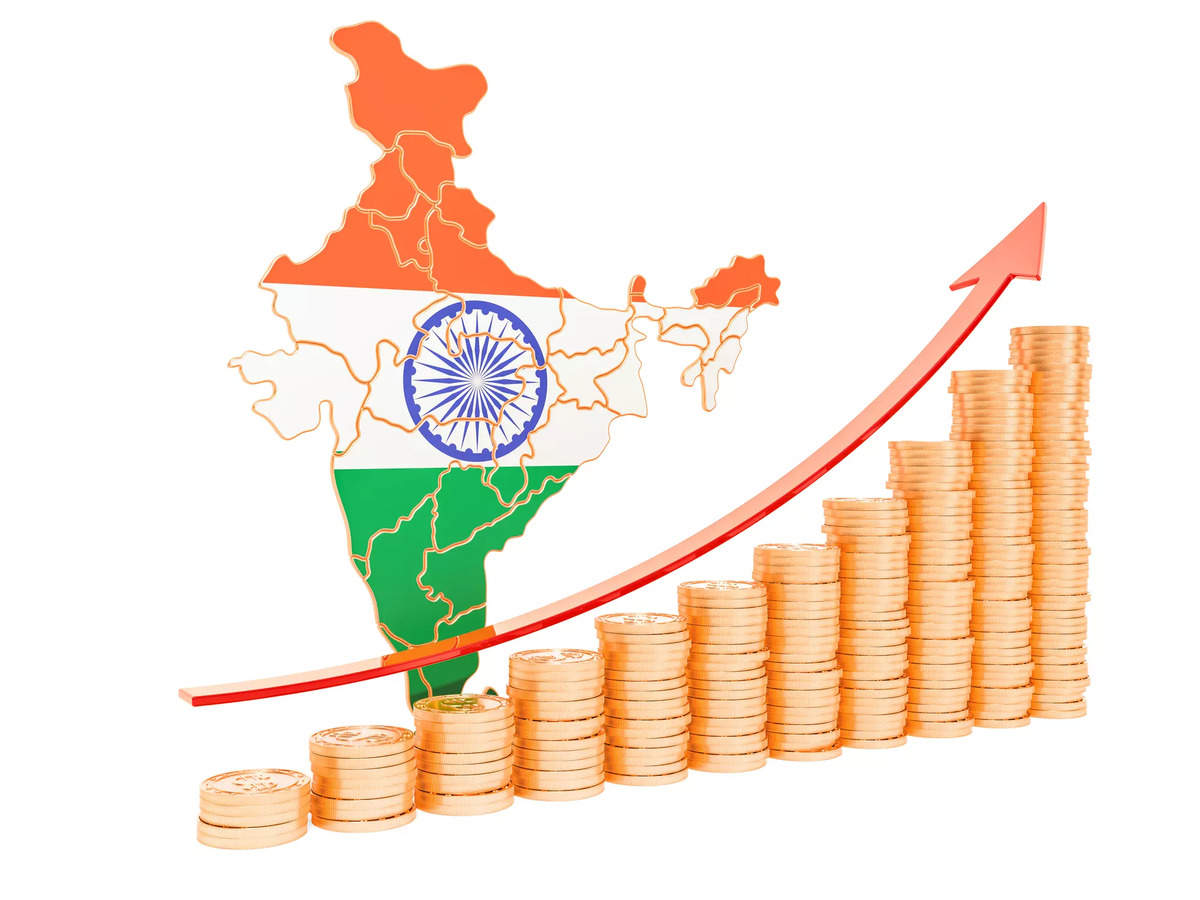
“India is poised to reach a GDP of up to 4 trillion USD in 2024-25 alone. Japan’s economy now stands at 4.1 trillion USD – a testament to the rapid weakening of the JPY – and India is now very close to becoming the world’s fourth-largest economy in terms of dollars within a year. Meanwhile, Germany’s GDP stands at 4.6 trillion USD and is growing at a relatively slow pace. Therefore, it is expected that by 2026-27, India will surpass Germany in economy. All these projections are based on the assumption that no unexpected shock affects the calculations, indicating that a significant shock would now be required to significantly disrupt this trajectory.

However, despite being the world’s third-largest economy, India will still remain relatively poor on a per capita basis, but the sheer bulk offers benefits that can be leveraged. While we celebrate India’s economic growth today, we must remember that India has been a major economic power for most of its history. Therefore, it is appropriate to look at the long cycle again to appreciate what we are witnessing today.

RelatedPosts

Why India is eyeing a route over China’s Xinjiang to get around Pakistan’s airspace ban. Here’s why it isn’t simple

Ten years on: how political resolve and military execution came together for the 2016 surgical strikes

Fifth-gen in the sky, fourth-gen on the ground: how the Tarang Shakti jets stack up against Pakistan’s and China’s frontline fighters

Load More

According to extensive estimates used by Angus Maddison, India accounted for about 33 percent of the global economy in 1 AD. These estimates were based on purchasing power parity (PPP) to avoid irregularities in exchange rates and relative prices. At that time, China accounted for 26 percent, which was the second largest, while Western Europe, mostly under Roman rule, accounted for about 11 percent.

ANCIENT INDIAN ECONOMY

Naturally, considering such long intervals, these are rough estimates, but it is noteworthy how significant India’s economy was two thousand years ago. Indian traders operated from the Middle East to East Asia, and Roman policymakers complained of trade deficits with India.

Even a thousand years later, in 1000 AD, India was the largest country in the world, with a share of 29 percent. China’s share was also slightly reduced to 23 percent, yet it remained the second-largest economy. After the fall of the Roman Empire, Europe’s share fell below 9 percent. The African economy, operated by the Fatimid Empire, accounted for 12 percent of the global economy; a share Africa has rarely, if ever, seen before or since.

The global economy was operated by supply chains from the Fatimid Empire to the Chola Empire and then the Song Dynasty. Financed by temple banks, Indian merchant guilds had established a vast trading network from the Indian Ocean to beyond. The Cholas launched two expeditions in 1017 and 1025 against Southeast Asia to keep shipping lanes open.

MEDIEVAL INDIAN ECONOMY

In the 13th and 14th centuries, Turkic-Mongol invasions and the plague inflicted serious damage to all major economic centers. By 1500, China had been reestablished under the Ming Dynasty and became the world’s largest economy with a share of 25 percent. India’s share had now decreased to 24.5 percent, but due to the peak of the Vijayanagara Empire, it still remained the second-largest.

By 1600, however, China’s share had increased to 29 percent. In contrast, India’s share had fallen to 22.6 percent due to the economic shock of the plunder of Vijayanagara not being fully recovered by the establishment of the Mughal Empire. The Mughals nurtured some economic centers but hindered others as part of their conquest campaigns.

MODERN INDIAN ECONOMY

Significantly, the expansion of European colonization and maritime exploration increased Western Europe’s share to 20 percent by 1600. At this time, Italy and France dominated the European economy. Remarkably, despite having global empires, Spain and Portugal remained relatively small in their economies. Managing these empires and the cost of constant wars drained the silver and gold brought from the Americas.

In the subsequent centuries, European imperialism expanded, and the arrival of the Industrial Revolution at the end of the 18th century occurred. However, China still remained a major economic power. In 1820, China’s share was 33 percent of global GDP, while India’s share had reached 16 percent. Exploitation by the East India Company and constant wars with the Marathas (and others) had their impact.

Commentators often say that in 1820, China and India together accounted for half of the world’s GDP, but note that at this time China’s share was twice that of India. Western Europe’s share was 23.6 percent – with Britain at 5.2 percent and France at 5.5 percent (hence, despite the defeat at Waterloo, the French economy was still slightly larger).”

WHEN INDIA BECAME COLONY

The 19th century was a time of significant upheavals. By 1870, China’s share had declined to 17 percent and further to 9 percent by 1913. Similarly, India’s share declined from 12 percent to below 8 percent before World War I. India’s position in the world was clearly affected by colonial domination, but note that China’s decline was even more dramatic. The Opium Wars, various internal rebellions, and technological stagnation had their impact.

In contrast, Western Europe’s share rose to its highest level of 33.5 percent between 1870 and 1913. However, the trajectories of individual countries are intriguing. Britain’s share reached its peak at 9.1 percent in 1870 and then declined to 8.3 percent (excluding its colonies). Meanwhile, Germany’s share increased from 6.5 percent to 8.8 percent during the same period. Thus, Germany’s economy was significant before World War I, but Britain possessed an empire.

During this period, the United States experienced rapid growth in the previous century and became the world’s largest economy with a 19 percent share by 1913. After the Second World War, its share exceeded 27 percent by 1950. The USSR held second place with 9.6 percent (its peak, gradually declining over the next four decades until its eventual collapse).

ECONOMY AFTER INDEPENDENCE

Fatigued by both wars and gradually losing their colonies, Britain’s share fell to 6.5 percent by 1950 and has since continued to decline steadily. Independent India and China’s shares were 4.2 percent and 4.5 percent, respectively. This was a significant setback for these civilizations that had dominated the global economy for millennia, but perhaps felt more acutely by the Chinese due to the more recent and rapid decline.

The most dramatic change of the next twenty-five years was Japan’s rise. In 1950, it comprised only 3 percent of the global economy, but by 1973, during the first oil crisis, it reached 7.7 percent. It’s also interesting that despite independence, India’s position in the global economy continued to decline, with Nehruvian socialism pulling it down to 3 percent in the 1970s. Economic freedom is as crucial as political freedom.

US STILL DOMINATED

In 1980, the U.S. still accounted for over 21 percent of the world’s economy. India’s share was only 3 percent, and China, after cultural revolution and significant reforms, was at 2.3 percent. Both economies began to improve—China more systematically, and India reluctantly until the more serious crisis of 1991.

Better policies led to better performances. By 2000, China’s share was 7.2 percent, and by 2017, it equaled 16 percent of the U.S. share. As of 2024, it now constitutes 19.4 percent of the global economy, once again the world’s largest.

CURRENT

In terms of dollars, the U.S. still has the world’s largest economy, but in terms of PPP, its share has now dropped to 15.5 percent. Meanwhile, India’s share has been steadily increasing. It rose from 4.3 percent in 2000 to around 8 percent in 2024. In other words, it’s now the world’s third-largest economy in PPP terms, a far cry from its pre-World War I position and still significantly less than its colonial past.

IMF estimates suggest that by the end of this decade, China’s share of the global economy in PPP terms will stabilize at 19.5 percent, while America’s will decline further to 14.7 percent. Japan’s share will reach up to 3.2 percent, while Britain’s will remain at 2 percent.

WAY FORWARD

In contrast, India’s share is expected to reach 9.2 percent of the world economy by 2030. Such an economy isn’t a minor recurrence, considering the long cycle of decline it has endured.

Indeed, the significance of India’s current growth can only be understood correctly in the context of a civilization’s timescale. While we celebrate the recent turn of fortune, it’s also important to remember that India has a long way to go before reclaiming its historic place in the world.

ALSO READ: Does the World Economy Growth Affect Payment Systems?

SOURCE: https://swarajyamag.com/economy/india-in-the-world-economy-it-is-reemerging-after-a-thousand-years-of-decline

Tags: Ancient IndiaEconomyIMFIndiaIndian EconomyUSWorld economy
ShareTweetSend
Previous Post

Pune Accident: If not controlled, you can also become the victim!

Next Post

This is what happens with Minor Rape Victims in India!

Related Posts

Why More Vehicle Owners Are Choosing Online Car Insurance for Their Coverage Needs
Finance

Why More Vehicle Owners Are Choosing Online Car Insurance for Their Coverage Needs

1 October 2026

With the rise of digital platforms, the insurance-buying customer journey has also changed. Online car insurance is a more...

Best Stripe Alternatives for Receiving Money in India (2026)
Business

Best Stripe Alternatives for Receiving Money in India (2026)

1 October 2026

Stripe is the default answer to "how do I take payments online" in most of the world. In India...

Why India is eyeing a route over China’s Xinjiang to get around Pakistan’s airspace ban. Here’s why it isn’t simple
Analysis

Why India is eyeing a route over China’s Xinjiang to get around Pakistan’s airspace ban. Here’s why it isn’t simple

30 September 2026

Civil Aviation Minister Kinjarapu Ram Mohan Naidu said on Tuesday that India is in talks with China to use...

Load More

Leave a Reply Cancel reply

Your email address will not be published. Required fields are marked *

I agree to the Terms of use and Privacy Policy.
This site is protected by reCAPTCHA and the Google Privacy Policy and Terms of Service apply.

Currently Playing

Hanuman Chalisa Kept Me Going': Flydubai Hero Smit

Hanuman Chalisa Kept Me Going': Flydubai Hero Smit

00:10:03

How Pakistan-Linked Drug Networks Are Targeting India | Coast Guard Deals a ₹3,000 Crore Blow

00:03:28

How SkyStriker Hunts Its Target: Inside India’s Loitering Munition

00:03:49

F-35 vs Rafale? Inside India’s Biggest Air Exercise

00:05:54

China and the Philippines Are Fighting a War With Maps, Not Missiles

00:05:55
Facebook Twitter Instagram Youtube
tfipostTfipost.com
Right Wing | News Analysis | Indian Opinion
  • About us
  • Contact Us
  • Careers
  • Brand Partnerships
  • Terms of use
  • Privacy Policy
  • Sitemap

©2026 TFI Media Private Limited

No Result
View All Result
  • Premium
  • Politics
    • Analysis
    • Opinions
    • Trending
  • Economy
    • Business
    • Finance
  • Defense
    • Defence
    • Strategy
    • Weaponry
  • Geopolitics
    • Africa
    • Americas
    • Asia Pacific
    • Europe
    • South Asia
    • West Asia
  • Knowledge
    • Culture
    • History
    • Indology
  • Law
  • Lounge
    • Books
    • Cinema
    • Food
    • Health
    • Sports
    • technology
    • Travel
    • Satire
TFIPOST हिन्दी
TFIPOST Global

©2026 TFI Media Private Limited