





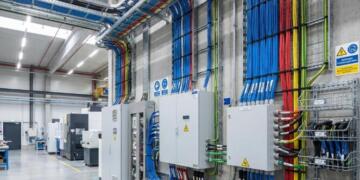


















The global economic landscape is undergoing a profound transformation. In an era defined by unpredictable supply chain shocks and shifting geopolitical alliances, nations are rapidly realizing that critical infrastructure and heavy manufacturing cannot rely entirely on fragile import networks. The United Arab Emirates, recognizing this shift, is aggressively pursuing a doctrine of industrial self-reliance through initiatives like “Make it in the Emirates” and “Operation 300bn.”
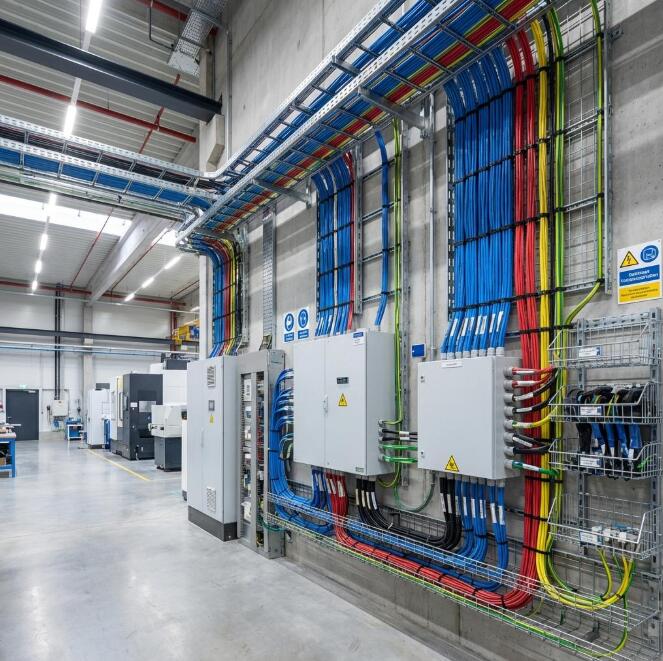
As the nation builds state-of-the-art automated mega-factories, modernizes its global shipping ports, and integrates AI-driven smart grids, the focus naturally shifts to the high-tech machinery powering this revolution. However, the true vulnerability and strength of this industrial leap lie in a highly specialized, deeply critical, yet often overlooked component: the intricate network of electrical cabling that acts as the nervous system for these colossal automated operations.
1. The Nervous System of Automated Industry
In the context of modern infrastructure, it is essential to distinguish between the “muscle” and the “brain.” High-voltage power cables act as the arteries and muscles, delivering the raw electricity required to turn massive motors and light up city blocks. But in an automated factory, a desalination plant, or an advanced petrochemical refinery, raw power is useless without precise direction.
This is where control cables come in. If power cables are the muscles, control cables are the central nervous system. They carry the low-voltage signals, data pulses, and telemetry from Programmable Logic Controllers (PLCs) to automated valves, robotic assembly arms, and safety relays.
If a power cable fails, a machine simply stops. But if a control cable fails—or if its signal is corrupted by outside interference—a robotic arm might swing a fraction of a second too late, or a pressure valve in a refinery might fail to open. The resulting catastrophic errors can cost millions of dollars in downtime and pose severe safety hazards. To prevent this, industrial planners are heavily prioritizing signal integrity, turning to specialized Control Cable Suppliers in UAE to source auxiliary wiring that guarantees absolute precision and reliability in extreme operational environments.
2. Defeating the Invisible Enemy: Electromagnetic Interference (EMI)
The modern factory floor is a highly volatile electrical environment. Dozens of heavy machines, massive power transformers, and high-frequency inverters operate simultaneously in close proximity. These machines generate massive invisible electromagnetic fields.
When a standard, unshielded wire is run near these magnetic fields, it acts like an antenna. It absorbs the electromagnetic noise (EMI), which creates a “ghost voltage” or static within the wire. For a control cable carrying a delicate 24-volt signal instructing a laser cutter, this static can completely scramble the command.
To achieve the strategic goal of flawless automation, the UAE’s industrial sectors rely on highly engineered control cables designed with sophisticated shielding. These cables incorporate tightly woven tinned-copper braids or overlapping aluminum mylar foils. This shielding acts as a Faraday cage, trapping the internal signals safely inside while bouncing external electromagnetic interference away. This ensures that the automated “brain” of the factory can communicate with its mechanical components without any misinterpretation.
3. Supply Chain Resilience: Sourcing the “Invisible Infrastructure” Locally
The push for Industry 4.0 is not just a technological challenge; it is a logistical one. The sheer volume of control and auxiliary cabling required to build a fully automated logistics hub or a smart residential district is staggering, often running into thousands of kilometers per project.
Historically, relying on international imports for these critical components introduced severe vulnerabilities. A single shipping bottleneck in a foreign port could delay a multi-billion-dollar infrastructure project by months.
Today, as a matter of economic security and strategic autonomy, major developers and government entities are shortening their supply chains. The strategic imperative to partner with domestic cable suppliers in uae has never been clearer. Sourcing these vital components locally not only ensures uninterrupted project timelines but also guarantees that the materials are specifically researched, tested, and manufactured to withstand the aggressive climatic conditions of the Middle East. It keeps capital within the local economy and builds domestic industrial capacity, perfectly aligning with the nation’s macroeconomic strategies.
4. Armor for the Desert: Withstanding Extreme Environments
An automated assembly line in the UAE does not operate in the mild conditions of a European factory. It must contend with intense ambient heat, highly corrosive coastal humidity, and the pervasive threat of fine desert sand.
Control cables utilized in these environments are heavily modified for survival.
- Thermal Stability: Standard plastics melt or deform under the continuous high temperatures of heavy machinery operating in a Middle Eastern summer. Industrial control cables utilize specialized XLPE (Cross-Linked Polyethylene) insulation, which offers exceptional thermal stability and prevents short circuits.
- Chemical Resistance: In the booming oil, gas, and chemical sectors, cables are constantly exposed to corrosive petrochemicals and solvents. The outer sheaths of these control cables are extruded with specialized, hydrocarbon-resistant compounds that prevent the plastic from swelling or degrading over time.
- Mechanical Flexibility: Unlike static power lines buried in a trench, control cables are often attached to moving machinery, automated cranes, or conveyor belts. They utilize fine-stranded copper cores (Class 5 flexibility) that can withstand millions of bending cycles without suffering from metal fatigue or snapping.
Conclusion: Securing the Industrial Future
The UAE’s transition into a global powerhouse of smart manufacturing and automated infrastructure is a masterclass in strategic planning. However, the grandiose visions of AI-managed ports and robotic factories are entirely dependent on the physical layer that connects them.
By prioritizing high-performance shielded wiring, robust environmental protection, and—most importantly—localized, resilient supply chains, the emirates are ensuring their industrial revolution rests on an unshakable foundation. As the world moves deeper into the era of automation, the quality of the control cables weaving through these facilities will remain the ultimate arbiter of operational success and strategic economic security.
Understanding Industrial Control Cables (FAQs)
What is the main difference between a power cable and a control cable?
Power cables are designed to carry high voltages and massive currents to physically drive machinery or provide electricity. Control cables carry very low voltages and small currents; their job is to transmit data, signals, and commands between computers and the machines they operate.
Why do control cables have so many small wires inside them?
A control cable often needs to transmit multiple, complex instructions simultaneously (e.g., speed, direction, temperature, and pressure readings). Therefore, a single control cable will contain a “multicore” design—sometimes housing anywhere from 2 to over 60 individually insulated, color-coded wires in a single jacket.
What does a “copper braid” do in a control cable?
The copper braid acts as an electromagnetic shield. It prevents external electrical noise from entering the cable and scrambling the delicate control signals, while also preventing the cable’s own signals from leaking out and interfering with nearby equipment.
Can control cables be buried directly in the ground?
While some are designed for it, standard control cables are typically run through protective conduits, cable trays, or internal building shafts. If they must be buried in harsh industrial soil, they require an additional layer of mechanical protection, such as Steel Wire Armor (SWA).
Why is flexibility so important in industrial control cables?
In automated factories, control cables are frequently connected to robotic arms, moving assembly lines, or vibrating machinery. If the cable were rigid, the constant movement would quickly snap the internal copper wire. High flexibility ensures long-term durability under continuous mechanical stress.