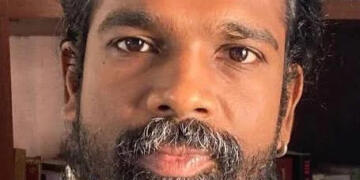
















A fresh controversy has erupted at IIT Bombay, centering on Sociology Professor Suryakant Waghmore, whose critics label his public interventions as Hinduphobic amid the ongoing fallout from student Sahil Wakode’s suicide. Waghmore has drawn sharp backlash for opposing the IIT Bombay Faculty Forum’s statement backing Professor Suryanarayana Doolla, the faculty member named in an FIR under the SC/ST (Prevention of Atrocities) Act following Wakode’s death.
The crisis began after second-year BTech student Sahil Wakode died by suicide on September 18, 2026, following an incident in which he was allegedly caught using a mobile phone during an exam invigilated by Professor Doolla. Wakode’s family filed a police complaint alleging caste-based harassment and mental torture, prompting Mumbai Police to register an FIR invoking both abetment-to-suicide provisions and the SC/ST Act. In response, the IIT Bombay Faculty Forum issued statements clarifying that Doolla had not been suspended from the institute but only temporarily relieved of his dean responsibilities to facilitate an unbiased probe. It was against this backdrop that Waghmore publicly dissented. On social media, he argued that the Faculty Forum was “not a legal body” and that “not all faculty identif[ied] with this group,” alleging its statements were “building pressure on [the] investigation committee.” His remarks, framed by supporters as a defense of due process, were interpreted by critics as undermining collective faculty solidarity at a moment of intense institutional stress.
Opponents of Waghmore have seized on his past writings and public positions to characterize his stance as part of a broader Hinduphobic worldview. They point to his research focus on “‘Hinduism’ civility and exclusion,” as well as past comments describing “Bhartiya vegetarianism of purity and segregation” as a “social illness” during the 2023 IIT-B mess-table dispute. For these critics, Waghmore’s refusal to endorse the Faculty Forum’s pro-Doolla statement fits a pattern of what they term Hinduphobic activism within elite academic spaces. The label has gained traction in sections of the media and online discourse, where Waghmore is increasingly portrayed not merely as a dissenting voice but as an emblem of perceived ideological capture. Detractors argue that his interventions reflect a Hinduphobic bias against Hindu-majority sensibilities and institutional norms, especially when caste, discrimination, and campus power dynamics are at stake.
The controversy has quickly spilled beyond campus boundaries, with national outlets highlighting the unusual spectacle of an IIT professor being publicly branded Hinduphobic in the context of a student suicide investigation. For IIT Bombay, already reeling from protests, political scrutiny, and an ongoing police probe, Waghmore’s stance adds another layer of complexity. Administrators now face the dual challenge of safeguarding the integrity of the investigation while managing a fractious faculty environment in which accusations of Hinduphobic conduct are being traded alongside demands for justice and accountability. Student representatives have called for systemic reforms and an independent inquiry committee with external members, even as they clarify their position on Doolla. Meanwhile, a large section of faculty has rallied behind Doolla in a peace march, insisting that “every student is an individual, not categorised by any caste or class.” In this charged atmosphere, Waghmore’s dissent is read by some as principled caution and by others as a Hinduphobic attempt to derail institutional cohesion.
As Mumbai Police’s Crime Branch investigates the FIR against Doolla, the broader debate over caste, academic freedom, and ideological bias at India’s premier engineering institute shows no sign of abating. For Waghmore, the personal and professional stakes are high: his name is now inextricably linked to a national conversation in which the term Hinduphobic is wielded as both critique and cudgel. Whether his stance will be vindicated as a defense of due process or condemned as an instance of Hinduphobic obstruction may well depend on the findings of the probe—and on how India’s academic and political ecosystems choose to interpret the tangled threads of caste, power, and principle at IIT Bombay.