








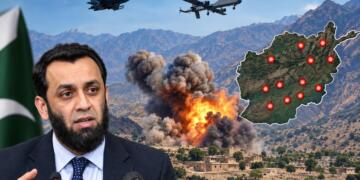










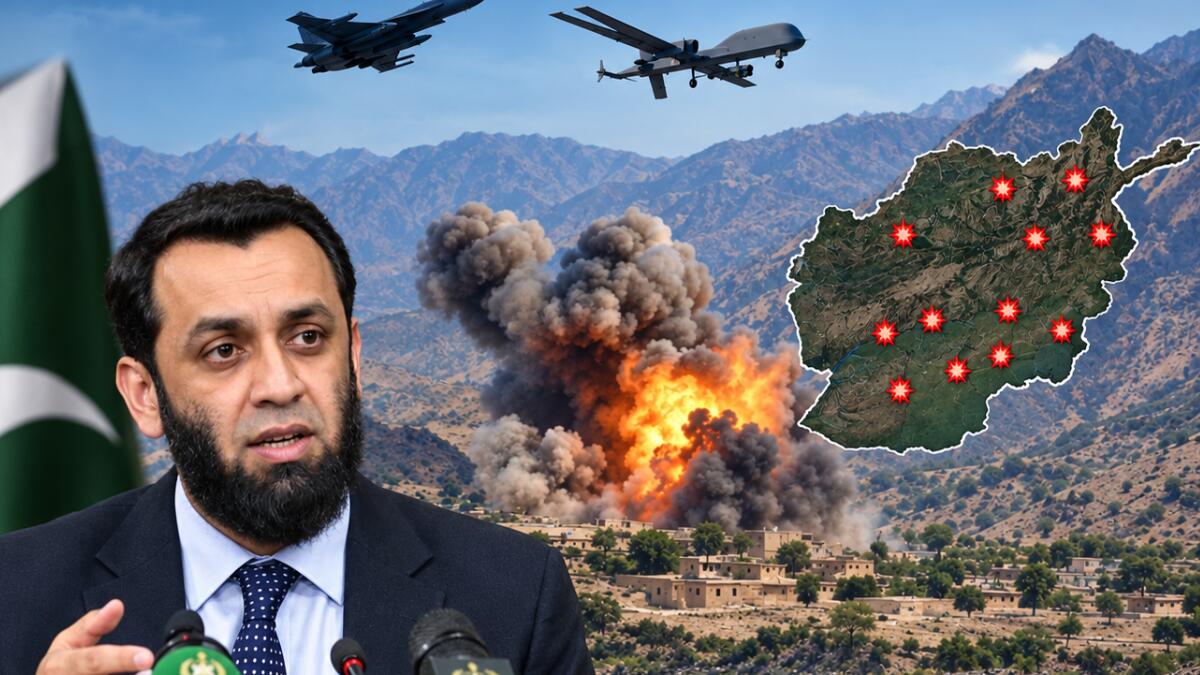
Pakistan carried out precision aerial and drone strikes on 10 locations across Afghanistan on Thursday, September 24, in what it described as retaliation for a cross-border drone incursion a day earlier, according to PTI. Pakistan information Minister Attaullah Tarar said the strikes targeted sites that Islamabad believes were being used to launch and store the drones involved in the attempted attack.
Tarar, posting on X, said Pakistan’s air defence systems had detected, tracked and neutralised the intruding drones on September 23 before they could reach their intended targets. He described the subsequent strikes as deliberate, precise, calibrated and proportionate, and said they were strictly limited to identified military objectives directly linked to the attempted attacks against Pakistan.
The minister invoked Pakistan’s right to self-defence, saying the country exercised its sovereign right to self-defence in striking the 10 locations. He condemned what he called a deliberate and unlawful incursion into Pakistani territory by drones launched from Afghan soil, calling it a flagrant violation of Pakistan’s sovereignty.
Tarar was unambiguous about what would follow any repeat incident, warning that further violations of Pakistan’s sovereignty would be met with an immediate and decisive response. He added that denials or attempts by the Afghan Taliban to deflect responsibility would not change the facts on the ground or limit Pakistan’s right to defend its territory, people and national security. He called on the Kabul administration to immediately halt hostile activity and take effective, concrete, verifiable and sustained action against terrorist groups operating from Afghan soil.
Pakistan is framing the operation as part of its ongoing counter-terrorism campaign, referred to as Ghazab lil Haq (also rendered Ghazab Lil Haqq).
On the ground in Afghanistan
Afghan Taliban government spokesperson Zabihullah Mujahid said the strikes hit Kandahar, Paktia and Khost provinces. A resident of Kandahar city told AFP they heard a jet overhead followed by a large explosion and a subsequent fire in the city centre. As of the latest reports, Afghan authorities had not issued detailed casualty or damage figures for this round of strikes.
The strikes land against a backdrop of sharply worsening ties between the two neighbours, once allies and now increasingly open adversaries. Pakistan has long accused the Taliban government of allowing groups like the Tehreek-e-Taliban Pakistan (TTP) to operate from Afghan territory and launch attacks into Pakistan — an accusation Kabul has consistently denied.
This is not the first round of Pakistani strikes on Afghan soil this year. In February, Pakistani airstrikes on Nangarhar and Paktika provinces, targeting alleged TTP and ISIS-Khorasan hideouts, killed at least 18 people according to Afghan sources, with Pakistan claiming around 80 militants were killed. The Taliban-led government condemned those strikes as a violation of Afghanistan’s territorial integrity, alleging they hit civilian homes and a religious seminary, and vowed a measured response — Afghanistan did launch a retaliatory operation days later, which in turn triggered Pakistan’s Ghazab lil Haq campaign and the two countries’ worst fighting in years.
Thursday’s exchange suggests that underlying conflict remains far from resolved, with both sides now trading direct military action across the border on a recurring basis.