
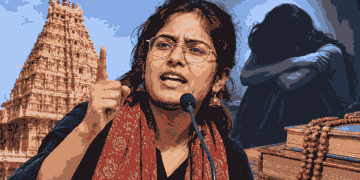
















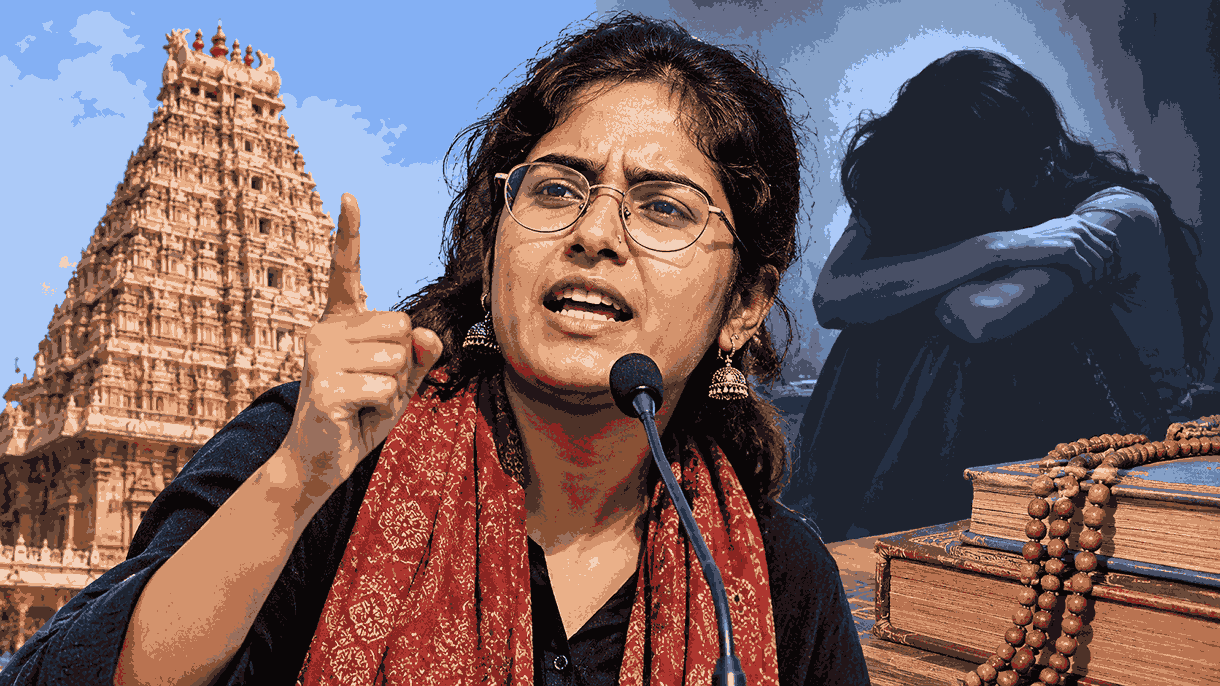
The video, which began circulating widely on November 3, 2026, contains Bora’s criticism of what she calls Brahmanvaad, or Brahmanical social structures. She compares the system to patriarchy and capitalism, arguing that it perpetuates inequality and subordination. Although she maintains that her criticism is directed at an ideological structure rather than individual members of a caste, her remarks about Hindu priests and religious practices have attracted considerable attention.
One of the most controversial portions of the video concerns her allegation that priests sexually assault women inside temples. Bora invokes the Unnao and Kathua cases while making this claim. However, these cases do not, by themselves, establish her broader allegation about temple priests. The distinction between documented criminal cases and sweeping accusations against an entire category of religious functionaries is important, particularly when public figures make statements capable of influencing political discourse.
Bora also refers to the Manusmriti and a controversial couplet from Tulsidas’s Ramcharitmanas, particularly the phrase associated with the word ‘taadna’. She interprets these references as evidence of a religious and social framework that places women, Shudras, poor people and animals in subordinate positions. Her interpretation forms the ideological foundation of her argument against Brahminism.
Addressing women who identify with or defend Brahmanical traditions, Bora uses provocative language. She suggests that women who support this system should remain confined to their homes, wear veils and submit to their husbands or fathers. She presents this as the status supposedly assigned to women by the social hierarchy she criticises. The remarks have become a major talking point because they combine criticism of religious traditions with a direct challenge to women who hold different cultural and ideological beliefs.
The controversy also highlights the continuing political influence of student organisations associated with the Left. AISA, of which Bora is the national president, has historically been involved in campus politics, protests and ideological campaigns. Its leadership frequently engages with questions of caste, gender, social justice and religious identity. However, critics argue that such activism can become counterproductive when it relies on sweeping generalisations about Hindu religious institutions.
The debate over Brahminism is particularly sensitive because it involves questions of caste discrimination, historical interpretations of religious texts and the relationship between Hindu traditions and contemporary social reform. These subjects deserve serious academic and public discussion. Yet, allegations of sexual violence must be supported by credible evidence, and criminal behaviour by particular individuals should not automatically be attributed to an entire religious community or institution.
Another contentious aspect of the video is its treatment of Hindu scriptures. The Ramcharitmanas has been interpreted differently by scholars, religious leaders and social reformers over the years. The disputed expression cited by Bora has generated extensive debate about its historical meaning and contemporary relevance. Reducing such a complex discussion to a single interpretation risks overlooking the broader literary, philosophical and devotional context of the text.
Critics of the activist’s remarks argue that there is a difference between challenging discriminatory practices and portraying Hindu religious institutions as inherently dangerous to women. They contend that allegations involving temple priests require specific evidence and should not be presented as established facts through references to unrelated criminal cases. The issue is particularly significant because accusations of sexual violence carry serious implications for both victims and those being accused.
The discussion surrounding Brahminism also raises questions about whether political activists apply the same standards of scrutiny across different religious and ideological communities. Advocates of equality have every right to challenge discrimination, but their arguments become stronger when they are evidence-based and avoid collective condemnation.
For many observers, the resurfaced video represents another example of how campus politics and religious identity increasingly intersect in India’s public discourse. While caste discrimination and crimes against women must be addressed firmly, public debate should distinguish between documented incidents, ideological disagreements and unverified generalisations.
Ultimately, Brahminism has once again become the centre of a heated political discussion following Bora’s remarks. The larger challenge is to ensure that conversations about women’s rights and social equality remain grounded in evidence, historical context and intellectual honesty rather than inflammatory accusations against religious communities.